Is Wasm Becoming Garbage? - WebAssembly and Garbage Collection
Explore WebAssembly's new garbage collection feature, its design rationale, and implications for compilers targeting object-oriented and functional languages.
A Monadic Framework for Name Resolution in Multi-Phased Type Checkers
Explore a monadic framework for name resolution in multi-phased type checkers, bridging the gap between abstract typing rules and practical implementations using compositional mappings and monadic combinators.
Strongly-Typed Multi-View Stack-Based Computations
Explore a Domain-Specific Language for stack-based computations, ensuring type correctness and supporting multiple views and mutually recursive functions of arbitrary arities.
All the Binaries Together: A Semantic Approach to Application Binary Interfaces
Explore a semantic approach to Application Binary Interfaces, enhancing interoperability and safety in multi-language systems through realizability models and formalized ABIs.
Type Inference for Application Spines in Higher-Order Languages - WITS'24
Explore type inference for application spines in Haskell, covering error messages, impredicative polymorphism, visible type application, and required type arguments.
Solving Constraints During Type Inference - WITS'24
Explore GHC's type inference engine, covering bidirectional inference, implication constraints, level numbers, evidence generation, and quantified constraints in Haskell.
The Evolution of Effects in Functional Programming - From Monads to Higher-Order Effects
Explore the evolution of effectful programming in Haskell, from monads to higher-order effects, examining key milestones and their impact on functional programming paradigms.
Predictable Inlining in OCaml - Flambda2 Heuristics and Inlining Histories
Explore OCaml's inlining heuristics in Flambda2 and learn about "Inlining histories" for visualizing compiler decisions.
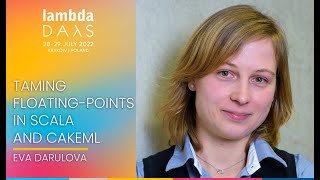
Taming Floating Points in Scala and CakeML
Explore formal verification techniques for floating-point programs in functional languages, focusing on static analysis to ensure accuracy and meaningful results despite rounding errors.

An Enigma Machine in Elm
Explore the Enigma machine's encryption process through an Elm implementation. Learn its workings, weaknesses, and historical significance in WW2 codebreaking efforts.

Functional Parsing for Novel Markup Languages - Lambda Days 2022
Explore functional parsing for novel markup languages, focusing on fault-tolerant parsers with real-time error messages. Learn design principles and implementation techniques through case studies of MiniLaTeX and L1.
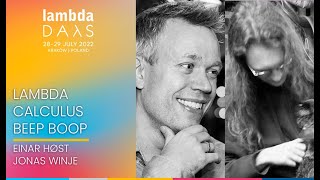
Lambda Calculus Beep Boop - A Humane Representation of Lambda Calculus Terms
Explore "beep boop," a humane representation of lambda calculus terms inspired by sound, offering an easier alternative to traditional notations for humans to utter and understand.
Make Illegal States Unrepresentable - Techniques for Safer Code Design
Explore techniques to make illegal states unrepresentable in code, reducing bugs and improving comprehension. Learn to apply this principle in functional programming for more robust software design.

Using Smoke and Mirrors to Compile a Functional Programming Language to Efficient GPU Code
Explore techniques for compiling functional languages to efficient GPU code, overcoming hardware restrictions through strategic language design and aggressive compiler optimizations.
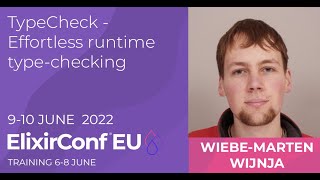
TypeCheck - Effortless Runtime Type Checking
Explore runtime type-checking in Elixir with TypeCheck library. Learn its benefits, implementation, and advanced features for improved code clarity and resilience.
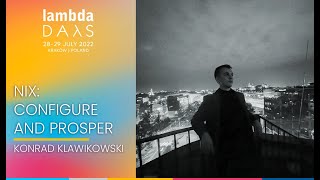
Nix: Configure and Prosper - An Introduction to Nix Ecosystem and Usage
Explore Nix's ecosystem, package manager, and OS configuration. Learn core concepts, syntax, and real-world applications for reproducible builds and cross-platform compatibility.
Uncomputable Functions - Exploring the Limits of Computation
Explore the fascinating world of uncomputable functions, their implications for lambda calculus, and the limits of computation in this thought-provoking presentation.
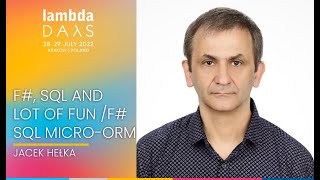
F#, SQL and Lots of Fun - Building a F# SQL Micro ORM
Explore building a data access library for F#, covering design decisions, query representation, side-effect control, and DSL creation for efficient SQL interactions.

Generalizing Payment as Types - Haskell-Based Specification for Continuous Money Transfer
Explore innovative payment systems using Haskell for type-safe, continuous money transfers. Learn about generalizing payments and implementing blockchain protocols with functional programming concepts.

Learn You Some Pattern Matching for Great Good
Master pattern matching to simplify code structure, refactor conditionals, and improve codebase health. Learn implementation techniques, benefits, and potential pitfalls in large-scale projects.
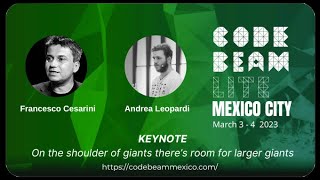
Erlang vs Elixir: On the Shoulder of Giants There's Room for Larger Giants
Explore the symbiotic relationship between Erlang and Elixir, examining their impact on various domains and the reasons behind their growing popularity in software development.