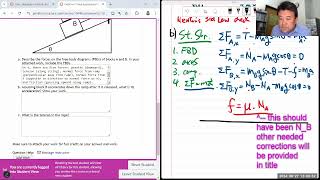
Physics 4A - Forces Freeform Timed Assessment: Inclined Plane and Two Masses
Solve complex physics problems involving inclined planes and multiple masses in a timed assessment format.
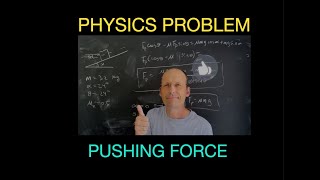
Python Physics: Force Needed to Push a Block Up an Incline with Friction
Explore force calculations for pushing a block up an inclined plane with friction using Python, applying physics principles to real-world scenarios.
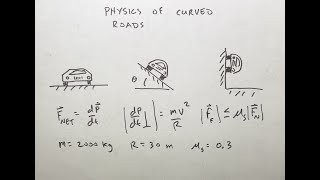
How Fast Can a Car Take a Curve? Three Different Road Types
Explore maximum car speeds on flat, banked, and vertical curves using physics principles and calculations.
Boston Cop Slide Calculation - Physics Analysis of Viral Video
Analyze a viral video of a cop's high-speed slide exit, calculating final velocity and friction coefficient using physics principles.
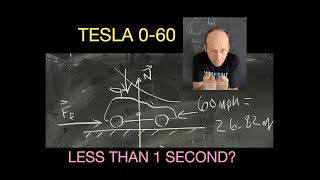
Could a Tesla Really Accelerate from 0-60 mph in Less Than 1 Second?
Explore the physics behind Tesla's ambitious 0-60 mph acceleration claim, analyzing feasibility and engineering challenges.
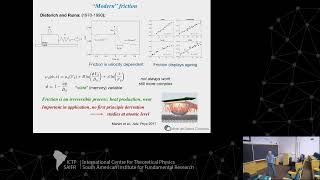
Markov Dynamics and Entropy Production in a Prandtl-Tomlinson Model for Friction
Explore Markov dynamics and entropy production in friction models, focusing on the Prandtl-Tomlinson approach for advanced condensed matter theory insights.

Creating and Controlling Wrinkles in Cinema 4D Tutorial
Learn to create realistic cloth wrinkles in Cinema 4D using softbodies. Master friction, growing cloth, and efficient A/B testing for precise simulations. Includes troubleshooting and optimization tips.
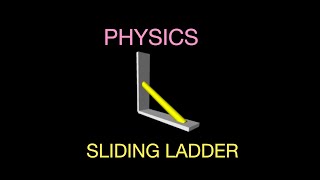
Ladder Physics: What Angle Does a Frictionless Ladder Leave the Wall?
Explore frictionless ladder physics, determining the angle at which it loses wall contact using Euler method and ball-spring simulations in Python.
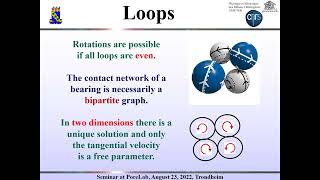
Frustrated Bearings: Exploring Minimum Energy Dissipation in Sphere Systems
Explore the fascinating world of frustrated bearings, their unique properties, and applications in physics and engineering. Discover how these systems exhibit novel states and unexpected behaviors in 2D and 3D.
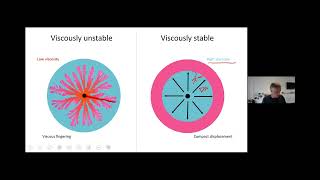
Viscously Stable Frictional Fingers in Hele-Shaw Cells
Explore viscously stable frictional fingers in Hele-Shaw cells, examining the interplay of friction, capillarity, and viscous forces in pattern formation during fluid invasion through granular media.
The Anomalous Transport of Tracers in Active Baths
Explore anomalous transport of tracers in active baths, focusing on long-time dynamics, ratchet effects, and unique friction properties in low-dimensional systems.
Laws of Motion in Physics - Newton's Laws and Applications
Master fundamental physics concepts from force and inertia to circular motion, covering Newton's laws, momentum conservation, friction, and centripetal force for competitive exams and board preparation.
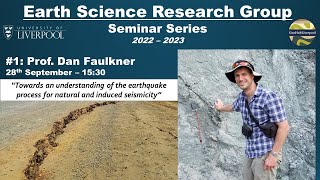
Towards an Understanding of the Earthquake Process for Natural and Induced Seismicity
Explore earthquake processes, linking fluid injection experiments to lab friction measurements for induced seismicity forecasting. Examine fault behavior models to understand earthquake patterns and implications for major fault systems.