
Introduction to Aerospace Propulsion
Explore aerospace propulsion's evolution, thermodynamics principles, and various power cycles. Gain insights into compressible flows and shock waves for a comprehensive understanding of propulsion systems.
PHY1505
Explore fundamental physics concepts including center of mass, fluids, and oscillations through comprehensive video lectures.
Fluid Dynamics
Comprehensive exploration of fluid dynamics principles, covering equations, flow types, and practical applications. Includes interactive simulations for enhanced understanding.

Fluid Characteristics - Fluid Statics
Explore fluid mechanics fundamentals, including fluid properties, viscosity, non-Newtonian fluids, surface tension, buoyancy, hydrostatic pressure, and manometers. Gain practical insights through interactive simulations and real-world examples.

The Curl of a Vector Field - Measuring Rotation
Explore the curl operator in vector calculus, understanding its role in measuring rotation in vector fields and its applications in fluid dynamics, including vorticity and tornado analysis.

Sparse Nonlinear Models for Fluid Dynamics with Machine Learning and Optimization
Exploring SINDy algorithm for developing efficient nonlinear models in complex fluid flows, with applications in various fields including bluff body wakes, thermal convection, and magnetohydrodynamics.
Lagrangian Coherent Structures in Unsteady Fluids with Finite Time Lyapunov Exponents
Explore Lagrangian Coherent Structures and Finite Time Lyapunov Exponents in fluid dynamics. Learn about material lines, particle advection, and applications in aerodynamics, ocean mixing, and jellyfish feeding.

Hemodynamics
Explore cardiovascular fluid dynamics, including hydrostatic pressure, flow equations, and resistance laws. Gain insights into key principles of hemodynamics for a deeper understanding of cardiovascular physiology.
Geophysical Fluid Dynamics - Geometry and Ecology
Exploring geophysical fluid dynamics in ecology, focusing on atmospheric transport of microorganisms and its impact on biodiversity. Discusses Lagrangian coherent structures and their role in predicting environmental changes.
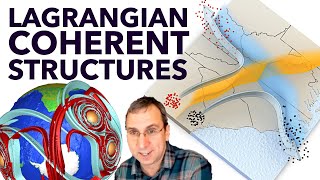
Lagrangian Coherent Structures Introduction
Explore Lagrangian coherent structures in fluid flows, revealing particle transport patterns. Learn theoretical foundations and applications in fluid mechanics, with insights on reduced order modeling.
Data-Driven Dynamical Systems with Machine Learning
Explore modern machine learning methods for modeling complex dynamical systems from data. Learn data-driven control techniques and apply them to various fields of science and engineering.

Reinforcement Learning
Explora el Aprendizaje por Refuerzo, desde métodos básicos hasta redes neuronales y aplicaciones en dinámica de fluidos y control, en esta serie de 3.5 horas por Steve Brunton.
Open Flow Channel GATE Civil Engineering
Comprehensive exploration of open flow channel concepts for GATE/ESE Civil Engineering, covering classifications, geometry, hydraulics, transitions, varied flows, and hydraulic jumps.
Physics for NEET 2021-22
Comprehensive physics preparation for NEET exam, covering mechanics, electromagnetism, and more. Includes lectures, problem-solving sessions, and practice tests to build conceptual understanding and exam readiness.
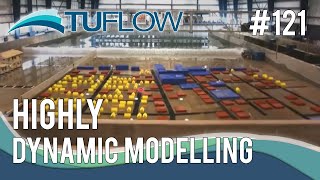
Tsunami and Dam Failure and Non-Newtonian Modelling
Explore advanced hydraulic modelling techniques for tsunamis, dam failures, and non-Newtonian flows. Learn to accurately simulate extreme inundation events using benchmarked methods and real-world case studies.
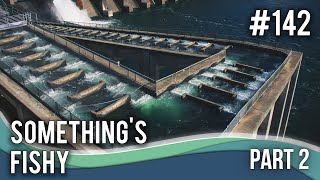
Something's Fishy
Explore fish passage hydraulics for Australian species, covering design considerations, innovative upgrades, and modern modeling techniques to promote effective fish migration in waterways.
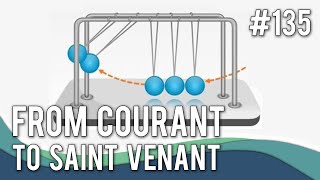
From Courant to Saint Venant
Explore the foundations of hydraulic modeling, from conservation principles to Saint-Venant equations, with real-world analogies and expert insights on key concepts like the Courant Number and solution methods.
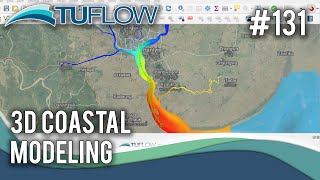
3D Coastal Modelling
Explore 3D coastal modelling approaches, including ocean circulation, model setup, result visualization, and real-world challenges. Learn to extend 2D models to 3D for comprehensive nearshore hydrodynamic analysis.
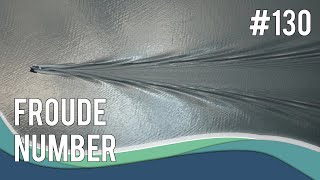
Froude, Dude!
Explore the Froude Number's principles and applications in hydraulic design, from naval architecture to static structures, covering subcritical and supercritical flow concepts.
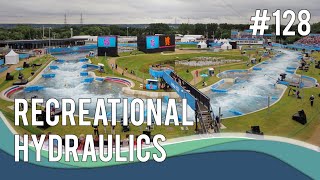
Recreational Hydraulics - Rafting, Wave Pools, & Water Slides
Explore the exciting world of recreational hydraulics, from Olympic whitewater courses to wave pools and waterslides. Learn how engineers apply fluid dynamics principles to create thrilling aquatic experiences.
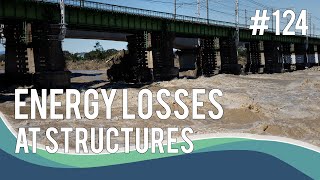
Energy Losses at Structures
Explore energy losses in water structures, from form losses to modeling approaches. Learn about constrictions, piers, bridge decks, and industry-standard techniques for understanding and mitigating hydraulic energy dissipation.