Self-Instruct Fine-Tuning of Large Language Models - Introduction to Alpaca
Master self-instruct fine-tuning techniques for LLMs, focusing on synthetic data generation using ChatGPT/GPT-4 to enhance model performance in specific tasks like summarization and translation.
Fine-Tuning Code Language Models - A Practical Guide
Master the process of fine-tuning Code LLMs using instruction datasets, from environment setup to implementation, with hands-on demonstrations using StarCoder and practical GPU requirements guidance.
Challenges and Opportunities Building LLM-Powered Applications
Explore end-to-end architecture for LLM-powered applications, covering design patterns, open-source tools, fine-tuning techniques, and guardrails using a knowledge management example.
What We Learned from 570K ChatGPT Interaction Logs In The Wild
Explore insights from 570K ChatGPT conversations, revealing diverse user prompts and potential toxic use-cases. Learn about fine-tuning instruction-following models using this rich dataset.
Stable Diffusion DreamBooth Tutorial Using Automatic1111 Web UI - Ultra Detailed
Comprehensive guide to Stable Diffusion DreamBooth: installation, training, fine-tuning, and advanced techniques for creating high-quality AI-generated images with custom subjects and styles.
Learning to Act by Watching Unlabeled Online Videos - Paper Explained
Exploring OpenAI's Video PreTraining for Minecraft: leveraging unlabeled gameplay footage to create an AI agent capable of complex tasks, including crafting a diamond pickaxe.
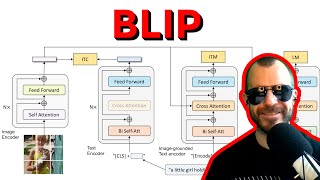
BLIP- Bootstrapping Language-Image Pre-Training for Unified Vision-Language Understanding and Generation
BLIP: A versatile vision-language pre-training framework that excels in both understanding and generation tasks. Utilizes bootstrapping to improve noisy web data, achieving state-of-the-art results across various vision-language tasks.
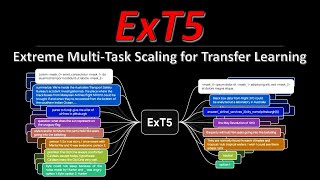
Towards Extreme Multi-Task Scaling for Transfer Learning
Explores ExT5, an advanced NLP model pre-trained on 107 diverse tasks. Analyzes multi-task scaling benefits, task co-training effects, and demonstrates ExT5's superior performance across various NLP benchmarks.
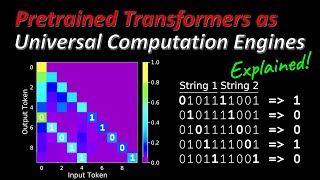
Pretrained Transformers as Universal Computation Engines
Explore how pretrained language transformers can be fine-tuned for diverse tasks like vision and protein folding, with minimal parameter adjustments, demonstrating their potential as universal computation engines.
GPT3 and Finetuning the Core Objective Functions - A Deep Dive
Explore GPT-3's core functions, AI safety concerns, and strategies for increasing prosperity and understanding. Delve into generating training data, creating machine conscience, and the challenges of superintelligence.
How to Build a Q&A AI in Python - Open-Domain Question-Answering
Learn to build an open-domain question-answering AI in Python, covering retriever training, fine-tuning, evaluation, vector database setup, and querying techniques for natural language interfaces.
The Future of Natural Language Processing
Explore transfer learning in NLP, covering model efficiency, generalization, fine-tuning, and inductive biases. Gain insights into current trends and future directions from HuggingFace's science lead.
Fine Tuning LLM -OpenAI GPT- with Custom Data in Python
Learn to fine-tune OpenAI GPT models with custom data using LlamaIndex in Python. Explore concepts, see a Gradio UI demo, and follow a coding walkthrough for Q&A and summarization tasks.
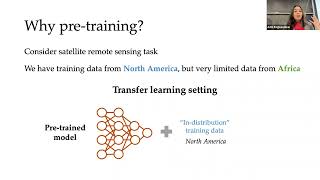
CMU Advanced NLP: How to Use Pre-Trained Models
Explore advanced techniques for leveraging pre-trained models in NLP, including fine-tuning, linear probing, and in-context learning. Gain insights into empirical observations and mental models for effective implementation.

LORA Training in Stable Diffusion - Less Than 7GB VRAM
Learn to train LORA weights for Stable Diffusion using less than 7GB VRAM. Master fine-tuning techniques, use the kohya ss GUI, and implement LORA weights in your AI image generation projects.
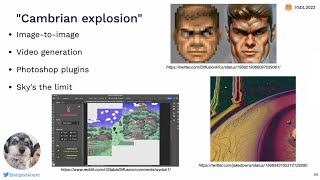
Foundation Models - FSDL 2022
Explore Transformers, Large Language Models, prompt engineering, and innovative applications like CLIP and image generation in this comprehensive overview of foundation models.
Stable Diffusion 2.0 Fine-Tuning with DreamBooth on Free Colab
Fine-tune Stable Diffusion 2.0 with DreamBooth on free Google Colab. Create custom AI avatars and profile pictures. Learn data collection, processing, model training, inference, and conversion for Automatic1111 compatibility.
Enabling LLM-Powered Applications with Harrison Chase of LangChain
Explore LangChain's mission to simplify LLM-powered app creation with CEO Harrison Chase. Discover its features, growth, community, use cases, and future predictions for AI development.
Big Transfer - General Visual Representation Learning
Explore pre-trained ResNet for visual tasks, learning about large model pre-training and effective fine-tuning techniques for improved performance across diverse datasets.

Bringing LLM to the Enterprise - Training From Scratch or Just Fine-Tune With Cerebras-GPT
Learn to leverage Cerebras-GPT for enterprise LLM deployment, covering training from scratch, fine-tuning, and cost considerations. Explore open-source frameworks and compute-optimal models for efficient implementation.
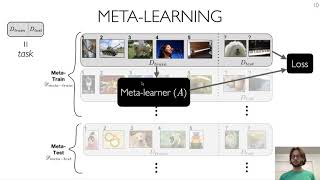
Transfer Learning Larochelle
Transfer learning techniques for deep learning, including few-shot learning, fine-tuning, and universal representations, with a focus on addressing limited labeled data challenges.