Fine-Tuning Foundation Models for Document Classification with Azure ML - LLama2
Fine-tune LLM for document classification using Azure ML Studio's Python SDK. Learn to adapt Llama2, Mistral, or other models for text classification tasks.
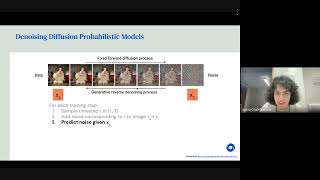
Differentially Private Diffusion Models Generate Useful Synthetic Images
Explore privacy-preserving synthetic image generation using diffusion models. Learn techniques for fine-tuning pre-trained models to achieve state-of-the-art results on CIFAR-10 and Camelyon17 datasets.
Fine-tuning LLMs Without Maxing Out Your GPU - LoRA for Parameter-Efficient Training
Discover parameter-efficient fine-tuning of large language models using LoRA. Learn to classify consumer finance complaints with RoBERTa on Google Colab's V100 GPU.
Embeddings vs Fine-Tuning - Part 1: Understanding and Implementing Embeddings
Explore embedding techniques for language models, including creation, implementation, and performance evaluation. Learn key concepts like semantic search, cosine similarity, and data preparation for optimal results.
Embeddings vs Fine-Tuning - Supervised Fine-tuning - Part 2
Explore supervised fine-tuning techniques for language models. Learn to convert datasets, implement in Google Colab, and compare chat vs base models. Gain practical tips and access to essential scripts.
Advanced Fine-Tuning Techniques for Long Context Summarization
Explore advanced fine-tuning techniques for long context summarization, including increasing rope_theta, training norm and embed, and optimizing prompt-response training for improved model performance.
Fine-tuning Optimizations - DoRA, NEFT, LoRA+, and Unsloth
Explore advanced fine-tuning techniques like DoRA, NEFT, LoRA+, and Unsloth to optimize language models. Learn implementation, comparisons, and practical applications through code examples and demonstrations.
Fine-tuning LLMs - Every Step Explained for Memorization Tasks
Explore LLM fine-tuning techniques, from dataset generation to hyperparameter optimization. Learn to overcome challenges like the reversal curse and optimize model performance for specific tasks.
Combined Preference and Supervised Fine-Tuning with ORPO
Explore combined preference and supervised fine-tuning with ORPO. Learn about fine-tuning methods, loss functions, and performance improvements. Includes practical demos and evaluations.
Full Fine-Tuning vs LoRA and QLoRA - Comparison and Best Practices
Explore full fine-tuning vs (Q)LoRA techniques, comparing VRAM usage, training time, and quality. Learn parameter selection, tips for QLoRA, and step-by-step guidance for TinyLlama and Mistral 7B fine-tuning.
Tiny Text and Vision Models - Fine-Tuning and API Setup
Explore fine-tuning and API setup for tiny text and vision models, covering multi-modal architectures, LoRA adapters, and deployment strategies for custom APIs.
Very Few Parameter Fine-Tuning with ReFT and LoRA
Explore advanced fine-tuning techniques ReFT and LoRA for efficient parameter optimization in transformer models. Learn implementation, comparison, and practical tips for improved model performance.
Fine-tuning Llama 3 on Wikipedia Datasets for Low-Resource Languages
Learn to fine-tune Llama 3 on Wikipedia datasets for low-resource languages. Master dataset creation, LoRA setup, blending techniques, and parameter optimization for improved language model performance.
Fine-Tuning a Diffusion Model with Your Photos
Learn to fine-tune a diffusion model using your own photos. Explore Flux Schnell, set up GPU environments, create datasets, and understand the intricacies of diffusion models and their architectures.

Training LoRA with SimpleTuner and AI-Toolkit for FLUX.1 - Art Style and Concept Development
Comprehensive guide on training LoRA models for FLUX.1 [dev], covering techniques, experiments, and analysis for art style and concept generation in Stable Diffusion.
Building GenAI-Powered Solutions Using Mosaic ML, DBRX LLM and LLMOps
Explore LLMs and Generative AI's potential to revolutionize industries. Learn about Databricks Mosaic ML Training Platform, DBRX models, and LLMOps for streamlined AI adoption and innovation in healthcare and insurance.
AutoFeedback - Scaling Human Feedback with Custom Evaluation Models
Discover how AutoFeedback combines human and model-based evaluation to improve LLM output assessment, reducing costs and enhancing efficiency while maintaining accuracy and transparency.
From Generic to Genius - Fine-Tuning LLMs with Precision and Speed
Discover how to fine-tune LLMs for your business needs, leveraging Databricks' Mosaic AI capabilities to create personalized models with improved speed, cost-efficiency, and data privacy.
Empowering Generative AI with Databricks and AMD
Explore GPU hardware's role in generative AI, AMD's advancements, and Databricks' solutions for scalable model training, deployment, and governance while ensuring data privacy and cost-effectiveness.
Bringing Text-to-SQL to Business Intelligence Production in Large Enterprises
Explore Text-to-SQL implementation in large enterprises, focusing on model selection, fine-tuning, and performance optimization for accurate natural language querying in business intelligence contexts.
Practical LLM Fine-Tuning for Semantic Search
Explore fine-tuning LLMs for semantic search in specialized domains. Learn data requirements, training techniques, and practical insights to enhance search capabilities using open-source tools.