Fine-Tuning Open Source Models for AI Agents
Optimize open source LLMs for AI agents: Learn best practices for fine-tuning models in retrieval, chat, planning, and function calling to create domain-specific assistants and application copilots.
Fine-Tuning and Deploying LLaMA 3.1 on Hugging Face and Ollama
Step-by-step guide to fine-tune LLaMA 3.1 with custom data, save on Hugging Face and Ollama, and deploy for enhanced AI performance tailored to specific business needs.

VirTex- Learning Visual Representations from Textual Annotations
Explore VirTex, a novel approach to visual representation learning using high-quality image captions, outperforming traditional methods with fewer images for various computer vision tasks.
Tune and Deploy Gemini with Vertex AI and Ground with Cloud Databases
Master Gemini Pro's lifecycle: train on custom datasets, fine-tune, deploy scalable endpoints, evaluate models, and ground with Google Cloud databases for optimal AI performance.
LoRA Explained - Efficient Fine-Tuning of Large Language Models
Explore LoRA, a technique for efficient fine-tuning of large language models. Learn about its low-rank matrix decompositions and reduced trainable parameters for task-specific adaptations.
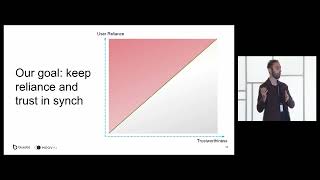
Safely Managing Generative AI with Humans in the Loop
Explore design patterns for human-in-the-loop approaches to ensure safe and trustworthy generative AI systems. Examine real-world case studies and learn valuable lessons for responsible AI implementation.
How to Fine-Tune Mamba for Question Answering
Dive into practical Mamba language model fine-tuning for question-answering tasks, from basic prompt engineering to complete model training implementation.
Fine-Tuning Self-Rewarding Language Models with Mistral 7B
Dive into implementing Meta's Self-Rewarding Language Model with Mistral 7B, covering fine-tuning techniques, data preparation, prompt generation, and practical demonstrations.
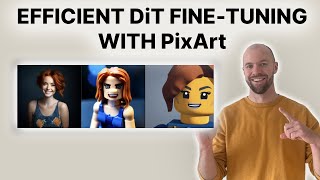
Efficient Text-to-Image Generation with PixART-α DiT Fine-Tuning
Dive into efficient text-to-image generation using PixART-α, exploring fine-tuning techniques, design principles, and practical implementation steps for diffusion transformers.
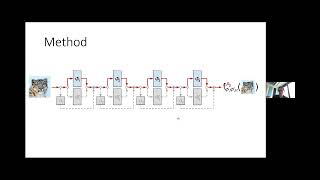
Neural Fine-Tuning Search for Few-Shot Learning
Explore advanced neural architecture search techniques for optimizing few-shot learning adaptation strategies, focusing on meta-training and meta-testing trade-offs in multi-domain contexts.
How to Train GPT-3 with Your Own Dataset
Discover practical techniques for customizing GPT-3 through dataset training, exploring real-world applications and methods to enhance model performance for specific use cases.
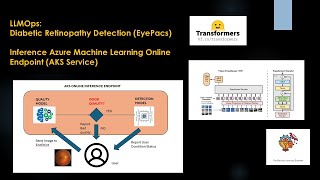
Fine-Tuning Vision Transformer for Retina Image Classification - Inference on Azure ML AKS
Fine-tune a Vision Transformer for diabetic retinopathy detection using EyeQ dataset and deploy on Azure ML with AKS for managed inference.
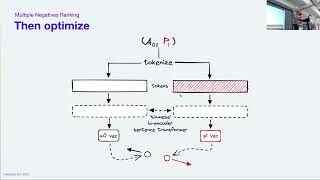
Fine-tuning Methods for Vector Search in Semantic Search and QA Applications
Explore fine-tuning methods for vector search in semantic search and QA applications. Learn when to use different techniques based on data availability and use cases.
Comparing AI-Augmented Information Retrieval Strategies
Explore AI-powered information retrieval strategies with Women of Search experts. Analyze fine-tuning ML models, RAG pipelines, and reranking methods for optimal use in search applications.
Making GenAI Safe, Trustworthy and Fit for Purpose with Auto Alignment
Enhance fairness, robustness, and safety of generative AI through alignment templating. Learn to measure model performance, improve with minimal human intervention, and adapt for specific use cases.

3 Ways to Make a Custom AI Assistant: RAG, Tools, and Fine-tuning
Explore three methods to create custom AI assistants using OpenAI: GPTs, Assistants API, and Fine-tuning API. Learn to build a YouTube comment responder through practical demonstrations.
QLoRA - How to Fine-tune an LLM on a Single GPU with Python Code
Learn to fine-tune large language models on a single GPU using QLoRA. Explore quantization techniques, LoRA, and practical implementation with Python code for custom YouTube comment responses.

The Janus Interface - Privacy Risks in Fine-Tuning Large Language Models
Explore how fine-tuning in large language models can amplify privacy risks, focusing on the novel Janus attack that recovers forgotten personal information from pre-training data.
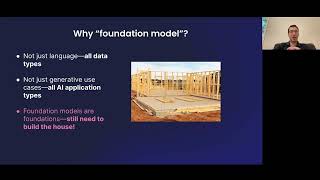
Data-Centric Development is Key to Production-Level AI
Explore data-centric AI development approaches for adapting foundation models to complex use cases, focusing on techniques for pre-training, instruction-tuning, and task-specific fine-tuning.
Fine-Tuning Large Language Models Faster Using Bonito for Task-Specific Training Data Generation
Accelerate LLM fine-tuning with Bonito: Generate task-specific training data for faster instruction tuning and improved zero-shot task adaptation on specialized, private datasets.
How to Fine-Tune LLMs for Specialized Enterprise Tasks - Curating Data and Emerging Methods
Explore fine-tuning methods for LLMs, learn to curate high-quality training data efficiently, and understand evaluation techniques for accurate enterprise deployment of specialized language models.