
Balancing Speed and Accuracy in Model Development
Explore strategies for optimizing machine learning model development, balancing speed and accuracy. Learn to assess business objectives, improve data quality, and select efficient features and models.
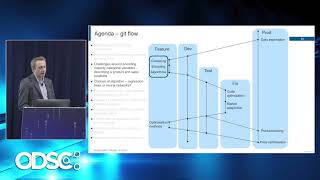
Price Optimisation - From Exploration to Productionising - David Adey, PhD & Alexey Drozdetskiy, PhD
Explore dynamic price optimization using machine learning, from data analysis to cloud deployment. Learn about feature encoding, model selection, efficiency improvements, and practical implementation strategies for revenue growth.
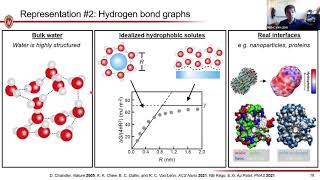
MD Simulations and Machine Learning to Quantify Interfacial Hydrophobicity
Explore molecular dynamics simulations and machine learning techniques to analyze interfacial hydrophobicity, focusing on efficient data analysis methods and topological approaches for complex chemical systems.

Getting ML Right in a Complex Data World
Explore efficient ML experimentation using data versioning tools to reproduce iterations, capture training data versions, and build intuitive infrastructure without duplicating resources.

Feature Selection in the Corrected KDD Dataset
Explore feature selection techniques for the Corrected KDD dataset with Dr. Zargari, enhancing understanding of information security and data analysis in cybersecurity applications.
Introduction to Machine Learning - Lecture 2
Explore key machine learning concepts and their applications in healthcare, bridging the gap between computational modeling and clinical problem-solving.
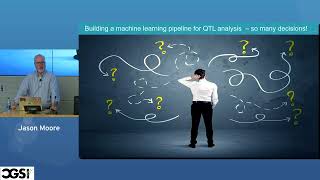
Automated Quantitative Trait Locus Analysis - CGSI 2023
Explore automated quantitative trait locus analysis using machine learning. Learn about genetic architecture, feature engineering, and Pareto optimization for biodata mining and complex trait analysis.

ML Efficiency for Large Models - From Data Efficiency to Faster Transformers
Explore algorithmic solutions for efficient scaling of large ML models, covering data efficiency, model efficiency, and faster attention mechanisms for improved training and inference.

Removing Spurious Features Can Hurt Accuracy and Affect Groups Disproportionately
Explore the impact of removing spurious features on model accuracy and group fairness in machine learning, examining potential unintended consequences and ethical implications.

Nowhere to Hide - How HW Telemetry and ML Can Make Life Tough for Exploits
Explore how CPU telemetry and machine learning can detect concealed malicious code, with insights on feature selection, overhead management, and platform-specific design for effective threat detection.
Applying Machine Learning to User Behavior Anomaly Analysis
Explore advanced machine learning techniques for user behavior anomaly detection in cybersecurity, covering feature selection, data quality, behavioral whitelisting, and neural network predictions.
Know Thy Operator
Explore industrial process data analysis, machine learning techniques, and behavior-based event detection systems for improved facility monitoring and state-of-health assessment.
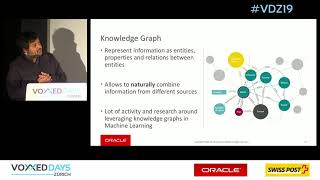
Graph-based ML for Automated Health Care Services
Leveraging graph-based machine learning and healthcare data to predict patient diagnoses in critical care units, showcasing the potential of automated healthcare through advanced ML techniques.
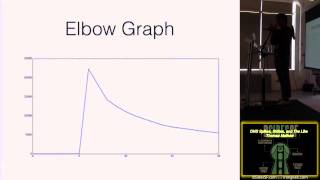
DNS Spikes, Strikes, and The Like
Explore DNS data analysis techniques, including passive DNS, reputation assessment, and unsupervised learning, to detect and mitigate domain shadowing and other malicious activities.

Good Features Beat Algorithms
Explore feature engineering and selection techniques to improve machine learning model accuracy. Learn how to develop an ensemble for measuring feature importance in real-world datasets.
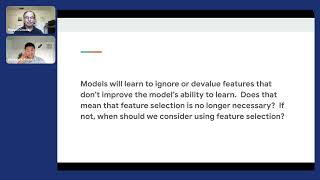
Practical Paths to Data-Centric AI
Explore data-centric AI with Google experts, covering data quality, feature selection, and large language model deployment. Learn about synthetic data, weak supervision, and data governance.
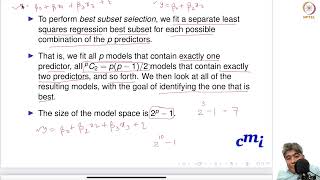
Feature Selection and Variable Selection Techniques
Explore techniques for selecting optimal variables in data analysis, including best subset, forward, and backward selection methods.

Dimensionality Reduction and Segmentation with Decision Trees - Python Code
Explore advanced decision tree applications for dimensionality reduction and predictor segmentation, with Python code examples for breast cancer detection and sepsis risk analysis.
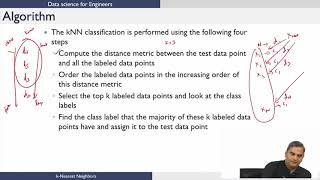
K-Nearest Neighbors (KNN) Algorithm - Introduction and Applications
Explore k-Nearest Neighbors algorithm: concepts, applications, assumptions, implementation, and optimization techniques for effective machine learning.
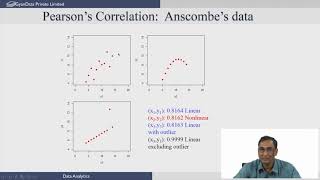
Predictive Modelling
Explore predictive modeling techniques and applications for data-driven decision-making and forecasting in various domains.

Feature Selection for Machine Learning
Explore feature selection methods for machine learning, including filter, wrapper, and embedded approaches. Learn to choose the most predictive variables for production-ready models.