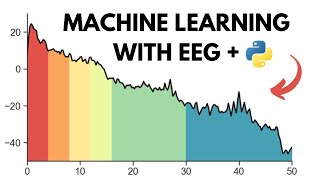
Machine Learning with EEG Time-Series - Easy Python Project - Part 0
Learn to classify EEG data between awake and asleep states using Python and random forest. Covers data loading, preprocessing, feature engineering, and machine learning implementation.
FeatureSmith- Learning to Detect Malware by Mining the Security Literature - USENIX Enigma 2017
Automated feature engineering system for malware detection using AI to synthesize knowledge from research papers, achieving comparable performance to manual methods and suggesting new informative features.

FeatureSmith - Automatically Engineering Features for Malware Detection by Mining the Security Literature
Explore automated feature engineering for malware detection using security literature mining, enhancing detection accuracy and providing explainable results.

Reinforcement Learning in Action - Creating Arena Battle AI for Blade & Soul
Discover how NCSOFT created pro-level AI agents for arena battles in Blade & Soul using reinforcement learning, addressing complexity and real-time response challenges.
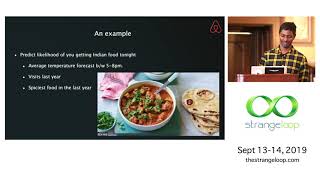
Zipline - A Declarative Feature Engineering Library
Explore Zipline, Airbnb's declarative feature engineering library for ML, reducing data preparation time from months to days and enabling efficient point-in-time correct feature generation.
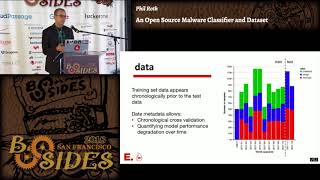
An Open Source Malware Classifier and Dataset
Explore open-source malware classification using machine learning, featuring a diverse Windows PE file dataset, pre-trained models, and reproducible code for enhanced static malware detection research.
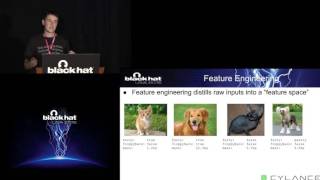
Deep Learning on Disassembly
Explore deep learning techniques applied to disassembly for malware identification, covering the process from raw binaries to model training and evaluation against active malware feeds.
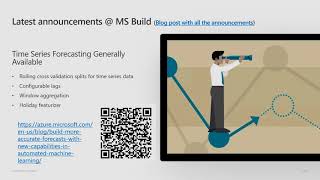
Overview of Automated ML June 2019
Explore automated machine learning for accelerating AI development, with demos on Azure ML Service and Databricks, focusing on Python implementation and recent Azure technologies.

Scaling Machine Learning with Spark
Learn to build scalable machine learning solutions with Apache Spark. Explore distributed computing, MLflow, feature engineering, and integrating Spark with deep learning frameworks like TensorFlow and PyTorch.

Scaling Machine Learning with Spark
Learn to build scalable machine learning solutions using Apache Spark, MLlib, MLflow, TensorFlow, and PyTorch. Explore distributed computing concepts, manage ML lifecycles, and combine Spark with deep learning for end-to-end workflows.
Auto Feature Engineering - Rapid Feature Harvesting Using DFS & Data Engineering Techniques
Explore rapid feature harvesting for machine learning using Deep Feature Synthesis and data engineering techniques to accelerate model development and shorten time-to-market.
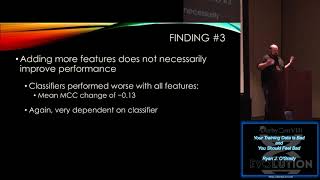
Stable 27 - Your Training Data is Bad and You Should Feel Bad
Explore the impact of poor training data on machine learning models and discover strategies for improving data quality and model performance.
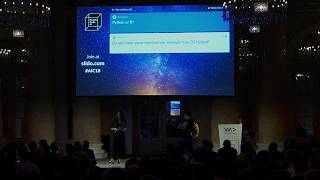
Data Science for Business - Repeatable and Objective Data Science Process
Explore the Team Data Science Process (TDSP) for efficient predictive analytics and AI integration in business processes, focusing on agile methodology and practical implementation strategies.
Feature Engineering is for Everyone
Explore feature engineering techniques for data visualization, automation, and machine learning. Learn to create and select features from various data types using encodings, vectorization, and date manipulation.
Machine Learning - Power of Ensembles
Explore ensemble methods in machine learning, combining diverse models for improved accuracy. Learn bagging, boosting, and stacking techniques with real-world examples and practical insights.
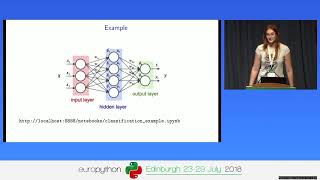
Data Is Not Flat
Explore feature engineering techniques for low-dimensional data to enhance model performance, with a focus on neural network classification and practical examples.
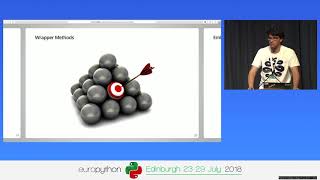
Good Features Beat Algorithms
Explore feature engineering and selection techniques to improve machine learning model accuracy. Learn how to develop an ensemble for measuring feature importance in real-world datasets.
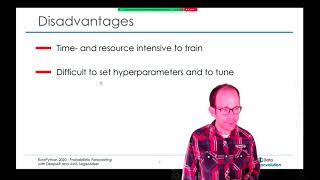
Probabilistic Forecasting with DeepAR and AWS SageMaker
Explore probabilistic forecasting with DeepAR, combining deep learning and time series analysis for accurate predictions with uncertainty estimates across multiple related datasets.
Predicting Urban Heat Islands in Calgary
Learn to predict urban heat islands using satellite imagery and geospatial Python libraries. Explore spatial regression methods, data processing, and visualization techniques for sustainable urban planning.
I Have to Confess, I Still Love Pandas
Discover the power of Pandas for data science workflows. Learn advantages, efficient usage techniques, and fundamental concepts to enhance your data manipulation skills.
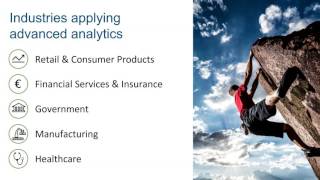
Advanced R Analytics in SS2016 Using R Tools for Visual Studio
Explore advanced R analytics using R Tools for Visual Studio, covering predictive modeling, data access, parallelization, and integration with SQL Server for improved performance and efficiency.