Deep Dive: The Replication Protocol in Apache Kafka
Explore Kafka's replication protocol, its role in data durability and high throughput, and learn about KRaft controllers for quorum-based replication in distributed systems.
Chaos Engineering for SQL Server
Explore Chaos Engineering concepts and methodologies to identify potential weaknesses in SQL Server, enhancing system resilience and reliability.

Developing with Quarkus, Microprofile and OpenTelemetry - Observability Best Practices
Explore observability in Quarkus applications: learn Microprofile Health, Metrics, Fault Tolerance, and tracing. Master instrumenting, business metrics, and Micrometer for enhanced application monitoring.
The Nuts and Bolts of Kafka Streams - An Architectural Deep Dive
Explore Kafka Streams' internal architecture for efficient application deployment and tuning. Learn threading models, partition assignment, and key configurations to optimize performance and scalability.
Workflow Engines and Event Streaming Brokers - Can They Work Together?
Explore tradeoffs between workflow engines and event streaming brokers for microservices communication. Compare Apache Kafka and Temporal, examining their strengths and implementation challenges in various use cases.

Real-Time Streaming Using Apache Kafka
Explore Apache Kafka streams for building scalable, fault-tolerant streaming applications with parallel processing capabilities.

RAFT: Distributed Consensus Protocol for Highly Available Systems
Investigate RAFT protocol's role in achieving consensus for highly available systems and simplifying distributed consensus understanding.

RAFT: Distributed Consensus Protocol for Highly Available Systems
Investigate RAFT protocol's role in achieving consensus for highly available systems and simplifying distributed consensus understanding.

.NET Resiliency Framework - Polly
Implement robust fault-tolerant .NET applications using Polly's resilience and fault-handling policies for graceful error management and improved reliability.

Chaos Mesh: Introducing Chaos in Kubernetes
Explore fault simulation in Kubernetes with Chaos Mesh, orchestrating scenarios to uncover potential system issues across development, testing, and production.
How Building a Portable Escape Room Made Me a Better Microservices Developer
Discover how creating a portable IoT escape room enhances microservice development skills. Explore parallels in puzzle design and architecture for resilient, scalable systems using DDD principles.
Lessons Learned While Running ML Models in Harsh Environments
Explore challenges and solutions for deploying ML models in critical financial environments. Gain insights on handling data, scale, ethics, security, and compliance issues in fraud detection systems.

Build Reliable Systems with Chaos Engineering - MLOps Podcast #237
Explore chaos engineering to build reliable systems under unpredictable conditions. Learn benefits, trends, and integration with ML systems for improved resilience and observability.
Simplifying Cloud Native Chaos Engineering: A Deep Dive into Chaos Mesh
Explore Chaos Mesh for cloud native chaos engineering, enhancing application reliability and resilience. Learn key features, best practices, and real-world examples to improve system stability.
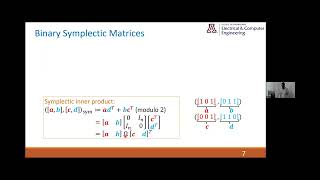
Tailoring Fault-Tolerance to Quantum Algorithms
Explore tailored fault-tolerance in quantum computing, focusing on Trotter circuits for quantum simulation using the [[n,n−2,2]] error-detecting code family and flag gadgets.
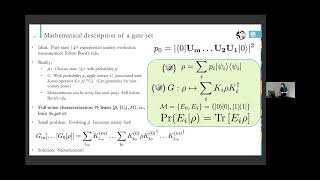
QCVV: Making Quantum Computers Less Broken
Explore quantum characterization, verification, and validation (QCVV) techniques to assess and improve quantum computer performance, including gate set tomography and robust phase estimation.
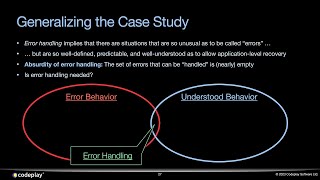
The Absurdity of Error Handling: Finding a Purpose for Errors in Safety-Critical SYCL
Explore error handling challenges in safety-critical SYCL, examining the concept of safety and rethinking error scenarios in C++ software development for critical systems.
Best Practices for Productionizing Distributed Training with Ray Train
Explore fault-tolerant distributed training techniques using Ray Train, covering experiment restoration, node failure recovery, cloud storage snapshots, and large model checkpointing for efficient AI workloads.
Detecting and Overcoming GPU Failures During ML Training
Explore GPU failure challenges in ML training, learn proactive detection methods, and discover fault-tolerant distributed training principles to mitigate issues and optimize performance.

Lies, Damned Lies and Timeouts Engineering
Explore the complexities of timeouts in distributed systems with Twitter's Principal Software Engineer. Learn to interpret and utilize timeouts effectively for robust system design.
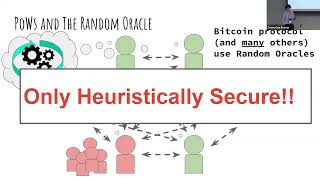
Consensus Protocols - Crypto 2024
Explore cutting-edge consensus protocols in cryptography, featuring expert presentations and discussions on the latest advancements in distributed systems and blockchain technology.