Julia's Use in Nuclear Physics Data Analysis: A Case Study
Explore Julia's potential in nuclear physics data analysis, combining high performance with dynamic capabilities for efficient processing and visualization of large datasets.
How to Get the Most Out of Databricks Notebooks
Discover powerful features in Databricks Notebooks to enhance collaboration, boost productivity, and elevate exploratory data analysis for data and AI teams.
Quality Assurance and Machine Learning Model Validation
Explore key steps in machine learning model validation and quality assurance, from bias detection to data leak prevention, enhancing your MLOps process.
Having Fun with Python: Originating and Processing Data for Innovative Visualization and Analytics
Extract and process data with Python to answer quirky questions and create innovative visualizations for data-driven insights.
What is Machine Learning - Lecture 2
Explore machine learning fundamentals, data preprocessing, and Python basics for energy and petroleum applications.
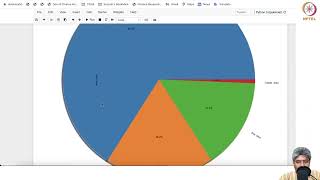
Hands-on Python: Analysis and Prediction of Bangalore House Price Data
Analyze and predict Bangalore house prices using Python, gaining practical data analysis skills for real estate market insights.
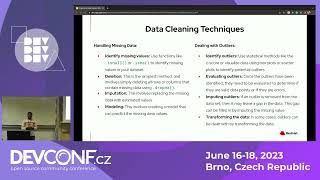
EDA Techniques for Data Analysis
Explore powerful Exploratory Data Analysis techniques for cleaning, visualizing, and understanding datasets to drive insights and inform decision-making in business contexts.
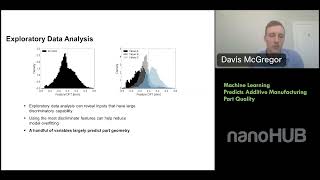
Machine Learning for Predicting Additive Manufacturing Part Quality - Tutorial on Support Vector Regression
Learn to predict additive manufacturing part quality using support vector regression. Explore data analysis, hyperparameter tuning, and cross-validation techniques for machine learning in 3D printing applications.
Plotly Tips - Exploratory Data Analysis
Explore data visualization techniques using Plotly library for tips dataset analysis. Learn to create various chart types and gain insights through hands-on exploratory data analysis.

Friction to Flow | Siva Hemanth Kolla | TEDxVishnu Institute
AI should be our collaborative partner, not just a productivity tool. Through my work in enterprise AI, I've witnessed talented professionals drowning in information overload—spending hours searching for answers instead of solving real problems. By combining Large Language Models with Retrieval Augm

When AI Becomes the Underwriter | Avinash Reddy Aitha | TEDxVishnu Institute
Insurance is supposed to protect people, yet outdated systems often burden those they're meant to serve. I'm working on Decision Intelligence AI that doesn't just process data but comprehends, reasons, and acts responsibly in insurance. From reducing claims processing from weeks to hours, to real-ti

¿Puede la IA entender el mundo como la ciencia? | Gabriel Mindlin | TEDxRiodelaPlata
Desde Pitágoras hasta hoy, la ciencia busca patrones para convertirlos en reglas y entender el mundo. Gabriel explora cómo la inteligencia artificial pone en tensión esa relación entre comprender y predecir y lo que eso implica para nuestra idea de conocimiento científico. Es físico, profesor titula

Black Hat USA 2025
Black Hat USA 2025