
Bringing Light to Risks Lurking in the Black Boxes of AI Models
Explore hidden risks in AI models and learn strategies to illuminate potential dangers lurking within these complex systems.

Can You Trust Your AI?
Explore Explainable AI and its role in fostering trust in AI systems. Learn about the TrustyAI initiative, different types of explanations, and the importance of transparency in AI decision-making.

Explainable Machine Learning in Finance - When Machines Surpass Human Intelligence
Explore causal and counterfactual explainability in AI/ML models for finance, addressing challenges when machines surpass human intelligence in complex, high-risk applications.
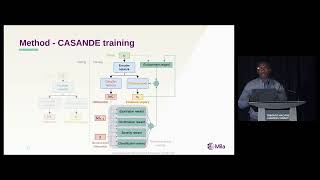
Towards Trustworthy Automatic Diagnosis Systems by Emulating Doctors' Reasoning with Deep Reinforcement Learning
Explore deep reinforcement learning for automated medical diagnosis, emulating doctors' reasoning to generate differential diagnoses, prioritize severe pathologies, and enhance system trustworthiness.

Stop Explaining Black Box ML Models for High Stakes Decisions and Use Interpretable Models
Explore the societal impact of black box ML models in high-stakes decisions and discover the benefits of using interpretable models for transparent decision-making.

Minimize Risk and Accelerate MLOps with ML Monitoring and Explainability
Discover strategies to minimize risk and accelerate MLOps through ML monitoring and explainability. Learn to efficiently monitor, troubleshoot, and document ML models for improved performance and compliance.

Advances in Algorithmic Recourse - Ensuring Causal Consistency, Fairness, and Robustness
Explore cutting-edge approaches to algorithmic fairness and transparency through causal inference methods, focusing on bias correction and ethical AI applications in healthcare and finance.

Multi-agent AI Systems: From Simple Rules to Complex Problem Solving
Explore how multi-agent AI systems offer a practical alternative to large-scale models, enabling flexible, explainable, and efficient solutions for real-world problems through distributed intelligence.

Digital Data-Driven Financial Advisory: From Prototypes to Production in Banking
Explore the evolution of data science in banking, from prototype to production, focusing on trust-building, real-time monitoring, and practical solutions for data-driven financial advisory services.
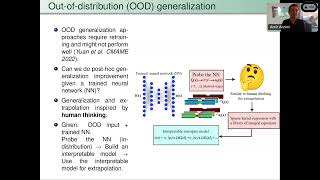
DDPS - A Flexible and Generalizable XAI Framework for Scientific Deep Learning
Explore a flexible XAI framework for scientific deep learning, enhancing interpretability and generalization in physics-based modeling through integral equations and sparse regression techniques.

The Subtle Art of Fixing Silently Failing ML Models
Discover techniques to identify, assess, and proactively fix silent ML model failures. Learn to build reliable, compliant solutions resistant to performance degradation using AI Observability tools.
Explaining Explainability: An Interdisciplinary Approach to Communicate Machine Learning Outcomes
Explore an interdisciplinary approach to communicating machine learning outcomes through explainable AI, combining technical interpretations with socio-technical perspectives for enhanced understanding.

Explainable AI Techniques Towards Clinical Adoption in Medical Imaging
Explore XAI techniques for medical imaging, focusing on post-hoc and ad-hoc methods, disease-specific applications, and categorization schemes for clinical adoption.

The Search for Transparency and Accountability in the Age of AI - RAI and XAI as Essential Tools
Explore responsible AI and explainable AI as crucial tools for building ethical, transparent, and trustworthy AI systems. Uncover their synergy in addressing fairness, accountability, and interpretability challenges.
Trade-off Between Optimality and Explainability in Machine Learning Models
Explore the trade-off between model explainability and accuracy in AI/ML, focusing on counterfactual explainability and optimization challenges in high-risk applications.
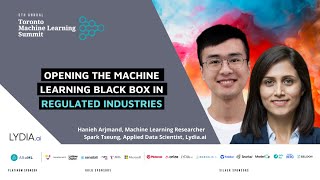
Opening the Machine Learning Black Box in Regulated Industries
Explore techniques for making machine learning models explainable and compliant in regulated industries like finance and insurance. Learn to bridge the gap between ML and regulatory requirements.

Boosting Retail Margins: Price Optimization with Machine Learning
Discover how machine learning revolutionizes price optimization in retail, boosting gross margins by 28%. Learn algorithms and techniques that led to significant revenue gains in a luxury retail experiment.

Interpretable Self-Explanatory Machine Learning Models
Explore interpretable machine learning models that are self-explanatory, focusing on making complex neural networks more transparent and understandable for critical applications.

How F.A.T. is Your ML Model Quality in the Era of Software
Explore F.A.T. (Fairness, Accountability, Transparency) properties for assessing ML model quality. Learn evaluation approaches, governance benchmarks, and bias mitigation techniques through case studies.

COVID-Net for COVID Detection and Risk Stratification via Chest Radiography
Explore COVID-Net's neural network for detecting and assessing COVID-19 risk through chest X-rays, including its rapid development and operational benefits.

How to Interpret and Explain Black Box Models
Explore popular model explanation techniques for machine learning interpretability, including LIME, SHAP, and visual analytics. Gain insights into making complex models more understandable and explainable.