
Applicable and Achievable Formal Verification
Introductory overview of formal verification techniques in industry, focusing on safety-critical systems. Explores tools, applications, and adaptability to existing infrastructures.
Refining Systems Data without Losing Fidelity
Explore strategies for efficient systems data management, including sampling and aggregation techniques, to maintain crucial information while reducing data volume and costs.
Advanced Napkin Math - Estimating System Performance from First Principles
Learn to quickly estimate system performance using base rates and napkin math, enabling informed decision-making in technical discussions and design processes without building systems first.
Control Theory for SRE
Learn to create a PID controller for autoscaling Kubernetes deployments, ensuring smooth scaling based on custom targets. Explore control theory principles and their application in SRE practices.
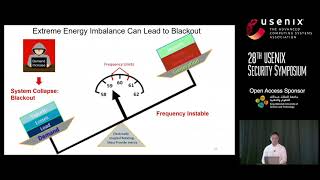
Not Everything is Dark and Gloomy - Power Grid Protections Against IoT Demand Attacks
Explores IoT demand attacks on power grids, analyzing cascading outages and system vulnerabilities. Presents findings from a large-scale North American grid study, discussing protective measures and future challenges.
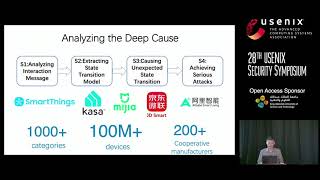
Discovering and Understanding the Security Hazards in the Interactions between IoT Devices, Mobile Apps, and Clouds on Smart Home Platforms
Exploring security vulnerabilities in smart home platforms through reverse engineering and phantom device testing, revealing unexpected state transitions and potential attacks.
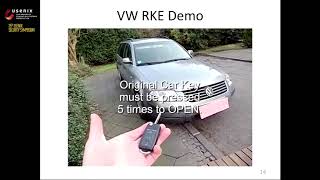
Lock It and Still Lose It - On the -In-Security of Automotive Remote Keyless Entry Systems
Unveils vulnerabilities in automotive remote keyless entry systems, demonstrating how attackers can exploit flaws to gain unauthorized access to vehicles from major manufacturers.
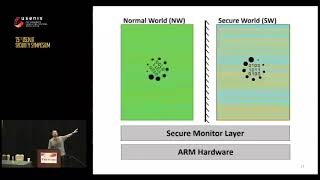
fTPM - A Software-Only Implementation of a TPM Chip
Explore software-based TPM implementation using ARM TrustZone, overcoming hardware limitations to provide robust security features for trusted computing in mobile devices.
AmphiLight - Direct Air Water Communication with Laser Light
Innovative laser-based system for high-bandwidth bidirectional air-water communication, adapting to water dynamics and offering 3D steering capabilities for improved underwater operations and coordination.
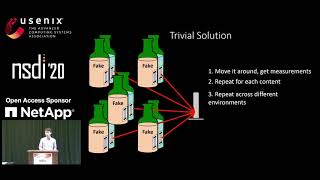
Food and Liquid Sensing in Practical Environments Using RFIDs
Innovative RF sensing system for non-invasive food and liquid identification in closed containers, achieving high accuracy across various applications and environments.

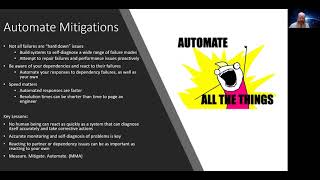
When -bin-sh Attacks - Revisiting "Automate All the Things"
Explores human factors in automation, challenges for system administrators, and strategies for coping with complex socio-technical systems. Discusses resilience, expertise development, and the ironies of automation.
Identifying Hidden Dependencies
Discover how Honeycomb improved system reliability through intentional node termination, uncovering bugs and progressing towards continuous experimentation for enhanced resilience and scalability.
Confessions of a Systems Engineer - Learning from My 20+ Years of Failure
Veteran systems engineer shares invaluable lessons from two decades of failures, offering insights on designing, running, and troubleshooting large-scale online services to help others avoid costly mistakes.
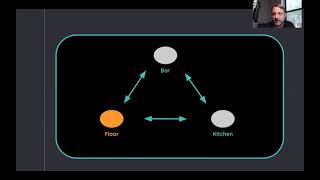
Food for Thought - What Restaurants Can Teach Us about Reliability
Explore how restaurant operations parallel computer system reliability, drawing insights from dining experiences to enhance understanding of complex system management and fault tolerance.
Beyond Goldilocks Reliability
Explore reliability engineering beyond traditional SRE practices. Learn about concrete models, underlying mechanisms, and new strategies to enhance service reliability and tackle complex challenges.
Automating Performance Tuning with Machine Learning
Explore machine learning-driven automation for optimizing Kubernetes microservices and JVM settings, enhancing performance, efficiency, and cost-effectiveness in complex tech stacks.
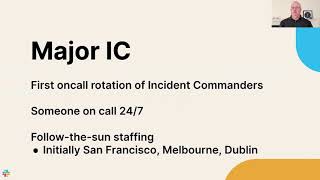
Evolution of Incident Management at Slack
Explore Slack's evolution in incident management, covering strategies for handling numerous incidents, team-wide capability building, and future directions in maintaining platform reliability.
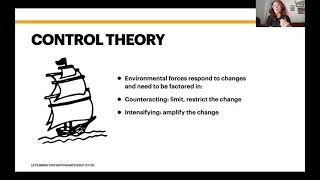
Let's Bring System Dynamics Back to CS
Explore System Dynamics for modeling feedback loops in distributed systems. Learn its history, tools, and applications to prevent outages and improve software architecture design.

Don't Follow Leaders or - All Models Are Wrong - and So Am I
Reflective analysis of SRE book's impact, addressing its strengths, weaknesses, and unresolved challenges in production engineering and reliability practices five years after publication.

Why You Should Burn Down Your Datacenter
Explore datacenter optimization challenges, integrating infrastructure management with power, space, and cooling systems. Learn about industrial controls and their limitations in this thought-provoking talk.

Kind Engineering - How to Engineer Kindness
Explore practical strategies for fostering kindness in software engineering, covering code reviews, psychological safety, feedback, and workplace honesty to create happier teams and companies.