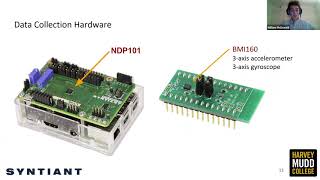
Training Neural Networks for Sensors
Overview of training neural networks for gesture recognition using accelerometer data on a low-power device. Covers data collection, augmentation, network architecture, and performance for smartwatch applications.
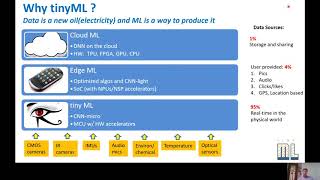
Recent Progress on TinyML Technologies and Always-On Machine Opportunities
Explore recent advancements in tinyML technologies, their implementation, and potential applications across various industries, with a focus on always-on machine learning for voice, vision, and sensing.
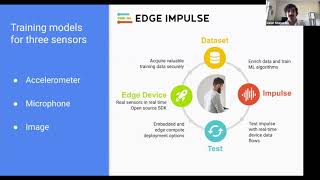
How to Train and Deploy TinyML Models for Three Common Sensor Types
Learn to train and deploy tinyML models for sensor, audio, and vision data using Edge Impulse. Explore workflows, best practices, and optimization techniques for embedded machine learning applications.
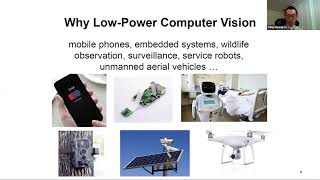
TinyML Talks - Low-Power Computer Vision
Explore energy-efficient computer vision techniques for battery-powered systems, including quantization, network architecture search, and knowledge distillation. Learn about hierarchical neural networks and the IEEE Low-Power Computer Vision Challenge.
How NRF9160 Enables Cellular IoT Asset Tracking
Explore nRF9160 for cellular IoT asset tracking: LTE-M, smart GPS, low power design, and development tools for efficient, long-lasting tracking solutions.
Everything You Need to Know About Bluetooth Low Energy Advertising
Comprehensive guide to Bluetooth Low Energy advertising, covering basics, types, data formats, extensions, and practical implementation using nRF Connect SDK and nRF Sniffer.

Introduction to Bluetooth Smart
Introduction to Bluetooth Smart protocol, covering terminology, architecture, link layer, attribute protocol, and profiles. Learn key concepts and procedures for implementing low-energy Bluetooth technology in small, battery-operated devices.
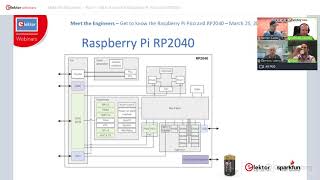
Meet the Engineers: Exploring the Raspberry Pi Pico and RP2040 - Part 1
Explore the Raspberry Pi Pico and RP2040 with industry leaders in this engaging webinar, covering technical aspects, design choices, and potential applications of these innovative microcontrollers.
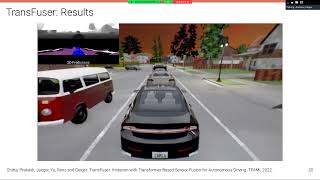
Learning Robust Policies for Self-Driving
Explore robust policies for self-driving vehicles, covering TransFuser for sensor fusion, PlanT for learned planning, and KING for identifying critical scenarios in autonomous driving.
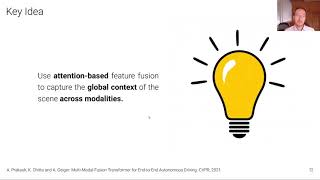
Driving with Attention
Explore innovative sensor fusion techniques for autonomous driving, focusing on TransFuser and NEAT models that leverage attention mechanisms to improve perception and decision-making in complex traffic scenarios.
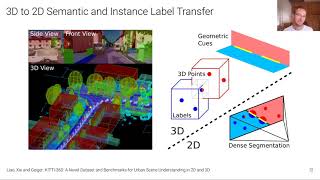
KITTI-360 - A Novel Dataset and Benchmarks for Urban Scene Understanding in 2D and 3D
Comprehensive dataset and benchmarks for urban scene understanding, combining computer vision, graphics, and robotics to advance autonomous driving technology.
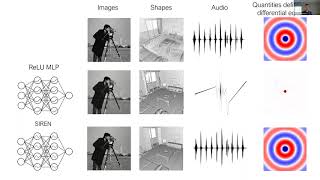
Implicit Neural Scene Representations
Explore implicit neural representations for complex signals, enabling 3D reconstruction from single images and fast inference through gradient-based meta-learning, with applications in scene understanding and semantic segmentation.
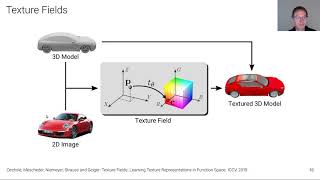
Learning 3D Reconstruction in Function Space
Explore neural implicit 3D representations for geometry and texture reconstruction, discussing their advantages, limitations, and applications in computer vision and graphics.
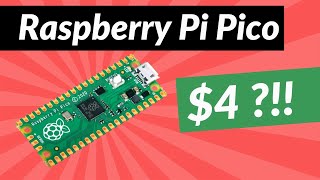
Raspberry Pi Pico for Robotics
Explore the powerful, affordable Raspberry Pi Pico microcontroller for robotics projects. Learn its features, capabilities, and how to program it using MicroPython, comparing it to other popular boards.
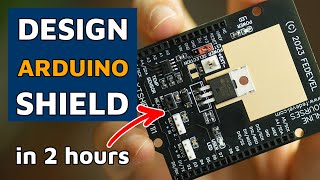
How to Make Custom Board - Arduino Shield in 2 Hours - Full Tutorial
Learn to create a custom Arduino shield from schematic design to PCB layout, manufacturing, and programming. Covers component selection, circuit design, board assembly, and testing various features like LEDs, sensors, and servos.
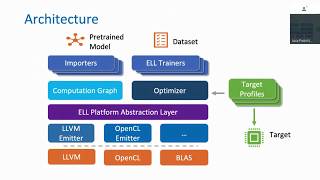
ELL: The Microsoft Embedded Learning Library - Principles and Applications
Explore Microsoft's Embedded Learning Library for efficient AI on resource-constrained devices. Learn about quantization, acceleration techniques, and architecture search for optimized machine learning deployment.
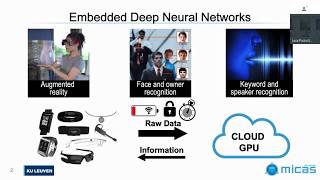
From Small to Tiny: Co-designing ML Models, Computational Precision, and Circuits - Energy-Accuracy Trade-offs
Explore co-designing ML models, computational precision, and circuits for energy-efficient tinyML systems. Learn about cross-layer optimization and cascaded networks for embedded applications.
Visual AI in Milliwatts - A Grand Challenge and Massive Opportunity
Explore visual AI's potential in low-power devices, discussing challenges, opportunities, and applications in security cameras and beyond. Learn about deep learning, processors, and algorithms driving this technology.
Ultra-Low-Power Command Recognition for Ubiquitous Devices
Explore ultra-low-power command recognition for ubiquitous devices, covering noise challenges, system goals, core functions, training, and implementation on tiny hardware.
tinyMLPerf: Benchmarking Ultra-low Power Machine Learning Systems
Explore benchmarking for ultra-low power ML systems, focusing on tinyMLPerf's methodology, tasks, and ecosystem impact. Learn about quantization and community-driven efforts in this emerging field.
Resource Efficient Machine Learning in a Few KBs of RAM - tinyML Summit 2020
Explore resource-efficient machine learning techniques for IoT devices with limited RAM, focusing on Microsoft's EdgeML library and algorithms like ProtoNN and FastRNN for edge computing.