This Embodied LLM is...
Explore Google's PaLM-E, an embodied multimodal LLM showing positive transfer across robotics tasks. Learn its workings, applications, results, and implications for AI advancement.
Introduction to Chaos Engineering With LitmusChaos
Explore Chaos Engineering fundamentals, its open-source landscape, and LitmusChaos features. Learn implementation strategies, differences from testing, and ways to contribute to this emerging field.

DIY Soil Sensor for Home Assistant Integration
Learn to build and integrate a DIY soil moisture sensor with Home Assistant using ESPHome. Automate your garden watering based on real-time data for efficient plant care and a smarter gardening experience.
Generalization and Robustness in Offline Reinforcement Learning
Explore offline reinforcement learning for safety-critical applications, covering generalization, robustness, and imitation learning in large-scale settings with rich function approximation.
ChatGPT - Water Sector Applications
Explore AI and large language models in water industry applications, including ChatGPT capabilities, live demos, software integration, and potential risks and opportunities.
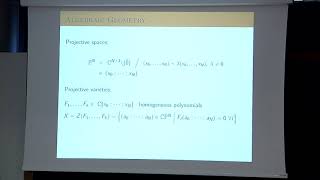
The Geometry of Tensors - Carolina Araujo
Explore tensor decomposition, its applications, and geometric interpretation. Learn about recent developments in determining tensor ranks and their significance in various fields.
Fusing Machine Learning and Optimization - IPAM at UCLA
Explore the fusion of machine learning and optimization for breakthroughs in decision-making, with applications in energy, mobility, and supply chains.
AI-Guided Nonlinear Optimization for Real-World Problems - IPAM at UCLA
Explore AI-guided optimization techniques for complex real-world problems, focusing on nonconvex objectives and slow-to-evaluate functions in applications like embedding table sharding and antenna design.
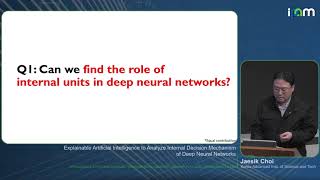
Explainable AI to Analyze Internal Decision Mechanism of Deep Neural Networks
Explore techniques for understanding and improving deep neural networks' decision-making processes, focusing on safety in critical applications and automatic correction of unreliable internal nodes.
From Network Dissection to Policy Dissection - Emergent Concepts in Deep Representations
Explore emergent concepts in deep neural networks, from image classification to reinforcement learning, revealing inner workings and enabling meaningful human-AI interactions for content creation and robotics control.
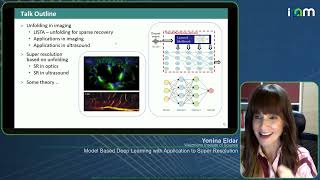
Model Based Deep Learning with Application to Super Resolution - IPAM at UCLA
Explore model-based deep learning for super-resolution microscopy, merging parametric models with optimization tools to create efficient, interpretable networks from limited training data.
The Role of Conventions in Adaptive Human-AI Interaction
Explores partner modeling in multi-agent coordination, focusing on representation learning, conventions, and strategies for reducing non-stationarity in decentralized systems.
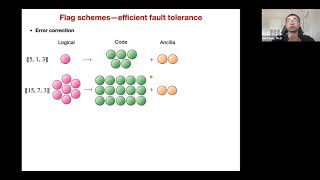
Quantum Fault Tolerance with Flag Qubits - Quantum Colloquium
Explore fault-tolerant quantum computing using flag qubits, a qubit-efficient method for error detection and correction in quantum circuits, with applications and theoretical implications.

Solving Inverse Problems With Deep Neural Networks - Robustness Included?
Exploring robustness of deep learning in inverse problems, focusing on resilience against statistical noise and adversarial perturbations in image reconstruction tasks.
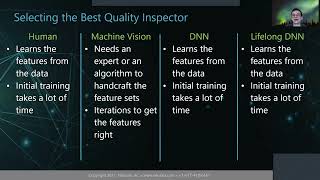
What Kind of AI Can Help Manufacturing Adapt to a Pandemic
Explore how AI, particularly DDNs and L-DNNs, can revolutionize quality inspections in manufacturing, adapting to challenges like COVID-19 and Industry 4.0 for improved efficiency and product quality.
How to Set Up an ML Data Labeling Pipeline - Best Practices and Examples
Learn best practices for building ML data labeling pipelines through crowdsourcing. Explore real-life examples, requirements, and techniques for high-quality labeled data in supervised machine learning projects.

Latency SLOs Done Right - Calculating and Setting Accurate Service Level Objectives
Explore accurate latency SLO calculation methods, including histogram-based approaches, to set mathematically correct quantiles and improve service level objectives for better monitoring and performance management.
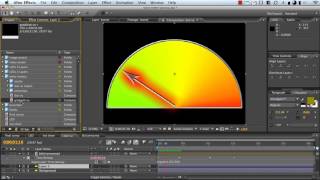
Noise Meter Tutorial - LED Lights and Animation
Create a noise meter with LED lights and Arduino, learning animation techniques and exploring housing options for your project.
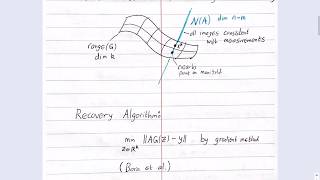
Theory of GANs for Compressed Sensing
Explore the theory of GAN priors in compressed sensing, covering key concepts, proofs, and optimization problems. Gain insights into visual representation and set restricted eigen value conditions.
Statistical Learning Theory and Applications - Class 7
Explore statistical learning theory, covering least squares, gradient descent, regularization, and induction, with insights into historical context and practical applications.
2019 ADSI Summer Workshop- Algorithmic Foundations of Learning and Control
Explore uncertainty in perception for control systems, covering model-free algorithms, pixel-based control, and machine learning applications in robotics and autonomous systems.