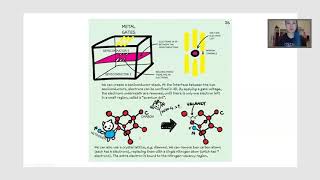
HackadayU: Intro to Quantum Computing - Hardware
Explore quantum computing hardware fundamentals, including quantum dots, trapped ions, and topological quantum computers, in this comprehensive introduction by Dr. Kitty Yeung.

Deep Learning for Scientific Computing - Two Stories on the Gap Between Theory & Practice - Ben Adcock
Explores deep learning in scientific computing, highlighting limitations and recent theoretical advancements in high-dimensional function approximation and inverse problems for imaging, aiming to bridge the gap between theory and practice.
Safe and Ethical Priorities for AI
Exploring UK's role in responsible AI innovation, covering safety, ethics, governance, and practical applications like tactile robotics. Insights from experts on fostering trust and creating impactful AI solutions.
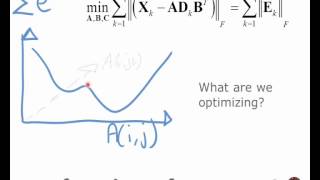
Multi-Way Analysis - The Algorithm
Explore the alternating least squares algorithm for multi-way analysis, focusing on PARAFAC modeling in chemometrics. Learn about notation, potential problems, and alternative approaches.

Advanced Cisco Voice over IP and QoS
Comprehensive training on Cisco Voice over IP and QoS, covering gateway configuration, dial plans, CUCME, CUBE, gatekeepers, and QoS implementation for optimal voice network performance.

Understanding Audio Data for Deep Learning
Explore fundamental audio processing concepts for deep learning, including waveforms, pitch, Fourier transform, and MFCCs, essential for AI applications in sound analysis.
Computation in Neural Networks
Explore Multilayer Perceptrons: components, structure, and signal processing. Learn about neurons, weights, layers, and activations in neural networks for a comprehensive understanding of distributed computation.
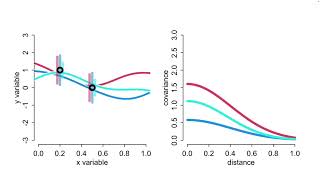
Statistical Rethinking 2023 - Gaussian Processes
Explore Gaussian processes and their applications in statistical analysis, including oceanic spatial confounds and phylogenetic regression, for advanced data modeling techniques.
Sample-Complexity of Estimating Convolutional and Recurrent Neural Networks
Explore sample-complexity in estimating neural networks, focusing on CNN and RNN architectures. Learn about generative models, minimax analysis, and key results through theoretical proofs and practical experiments.
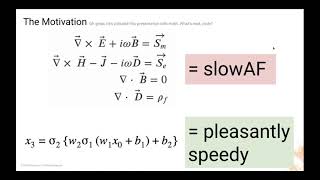
Inversion of 2D Remote Sensing Data to 3D Volumetric Models Using Deep Dimensionality Exchange
Innovative deep learning approach for inverting 2D remote sensing data to 3D models, reducing computation time from months to milliseconds. Explores unique embedding strategies and model architectures for efficient volumetric space reconstruction.
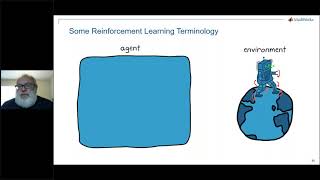
How to Train Your Robot - An Introduction to Reinforcement Learning
Explore reinforcement learning for robotics, covering key concepts, workflow, and practical applications. Learn to define environments, create agents, and deploy policies to hardware platforms.

Complexity Theory III
Explore advanced complexity theory concepts, including minimal circuits, probabilistic formulas, and explicit obstructions in this in-depth theoretical computer science lecture.
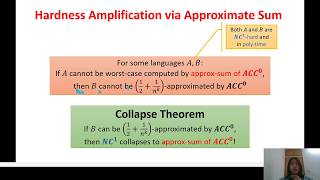
Strong Average-Case Circuit Lower Bounds from Non-trivial Derandomization
Explore circuit lower bounds and derandomization, focusing on AC circuits, algorithmic methods, and pseudorandom generators. Learn about recent developments in average-case circuit analysis.
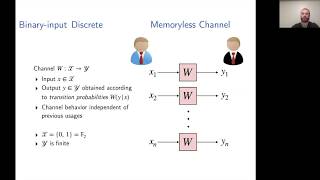
Arikan Meets Shannon - Polar Codes With Near-Optimal Convergence to Channel Capacity
Explore polar codes for efficient data transmission, examining their convergence to channel capacity and applications in binary-input discrete symmetric memoryless channels.
Audio Processing in Keras with Kapre
Learn to process audio in Keras using Kapre, exploring its advantages, features, and implementation. Discover how to embed audio transformations within deep learning models for optimized GPU-based calculations and easier deployment.
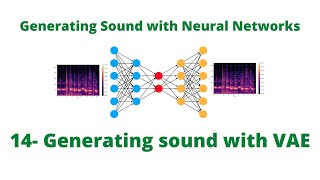
Generating Sound Digits with a Variational Autoencoder
Learn to generate audio spectrograms of sound digits using a trained Variational Autoencoder, then convert them into audio. Includes implementation, scripting, debugging, and result evaluation.

Decoding Nonhuman Communication - Polylogues
Explore cutting-edge research on decoding nonhuman communication, from sperm whale vocalizations to plant acoustic responses, using machine learning and natural language processing techniques.
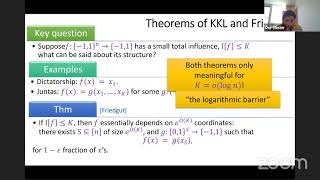
Advances in Boolean Function Analysis - On the Fourier-Entropy Influence Conjecture
Explores recent advancements in Boolean function analysis, focusing on the Fourier-Entropy Influence Conjecture and its implications for learning theory and sharp thresholds.
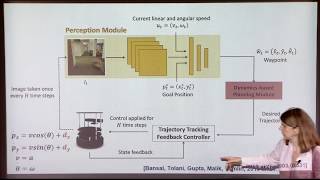
Using Deep Learning for Perception in Autonomous Systems - A Perspective from Control Theory
Explore deep learning for perception in autonomous systems, focusing on efficient navigation using monocular RGB cameras in unknown environments. Control theory insights and practical lessons included.
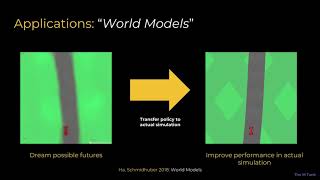
Introduction to Reinforcement Learning
Explore reinforcement learning's evolution, breakthroughs, and applications in AI, from board games to robotics. Gain insights into key concepts, formulations, and future directions in this rapidly advancing field.
Physical Computing: How Software Meets Hardware - From Christmas Trees to Connected Devices
Explore physical computing and connected devices, from microcontrollers to digital fabrication. Learn how diverse creators use open-source hardware and software to build interactive technologies and shape our connected world.