Why AI Makes Us All Safety Engineers - Building Safety into AI Systems from the Start
Discover how AI's unique nature demands a new approach to software development, integrating safety and security considerations from the earliest stages of planning and design.
Reinforcement Learning: From Policy Optimization to Multi-Agent Systems
Explore reinforcement learning fundamentals, from reward systems and policy optimization to transformer architectures in robotics and multi-agent systems, with practical implementation insights.
Robotics Transformer 2 (RT-2) - Vision-Language Models for Advanced Robotics
Explore how RT-2 combines Vision-Language Models with robotics, enabling advanced control systems and improved generalization through web-scale pre-training and specialized datasets.

Maximizing EDSFF E3 SSD Design - Mechanical, PCB, and Thermal Considerations
Delve into advanced SSD mechanical, PCB, and thermal design principles for EDSFF E3 form factors, exploring challenges and solutions for enterprise storage optimization and thermal control.
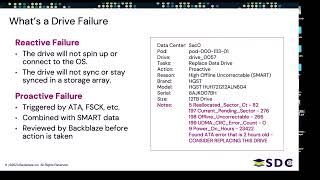
What 10 Years of Drive Stats Data Can Tell Us About Hard Drive and SSD Reliability
Explore 10 years of hard drive performance data analysis, covering failure rates, reliability patterns, and AI-driven predictions to optimize storage infrastructure and reduce costs.
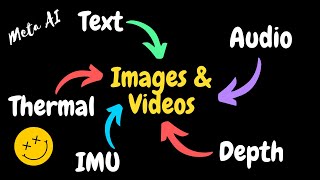
ImageBind: A Multi-Modal AI Model for Unified Embedding Space
Explore Meta AI's ImageBind technology and its groundbreaking approach to unified AI learning across six modalities, from technical architecture to practical applications and results.
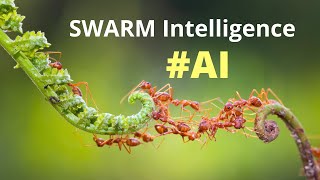
AI Swarm Intelligence: Multi-Agent Ecosystem for Decentralized Autonomous Systems
Explore swarm intelligence and multi-agent reinforcement learning systems, focusing on decentralized control, asynchronous decision-making, and real-world applications in urban environments and drone networks.
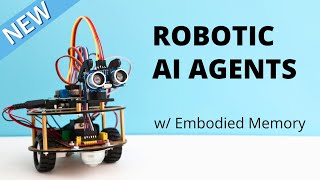
Embodied-RAG: Hierarchical Non-parametric Memory Systems for AI Agents
Explore Carnegie Mellon's groundbreaking Embodied-RAG framework that enhances robotic systems with hierarchical memory and advanced spatial navigation capabilities for real-world applications.
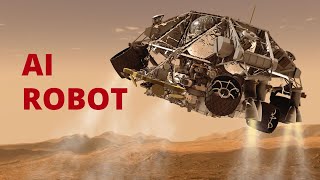
Behavior Cloning and Residual Reinforcement Learning for Visual Assembly
Explore advanced imitation learning techniques combining behavior cloning with reinforcement learning for autonomous robotic systems, focusing on precise visual assembly and sim-to-real transfer applications.
Robotics Policy Optimization for Multi-Agent Drone Swarms Using Game Theory
Explore advanced reinforcement learning applications in optimizing taxi fleets and drone swarms, focusing on multi-agent systems and environmental interaction strategies.

Classical Verification of Quantum Learning
Explore the verification framework enabling classical clients to reliably delegate learning tasks to quantum servers, focusing on parity learning and Fourier-sparse functions with mixture-of-superpositions examples.
Toward a 2D Local Implementation of Quantum LDPC Codes
Explore innovative approaches to implementing quantum LDPC codes in 2D architectures, focusing on bilayer designs and quasi-cyclic codes to achieve efficient error correction with reduced physical qubit requirements.
Parity vs. AC0 with Simple Quantum Preprocessing
Delve into quantum computation theory exploring the limitations of QNC0 and AC0 circuits in computing parity functions, with insights into decision tree complexity and nonlocal channels.
Risk-Sensitive Bandits - Arm Mixtures Optimality and Regret-Efficient Algorithms
Delve into risk-aware sequential decision-making through distortion riskmetrics, exploring optimal arm mixture strategies and new algorithms for tracking these mixtures in multi-armed bandit problems.
Reliable Object Detection and Identification in Adverse Conditions
Explore radar-based perception systems for autonomous vehicles, focusing on reliable object detection in adverse weather conditions and multi-sensor fusion techniques for enhanced safety.
Age-Distortion Tradeoffs in Communication Systems
Explore the balance between timely data transmission and quality in networked systems, examining optimal strategies for packet-based communication and the impact of coding across packets.
Coding Schemes for Input-Constrained Channels in Information Theory and Communication
Explore coding schemes for binary input-constrained channels, focusing on RLL constraints, Reed-Muller codes, and error resilience in both stochastic and adversarial channel models.
Short Packet Communication under Random Arrival of Data
Explore the intersection of information theory and network theory in short packet communication, focusing on reliability and latency in 5G applications like mMTC and uRLLC.
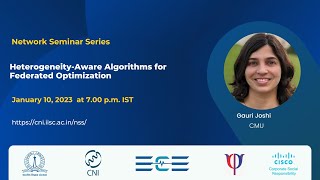
Heterogeneity-Aware Algorithms for Federated Learning and Distributed Optimization
Delve into advanced federated learning algorithms, focusing on heterogeneity challenges in distributed model training and innovative solutions for edge computing optimization.
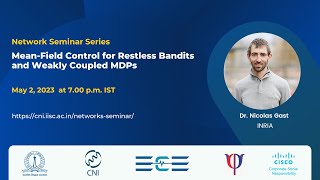
Mean-Field Control for Restless Bandits and Weakly Coupled MDPs
Explore optimization methods and stochastic models for large-scale system control, focusing on mean-field approaches to overcome dimensionality challenges in reinforcement learning and resource allocation.

Feasibility of Wireless Energy Transfer Using Intelligent Reflecting Surface in Next Generation IoT Networks
Explore wireless energy transfer technology in IoT networks, focusing on intelligent reflecting surface implementation, challenges, and solutions for efficient power transmission and harvesting.