Advancing Drought Monitoring and Prediction - Part II
Explore cutting-edge drought monitoring and prediction techniques, including global information systems, seasonal forecasting, and climate change impacts, with applications for decision-making in water resource management.
Mars Rover Curiosity's Investigations in Gale Crater
Discover the latest findings from NASA's Curiosity rover mission on Mars, including composition analysis and environmental observations in Gale Crater, presented by leading scientists.
Science Results From the Aquarius and SMOS Ocean Salinity Missions - Fall 2012
Explore cutting-edge findings from Aquarius and SMOS ocean salinity missions. Gain insights into measurement techniques, algorithm improvements, and impacts on ocean systems understanding.
Water Management Strategies for Sustainable Resources - Science Policy Conference 2012
Experts discuss strategies for managing water resources, addressing challenges in infrastructure, and balancing water needs for agriculture, industry, and human consumption.
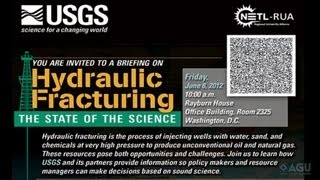
Hydraulic Fracturing - The State of the Science
Explore the science, opportunities, and challenges of hydraulic fracturing with experts from USGS and partners. Learn about unconventional oil and gas resources and their impact on policy and resource management.
The Climate Canary: Measuring Change on Antarctica's Pine Island Glacier
Explore Antarctica's Pine Island Glacier, its role as a climate indicator, and methods for measuring glacial change. Learn about ice dynamics, mass balance, and global implications through expert insights and hands-on activities.
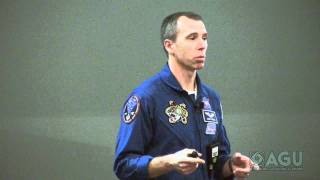
Adventures of a Geoscientist Astronaut - Nuts, Bolts, and Repairs in Earth Orbit
Geophysicist astronaut shares experiences from two space missions, including Hubble telescope repair and International Space Station assembly, offering unique insights into space exploration.
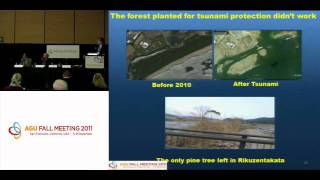
The 11 March 2011 Japan Tsunami - New Insights and Impacts - Press Conference
Insights from the 2011 Japan tsunami: wave behavior, coastal impacts, and global effects. Scientists discuss new findings on tsunami dynamics, damage patterns, and ecological consequences.
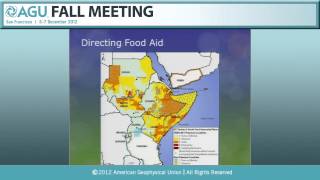
Advancing Drought Monitoring and Prediction - 2012 AGU Fall Meeting
Explore cutting-edge research on drought monitoring and prediction, including remote sensing, soil moisture analysis, and early warning systems for improved decision-making and humanitarian response.
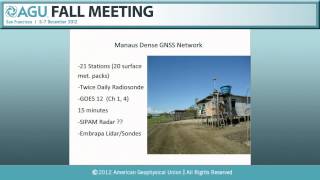
Climate and Meteorological Applications for GNSS and Related Remote Sensing Techniques
Explore cutting-edge research on using GNSS and remote sensing for climate and meteorological applications, including water vapor mapping, temperature anomalies, and tropospheric observations.
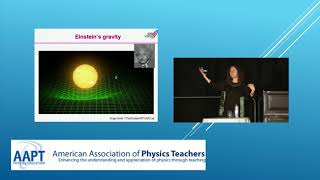
Gravitational Waves Discovery and LIGO Research - Gabriela González
Explore gravitational wave discovery with LIGO team physicist Gabriela González, focusing on instrument development, data calibration, and diagnostics to enhance astrophysical research methods.
Gravity Simulator - Exploring Motion in Phase Space - Episode 4
Explore phase space plots in gravity simulations, offering deeper insights into system behavior beyond real-space animations. Includes VPython code examples and references to Stephen Hawking.
Root Finder in Space - Power Trip - Episode 6A
Explore gravitational potential energy's impact on aphelion and perihelion using different power laws. Discover the importance of log plots in analyzing orbital mechanics.
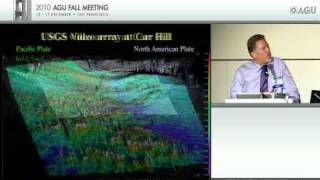
Ultra-High Resolution Four-Dimensional Imaging Across the Earth Sciences
Explore cutting-edge 4D imaging techniques revolutionizing Earth Sciences, offering unprecedented insights into geological processes and environmental changes over time.
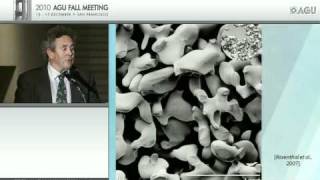
Mountain Hydrology, Fourth Paradigm, and Color of Snow - Nye Lecture
Explore mountain hydrology, data-driven science, and snow properties in this lecture. Learn about environmental applications, measurement techniques, and challenges in understanding snow dynamics and their impact.
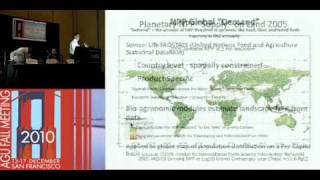
Carbon Consumption and Earth's Carrying Capacity: Challenges Ahead
Exploring Earth's carrying capacity as human consumption of plant resources increases, raising concerns about biodiversity, climate vulnerability, and global resource imbalances.
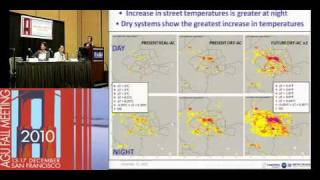
New Views of Urban Heat Islands
Explore satellite data insights on urban heat islands, their variations across cities, public health impacts, and potential exacerbation of heat waves through increased air conditioning usage.
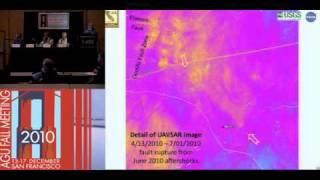
The April 2010 M7.2 Baja California Earthquake - Observations and Implications for Southern California
Explore the complex M7.2 Baja earthquake of 2010, its impacts, and implications for Southern California's seismic future through remote sensing, field observations, and new data analysis techniques.
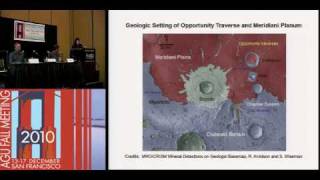
Opportunity Rover's Journey to Endeavour Crater on Mars - Orbital Observations Reveal New Insights
Explore Mars with Opportunity rover as it heads to Endeavour Crater, guided by orbital observations revealing clay minerals and potential new discoveries in this ancient Martian landscape.
Drude Circuit Simulation - Many Electrons
Explore electron behavior in circuits with a multi-electron simulation, enhancing understanding of electrical conductivity and current flow.
Drude Circuit Model - Resolving Contradictions Between Newton's Second Law and Ohm's Law
Explore the apparent contradiction between Newton's Second Law and Ohm's Law through coding, using the Euler-Cromer Method to simulate electron collisions in a Drude circuit model.