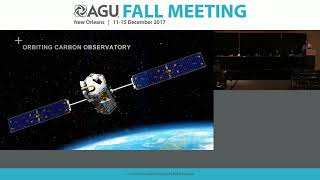
Emerging Sources of Scientific Data: Drones, CubeSats, and Citizen Science - 2017 Fall Meeting
Explore emerging scientific data sources like drones, CubeSats, and citizen science in this panel discussion on innovative data collection methods and their impact on Earth science research.
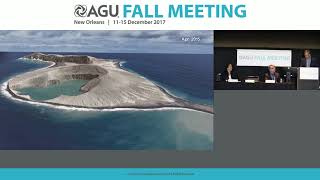
Evolution of a New Pacific Island - Satellite Observations and Insights
Satellite observations of a new Tongan island offer insights into island formation, longevity, and potential analogues for Mars features, providing unprecedented views of early island evolution.
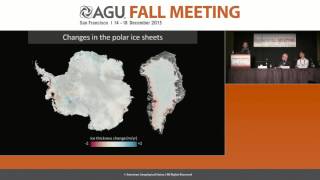
Measuring Polar Ice Sheets and Sea Level Rise - Latest Efforts
Experts discuss latest efforts to measure polar ice sheets, their impact on sea level rise, and challenges in providing accurate estimates using satellite and airborne surveys.
Unintentional Geoengineering: Whitening Skies and Changing Solar Radiation - Fall 2015
Explore unintentional geoengineering's impact on global cloud-free skies, solar radiation patterns, and Earth's surface through new data analysis and expert insights on atmospheric changes.
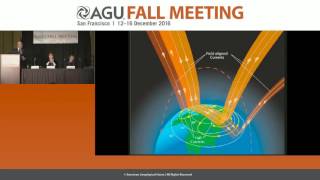
New Research on the Ionosphere - Our Interface to Space
Explore groundbreaking research on the ionosphere, its impact on Earth's communications, and upcoming NASA missions to study this crucial atmospheric region between our planet and space.
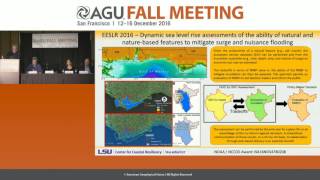
Water World: Historic Floods, Sea Level Rise, Storm Surge and Climate Change
Climate change impacts on coastal communities: Experts discuss sea level rise, flooding, and storm surge, presenting new assessments for the northern Gulf of Mexico and global coastal regions based on climate projections for 2100.

Software Defined Vehicle Trends and Key Technologies - The Critical Driver of Automotive Industry
Explore Software Defined Vehicle trends, key technologies, and their impact on the automotive industry. Learn about virtualization, cloud-native practices, and community developments like AGL and VIRTIO.
Earth Science Advances Following 10 Years of Aqua Observations - Part 2
Explore Earth science advancements from a decade of Aqua satellite observations, covering atmospheric, oceanic, and terrestrial discoveries at AGU's Fall Meeting 2011.
Surveillance of Volcanic Unrest - New Developments in Multidisciplinary Monitoring Methods
Explore cutting-edge multidisciplinary monitoring methods for detecting volcanic unrest, enhancing our ability to predict and mitigate potential eruptions.
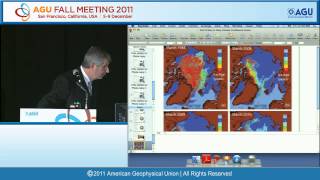
Climate Confluence Issues - Energy, Environment, Economics, and Security
Explore the interconnected challenges of climate change, energy, environment, economics, and security in this comprehensive AGU conference session.
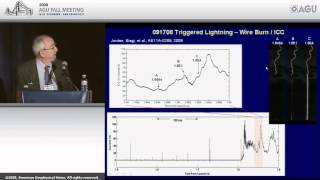
Recent Lightning Experiments - From Ball Lightning to Gamma Rays
Recent lightning experiments at the International Center for Lightning Research and Testing, exploring phenomena from ball lightning to gamma rays, presented by Martin A. Uman from the University of Florida.
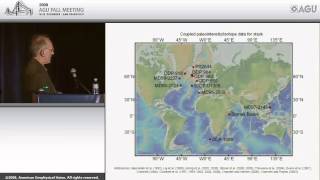
Excursions and Paleointensity - Integration of Magnetic and Oxygen Isotope Stratigraphies
Explore magnetic excursions and paleointensity through integrated magnetic and oxygen isotope stratigraphies, enhancing understanding of Earth's magnetic field history.
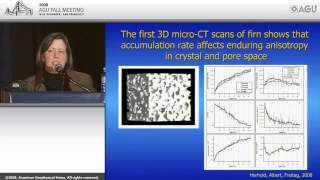
Polar Science in a Time of Rapid Change - Nye Lecture
Explore polar science advancements, ice sheet dynamics, and climate change impacts. Discover new technologies and research methods shaping our understanding of Earth's polar regions.
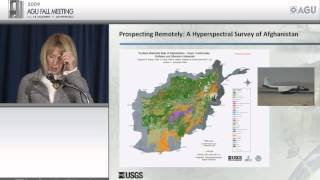
Frontiers of Geophysics - Advances in Earth Science Technologies
Explore cutting-edge geophysical technologies and their applications in earth sciences, from LiDAR to atmospheric rivers, with insights from USGS Director Marcia McNutt.
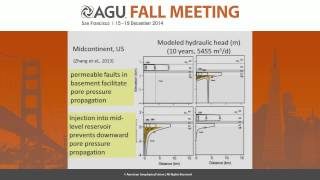
Connecting Wastewater Injection and Seismicity through Pore Pressure - AGU Lecture
Explore the link between wastewater injection and seismic activity through pore pressure analysis, covering key factors, physics, and modeling techniques.
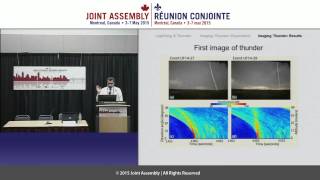
First Images of Thunder - Acoustic Signatures and Lightning Analysis
Explore groundbreaking research on capturing the first images of thunder, including acoustic beamforming techniques and triggered lightning experiments.
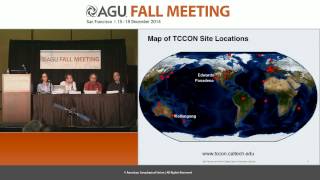
NASA's Orbiting Carbon Observatory Results - Fall Meeting 2014
Discover groundbreaking findings from NASA's Orbiting Carbon Observatory, revealing new insights into global carbon dioxide patterns and their impact on Earth's climate system.
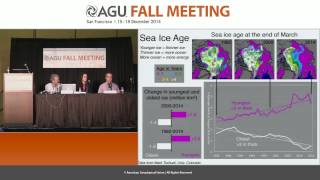
Fall Meeting 2014 - 15 Years of Sea Ice Loss and Absorbed Solar Radiation Gains
Arctic sea ice loss over 15 years has led to increased solar radiation absorption, accelerating warming and climate change impacts in the region.
The 2014 South Napa Earthquake - Analysis and Impacts
Experts analyze the 2014 South Napa Earthquake, discussing its impact, geological implications, and lessons learned for future seismic preparedness and response strategies.
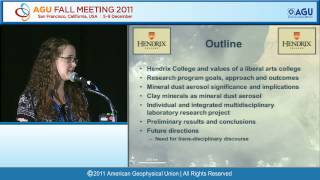
Atmospheric Dust - Interdisciplinary Studies II
Explore interdisciplinary studies on atmospheric dust, covering its impacts, sources, and interactions across various scientific domains. Gain insights into this crucial environmental factor.
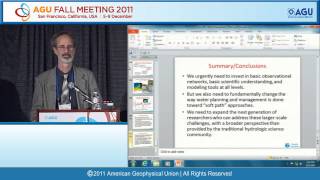
The Evolution of Water Management Paradigms - 2011 AGU Fall Meeting
Explore evolving water management paradigms, addressing hydrological challenges, social disparities, equity, sustainability, and complex adaptive systems in urban water resources management.