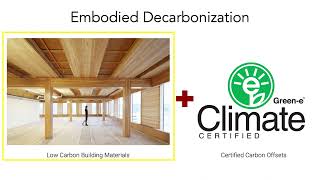
Buildings, Energy and Decarbonization
Explore energy usage in buildings, decarbonization strategies, and real-world case studies. Learn about efficiency, electrification, and renewable energy to address climate challenges in the built environment.
Introduction to Special Relativity - January IAP 2021
Explore Einstein's special relativity theory, covering time dilation, length contraction, Lorentz transformations, and relativistic effects. Gain insights into modern physics and spacetime concepts.

Buildings, Energy and Decarbonization
Explore strategies for reducing energy consumption and carbon emissions in buildings, focusing on innovative technologies and real-world examples of successful decarbonization projects.

Classical Physics
Comprehensive exploration of fundamental physics concepts, from motion and forces to thermodynamics and electromagnetism, providing a solid foundation in classical physics principles.
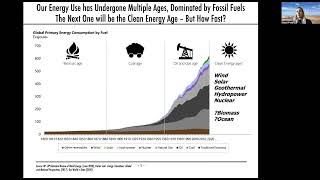
The Unfolding Energy Revolution Lecture
Explore the ongoing energy revolution, from current sources to emerging technologies in efficiency, renewables, transportation, and green buildings, with insights on future trends and transition tools.

Energy Efficiency Lecture
Explore energy efficiency's role in resource management, barriers, policy solutions, and decarbonization efforts with insights from Dr. Joel N. Swisher's comprehensive lecture.

Energy Efficiency
Explore integrative design, energy efficiency standards, and demand-side management to tackle energy challenges and promote sustainable solutions.
Accelerating Clean Energy Transition and Why it Matters
Explore energy's impact on climate and society, learn to think critically about energy use, and discover ways to contribute to sustainability efforts with environmental engineering expert Diana Gragg.
Building Decarbonization - Pathways to a Carbon-Neutral Future
Explore strategies for building decarbonization, including embodied and operational approaches for commercial construction, to reduce greenhouse gas emissions and achieve carbon neutrality.

Transportation Lecture
Comprehensive overview of transportation challenges, policies, and innovations, focusing on efficiency, electrification, and environmental impact reduction strategies.
Decarbonizing the Grid - Technology and Policy
Explore technical opportunities and policy drivers for integrating distributed energy resources to ensure grid resilience and decarbonization, featuring insights from Stanford experts.
Petascale Deep Learning on a Single Chip
Innovative deep learning processor architecture for improved efficiency and performance, featuring strategies to reduce data movement and enhance scalability for next-generation models.
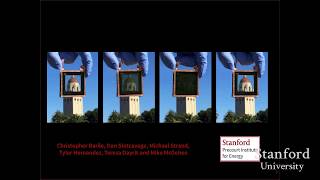
Smart Glass - How Metal Ions May Revolutionize Tinting and Energy Efficiency
Stanford engineers unveil dynamic windows using metal ions and voltage for rapid tinting, potentially reducing energy costs by 20%. Applications include buildings, vehicles, and eyewear.

The Unfolding Energy Revolution Lecture
Explore the current energy landscape, ongoing revolutions, and future trends in renewable sources, efficiency, transportation, and green buildings. Gain insights into drivers and tools for a clean energy transition.
Stanford Seminar - Powering the Future and Internationalizing Research, Petros Sofronis
Explore the future of energy and international research collaboration with insights on Japan's energy policy, hydrogen efficiency, and innovative approaches to global scientific cooperation.
Emerging Trends in Building Decarbonization
Explore strategies for reducing carbon emissions in buildings with expert Peter Rumsey. Learn about embodied and operational decarbonization techniques for sustainable design and construction.
Energy Efficiency: Measures, Barriers, and Role in Decarbonization
Comprehensive exploration of energy efficiency: applications, integrative design, barriers, policy solutions, and its role in decarbonization. Equips learners with knowledge to address sustainability challenges and make informed energy decisions.

Renewable Energy Policies and Challenges - Lecture 23
Explores renewable energy policies, focusing on wind power challenges and benefits. Examines the Cape Wind project, addressing siting issues, environmental impacts, and property rights conflicts.

Critiquing LEED Certification: Design and Green Architecture - Lecture 21
Explore the LEED certification system's strengths and limitations in green building, examining energy efficiency, environmental health, and the role of non-profit organizations in architectural standards.

Biomechanics and Locomotion in Biomedical Engineering - Lecture 19
Explore biomechanics of various modes of motion, from flight to walking, and their applications in biomedical engineering, including artificial hip design and efficient locomotion.
Climate Conversations - Opposing Views on Rising Tides
Explore the Biden Administration's impact on Australia's climate policy, discussing global commitments, economic sustainability, and potential policy shifts ahead of the Earth Day Summit.