Lessons Learned When Updating Userspace ABIs
Explore the challenges and solutions in updating Linux userspace ABIs, focusing on I2C and SMBus protocols. Learn about careful planning to improve functionality without breaking existing applications.
Rust-Based VirtIO Backends for Hypervisor-Agnostic Solutions
Explore Project Stratos: leveraging VirtIO for hypervisor-agnostic backends, implementing vhost-user daemons in Rust, and integrating with Xen for versatile virtualization solutions.
Unravelling How Firmware Interacts with the Linux Subsystem
Explore the intricate relationship between firmware and the Linux subsystem, gaining insights into their interaction and its implications for system performance and functionality.
Establishing Trust in Linux Keyrings - Built-in, Imputed, or Transitive Trust
Explore Linux keyrings, trust models, and key management in firmware, kernel, and user space. Learn about trust domains, scope, usage constraints, and security implications for different systems.
Blockchain in Action: Fighting Climate Change Through Traceability and Transparency
Exploring blockchain's impact on climate change through real-world applications in traceability, sustainability, and cross-industry collaboration for a greener future.
Design and Implementation of RISC-V Based LoRa Module for IoT Edge Computing
Explore a prototype RISC-V-based LoRaWAN end node PCB design, combining FPGA and RISC-V architecture with LoRa interface for low-power, high-capacity IoT solutions with edge analytics capabilities.
Linux for Space - Mission Begins
Explore Linux4Space: an open-source initiative to create a standardized Linux distribution for space applications, based on industry requirements and stakeholder collaboration.
HotBPF - On-demand and On-the-fly Memory Protection for the Linux Kernel
On-demand, on-the-fly Linux kernel memory protection mechanism: lightweight, hardware-independent, and deployable without rebooting. Enhances security during vulnerability disclosure to remediation window.
Zero-Overhead Virtualization - Challenges and Pitfalls Across Architectures
Explore zero-overhead virtualization challenges in embedded systems, comparing ARM, x86, and RISC-V architectures. Learn about Jailhouse hypervisor and architectural limitations for real-time performance.
IoT Security - Ecosystem, Interoperability and Standards
Explore IoT security challenges and solutions with the Security & Privacy Development Lifecycle framework, addressing ecosystem complexities, privacy concerns, and compliance issues in rapidly evolving IoT landscapes.
Formal Verification of Embedded Linux Systems Using Trace-Based Models
Explore trace-based models for formal verification of embedded Linux systems, focusing on safety-critical aspects, real-time properties, and system instrumentation techniques.
Asymmetric/Heterogeneous MultiProcessing - Mainline Linux and Zephyr in Unison
Explore AMP/HMP with Linux and Zephyr, covering code launch options, inter-processor communication, and libraries. Includes real-life demo on NXP i.MX systems using open-source stacks.
Merging Kernel Testing Code into KernelCI
Learn how to integrate kernel testing code into KernelCI, expanding its ecosystem through direct additions or KCIDB. Gain insights from CIP project's experience in merging testing systems and collaborating with KernelCI for improved Linux kernel testing.
Interfacing Sensors with Zephyr for IoT Devices
Explore sensor interfacing in Zephyr RTOS for IoT devices. Learn to add support for new sensors, interact with various types, and see demonstrations of temperature, pressure, and fingerprint sensors.
How to Get Your DT Schema Bindings Accepted in Less Than 10 Iterations
Learn best practices, common mistakes, and useful tricks for writing and converting Devicetree schema bindings in YAML format to streamline the acceptance process.
Cameras, Devicetree and ACPI: A Device Driver Perspective
Explore integrated camera hardware, comparing USB cameras with component-based systems. Learn about firmware interfaces, device drivers, and system complexities for digital cameras.
Mentorship Session: Software Engineering and Functional Safety in Automotive Industry
Explore software engineering fundamentals, quality metrics, and their application in creating functionally safe systems, with a focus on automotive industry standards and practices.
Host Performance Booster - Introduction and Current Mainline Support Status
Explore Host Performance Booster (HPB) for UFS storage, its architecture, benefits, and Linux support status. Learn how HPB improves read latency and overall system performance.
Improving the Linux Display Stack Reliability
Explore strategies to enhance Linux display stack reliability, focusing on KMS drivers, IGT deployment, and future improvements for embedded devices.
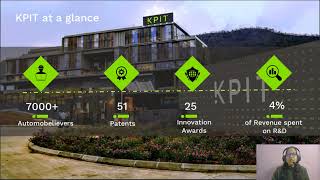
Bluetooth in Cockpit Systems
Explore Bluetooth integration in modern cockpit systems, focusing on connectivity, security, and user experience enhancements for automotive applications.
Supporting Complex MIPI DSI Bridges in a Linux System
Explore the intricacies of integrating MIPI DSI bridges into Linux systems, focusing on complex implementations and advanced techniques for seamless hardware-software interaction.