
Storage Virtualization and Hardware-agnostic Acceleration Using IPDK and xPU
Discover how IPDK enables vendor-agnostic storage virtualization and hardware acceleration, allowing standard drivers to access remote storage at scale while leveraging SmartNIC/DPU/IPU/xPU capabilities.
Deep Learning Module for Video Sound Recognition Using Azure Video Indexer
Discover how to enhance video transcription by integrating Azure Video Indexer with Databricks, implementing machine learning models for audio recognition and spectrogram classification.

Applied Custom Vision for AI-Powered Camera Feed Analysis
Explore practical applications of AI-powered computer vision for workplace monitoring, from parking lot analytics to safety alerts, featuring Custom Vision edge computing and OpenVino demonstrations.
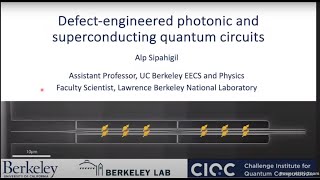
Defect-Engineered Photonic and Superconducting Quantum Circuits
Explore groundbreaking advances in integrated quantum systems, focusing on device physics challenges and innovative solutions for microwave, phononic, and photonic quantum technologies in silicon-based platforms.
Quantum Experiments in Satellite Technology - Quantum Key Distribution and Long-Haul Communications
Explore quantum key distribution protocols for satellite-based secure communications, focusing on uplink-based implementation methods and their advantages in long-distance quantum cryptography.

Wayland Shells for Embedded Systems - Overview and Comparison
Explore the landscape of Wayland shells in embedded Linux systems, comparing different compositors and their approaches to GUI management for specialized device interfaces.
Power Optimization and PPK2 for nRF Connect SDK Applications - Part 5
Master power optimization techniques for Bluetooth LE applications using PPK2 and Online Power Profiler tools, while learning effective strategies to enhance battery life in IoT devices.
Sending and Receiving Data Through Bluetooth LE with nRF Connect SDK - Part 3
Master Bluetooth LE data transmission and reception using nRF Connect SDK, implementing wireless sensor data access and remote control capabilities through mobile applications.
The iPhone Moment of AI - Natural Language Processing and Generative AI Revolution
Explore the transformative impact of Generative AI and NLP, from GPT-3's capabilities to practical applications in text generation and voice cloning, while addressing ethical considerations and corporate implementation.

Maximizing EDSFF E3 SSD Design - Mechanical, PCB, and Thermal Considerations
Delve into advanced SSD mechanical, PCB, and thermal design principles for EDSFF E3 form factors, exploring challenges and solutions for enterprise storage optimization and thermal control.
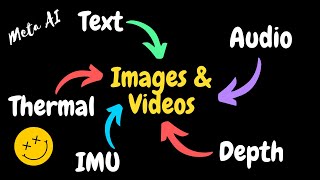
ImageBind: A Multi-Modal AI Model for Unified Embedding Space
Explore Meta AI's ImageBind technology and its groundbreaking approach to unified AI learning across six modalities, from technical architecture to practical applications and results.
Classical Verification of Quantum Learning
Explore the verification framework enabling classical clients to reliably delegate learning tasks to quantum servers, focusing on parity learning and Fourier-sparse functions with mixture-of-superpositions examples.
Toward a 2D Local Implementation of Quantum LDPC Codes
Explore innovative approaches to implementing quantum LDPC codes in 2D architectures, focusing on bilayer designs and quasi-cyclic codes to achieve efficient error correction with reduced physical qubit requirements.
Parity vs. AC0 with Simple Quantum Preprocessing
Delve into quantum computation theory exploring the limitations of QNC0 and AC0 circuits in computing parity functions, with insights into decision tree complexity and nonlocal channels.
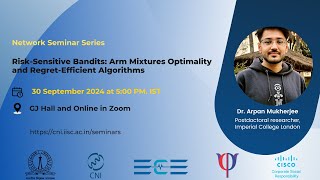
Risk-Sensitive Bandits - Arm Mixtures Optimality and Regret-Efficient Algorithms
Delve into risk-aware sequential decision-making through distortion riskmetrics, exploring optimal arm mixture strategies and new algorithms for tracking these mixtures in multi-armed bandit problems.
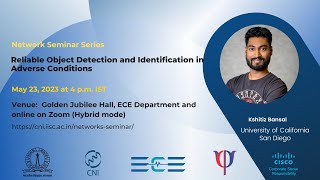
Reliable Object Detection and Identification in Adverse Conditions
Explore radar-based perception systems for autonomous vehicles, focusing on reliable object detection in adverse weather conditions and multi-sensor fusion techniques for enhanced safety.
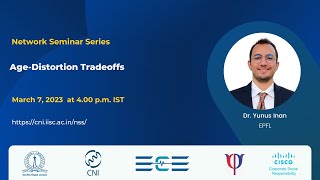
Age-Distortion Tradeoffs in Communication Systems
Explore the balance between timely data transmission and quality in networked systems, examining optimal strategies for packet-based communication and the impact of coding across packets.
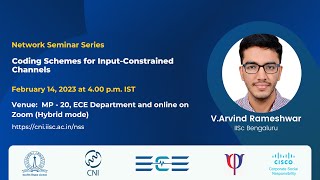
Coding Schemes for Input-Constrained Channels in Information Theory and Communication
Explore coding schemes for binary input-constrained channels, focusing on RLL constraints, Reed-Muller codes, and error resilience in both stochastic and adversarial channel models.
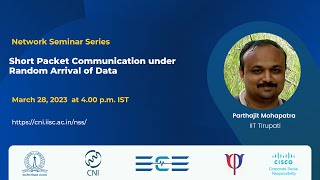
Short Packet Communication under Random Arrival of Data
Explore the intersection of information theory and network theory in short packet communication, focusing on reliability and latency in 5G applications like mMTC and uRLLC.
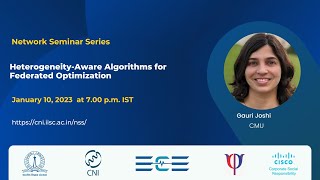
Heterogeneity-Aware Algorithms for Federated Learning and Distributed Optimization
Delve into advanced federated learning algorithms, focusing on heterogeneity challenges in distributed model training and innovative solutions for edge computing optimization.
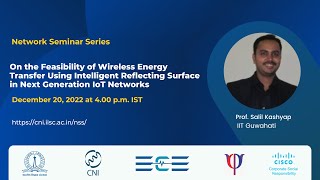
Feasibility of Wireless Energy Transfer Using Intelligent Reflecting Surface in Next Generation IoT Networks
Explore wireless energy transfer technology in IoT networks, focusing on intelligent reflecting surface implementation, challenges, and solutions for efficient power transmission and harvesting.