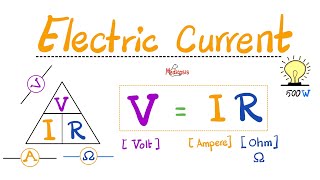
Electric Current, Voltage, and Resistance - Ohm's Law and Measurement Instruments
Explore electric circuits, current, voltage, and resistance. Learn about measuring devices and Ohm's Law. Gain practical knowledge for understanding electrical systems and physics concepts.
Understanding Climate Dynamics Through Linear Response Theory
Explore climate dynamics using Linear Response Theory. Learn how this mathematical framework helps predict and analyze complex climate system behaviors, offering insights into future climate scenarios.
Searches for Continuous Gravitational Waves: Methods and Results - Lecture 1
Explore methods and results for detecting continuous gravitational waves from sources like rapidly spinning neutron stars and exotic phenomena in our galaxy.
It's Electrifying - Tech and Climate Reshape Everything, Everywhere
Explore the challenges of balancing clean energy transition with increasing energy demands from AI and global development, discussing strategies for zero-carbon solutions and simultaneous electrification and decarbonization.
Towards Intelligent Automobile Cockpit via a New Container Architecture
Innovative container architecture for intelligent automobile cockpits using low-cost chips. Integrates safety-critical and multimedia functions, offering efficient resource utilization and scalability.
Numerical Weather Prediction Methods
Explore numerical weather prediction methods, including data assimilation techniques, uncertainty estimation, and applications in atmospheric and climate modeling.
Satellite Data Assimilation - Techniques and Applications
Explore satellite data assimilation techniques for weather and climate modeling, focusing on theory, methods, and practical applications in atmospheric and oceanic sciences.
Data Assimilation and Dynamical Systems in Earth Sciences - Lecture 3
Explore data assimilation theory and applications in Earth sciences, focusing on dynamical systems. Gain hands-on experience with practical techniques for integrating observations and forecasts in weather and climate models.
Application of Particle Filters on Data Assimilation
Explore particle filters in data assimilation, a powerful technique for integrating observations and forecasts to estimate atmospheric states and uncertainties in weather and climate modeling.
Bayesian Theory, Cost Function, Minimization, and Incremental Optimization in Data Assimilation
Explore data assimilation in weather and climate models, covering theory, methods, and applications. Gain hands-on experience with various techniques and their use in atmospheric and oceanic studies.
Ocean Data Assimilation - Lecture 2
Explore advanced ocean data assimilation techniques, their applications in climate modeling, and methods for integrating diverse oceanic observations to improve forecasting accuracy and understanding of marine systems.
Ocean Data Assimilation - Applications in Weather and Climate Models
Explore ocean data assimilation techniques, their applications in monitoring and understanding climate variability, and integration with atmospheric and land surface studies.

Human Attention and Communication Mediated via Machine Learning
Explore wavelets' role in modeling vision, extracting brain activity patterns, and detecting neural markers of attention. Learn how machines can measure attention for novel human communication methods.
Statistical Assessment of Interaction Among Brain Regions from Multi-Electrode Recordings
Explore statistical methods for assessing brain region interactions using multi-electrode recordings, enhancing understanding of neural connectivity and communication.
Retrieving the Structure of Probabilistic Sequences of Auditory Stimuli from EEG Signals
Explore EEG signal analysis to uncover probabilistic structures in auditory stimulus sequences, enhancing understanding of brain responses to complex sound patterns.
Phase Separation in Active Brownian Particles
Explore models of active matter systems, focusing on motility-induced phase separation in self-propelled particles and the resulting macroscopic PDEs.
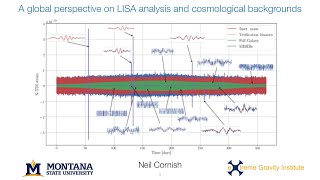
A Global Perspective on LISA Analysis and Cosmological Backgrounds
Explore LISA analysis and cosmological backgrounds from a global viewpoint, focusing on gravitational wave research and its implications for our understanding of the universe.
Flexible Analysis of Gravitational Wave Data - Signal Polarization and Detector Glitches
Explore advanced techniques for analyzing gravitational wave data, focusing on signal polarization and detector glitch identification in this in-depth presentation.
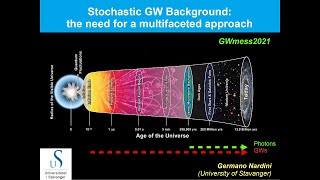
Stochastic Gravitational Wave Background - The Need for a Multifaceted Approach
Explore the multifaceted approach to understanding stochastic gravitational wave backgrounds, delving into advanced concepts in astrophysics and cosmology.
Gravitational Wave Data Analysis - Part 2
Explore advanced techniques in gravitational wave data analysis, focusing on signal processing and statistical methods for detecting and characterizing cosmic events.
Gravitational Wave Data Analysis - Part 1
Explore gravitational wave data analysis techniques, focusing on fundamental concepts and methodologies used in detecting and interpreting cosmic signals.