Geology and Game of Thrones - Part 1
Explore the geological aspects of Game of Thrones with Stanford scientist Miles Traer. Learn how pop culture can effectively communicate scientific concepts and discover the geologic history of Westeros.
Multi-scale Laboratory Experimentation in Hydrologic Sciences - Walter B. Langbein Lecture
Exploration of multi-scale laboratory experimentation in hydrology, discussing challenges and opportunities. Focuses on innovative approaches to studying subsurface environmental processes and advancing hydrologic sciences.
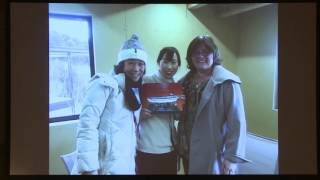
Disaster Resilience and Cosmic Exploration - Keynote Lectures
Renowned scientists Lucy Jones and Takaaki Kajita discuss disaster resilience, science communication, and cosmic exploration through neutrinos, gravitational waves, and gamma rays.
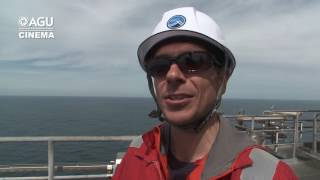
AGU Cinema - Exploring the Fault Trace
Embark on a cinematic journey aboard the Japanese Drilling Vessel "Chikyu" to explore fault mechanics and seismogenesis along subduction megathrusts in the Nankai Trough.
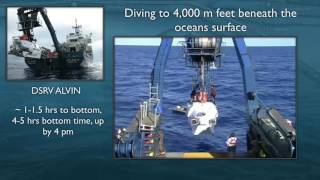
Bringing Underwater Volcanoes into Your Living Room - 2017 Chapman Conference
Explore the fascinating world of submarine volcanism with expert Deborah Kelly as she delivers a captivating keynote address on underwater volcanic activity and its implications.
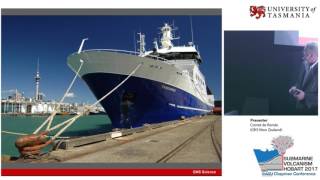
Intraoceanic Arc Seafloor Hydrothermal Systems - 2017
Explore intraoceanic arc seafloor hydrothermal systems with expert Cornel de Ronde in this keynote address from the 2017 AGU Chapman Conference on submarine volcanism in Tasmania.
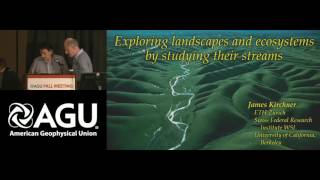
Hydrology Awards and Walter B. Langbein Lecture - Fall Meeting 2016
Prestigious hydrology awards ceremony featuring the Walter B. Langbein Lecture, recognizing outstanding contributions to water science and fostering excellence in the field.
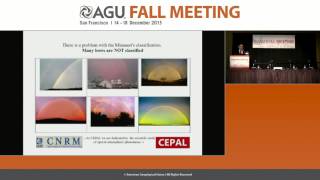
Why All Rainbows Don't Look Alike - New Classification System
Explore the science behind rainbow variations through a new classification system based on hundreds of images, offering insights into color band differences and atmospheric phenomena.
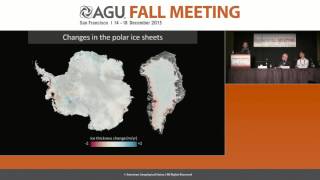
Measuring Polar Ice Sheets and Sea Level Rise - Latest Efforts
Experts discuss latest efforts to measure polar ice sheets, their impact on sea level rise, and challenges in providing accurate estimates using satellite and airborne surveys.
Unintentional Geoengineering: Whitening Skies and Changing Solar Radiation - Fall 2015
Explore unintentional geoengineering's impact on global cloud-free skies, solar radiation patterns, and Earth's surface through new data analysis and expert insights on atmospheric changes.
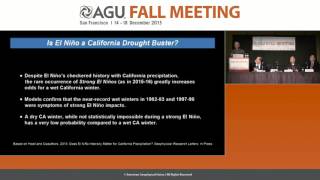
Global Impacts of the 2015-16 El Niño - NASA and NOAA Findings
Experts discuss global impacts of 2015-16 El Niño, including fire seasons, atmospheric changes, and potential drought relief, using NASA and NOAA satellite observations and research findings.
Union Education Tutorial - 2002 AGU Spring Meeting
Explore insights from the 2002 AGU Spring Meeting with Jack D. Fellows' educational tutorial, offering valuable perspectives despite potential technical limitations due to the video's age.
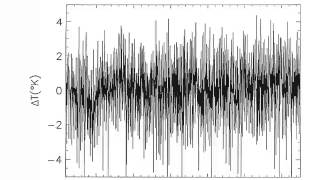
Complexity and Self-Organization in Earth Systems - Lorenz Lecture 2002
Explore self-organized complexity, predictability, and universal statistical distributions in natural systems through Donald L. Turcotte's insightful Lorenz Lecture at the 2002 AGU Fall Meeting.
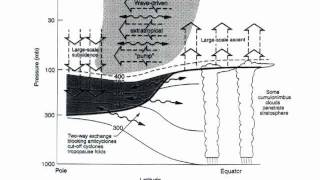
Solar-Terrestrial Coupling and Atmospheric Dynamics - 2001 Nicolet Lecture
Explore vertical motions, polar mesopause, and temperature trends in the atmosphere. Gain insights into supersaturation, plasma, and tropopause dynamics from renowned scientist George C. Reid.
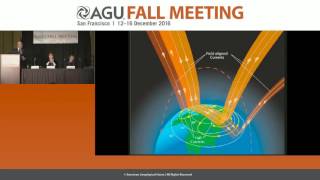
New Research on the Ionosphere - Our Interface to Space
Explore groundbreaking research on the ionosphere, its impact on Earth's communications, and upcoming NASA missions to study this crucial atmospheric region between our planet and space.
The Kaikoura Earthquake - Latest Observations and Landscape Effects
Scientists share latest observations on the Kaikoura earthquake's seismology and landscape effects, offering insights into this significant geological event that reshaped New Zealand's South Island.
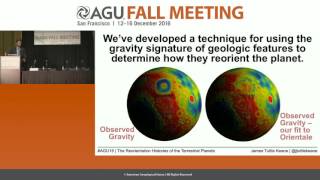
Tracking the Reorientation of Terrestrial Planets - True Polar Wander
Explore how major geological events can cause True Polar Wander on terrestrial planets, affecting their orientation and geological history over time.
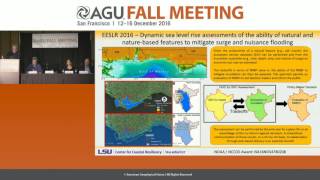
Water World: Historic Floods, Sea Level Rise, Storm Surge and Climate Change
Climate change impacts on coastal communities: Experts discuss sea level rise, flooding, and storm surge, presenting new assessments for the northern Gulf of Mexico and global coastal regions based on climate projections for 2100.
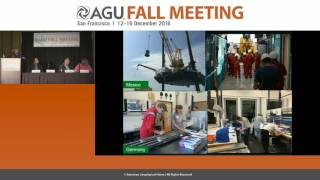
Chicxulub Impact Crater Drilling Expedition: New Findings on Ecosystem Recovery
Expedition scientists present new findings on the Chicxulub crater, revealing unexpected consequences of the dinosaur-killing asteroid impact on subsurface organisms and ocean life.
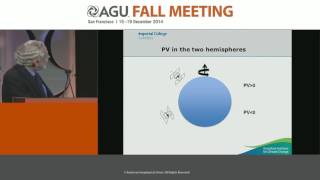
Cross-equatorial Flow and the Hadley Cell
Explores the complexities of cross-equatorial air movement in the Hadley Cell, challenging traditional views and discussing implications for weather and climate patterns.
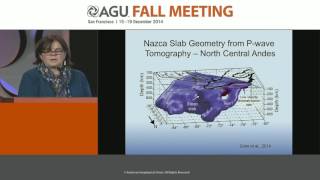
New and Evolving Seismic Images of the Central Andes and Subducting Nazca Slab - 20 Years of Portable Seismology Results
Explore 20 years of seismic imaging advancements in the Central Andes, revealing new insights into the Nazca Slab subduction and its impact on regional geology and tectonics.