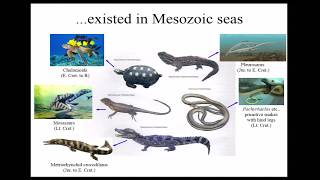
Global Distribution Achieved by Halisaurine Mosasaurs Explained by a New Discovery from Japan
New Japanese mosasaur skull discovery reveals insights into halisaurine survival strategies, explaining their global distribution in Cretaceous seas through unique adaptations and evolutionary traits.
Florida Fossils - Evolution of Life and Land
Explore Florida's prehistoric past through a virtual tour showcasing fossil evolution across geological epochs, featuring ancient mammals, megalodon sharks, and the reasons behind their extinction.
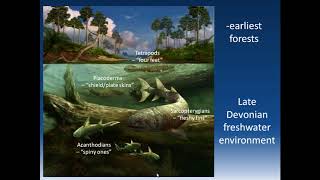
To Hay River and Back: Fieldwork on a 370-Million-Year-Old Beach in the Northwest Territories
Explore a 370-million-year-old beach in the Northwest Territories through paleontological fieldwork, fossil discoveries, and the challenges of excavating ancient marine life in remote Canadian landscapes.
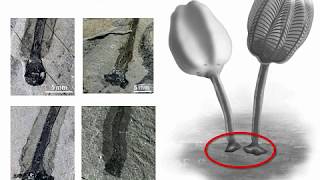
Community Structure in the Burgess Shale: Insights from a New Locality
Explore Burgess Shale's community structure through a new locality, examining preservation, ecology, and diversity of ancient marine life in this paleontological investigation.
Chasing Earthquake and Volcanism Signals in a Deep Marine Channel - The Hikurangi Channel New Zealand
Explore the Hikurangi Channel's geological history, examining earthquake and volcanic signals through sedimentary analysis of this massive deep marine system off New Zealand's coast.
Exploring Autogenic and Allogenic Processes in Lobyte3D
Explore autogenic and allogenic processes in deep-water fan systems using Lobyte3D, a stratigraphic forward model, to investigate signal recording and extraction in sedimentary strata.

Glacial Mars and Its Morphological Mysteries
Explore Mars' glacial landscapes, recent ice history, and morphological mysteries. Dr. Frances Butcher discusses glaciation, meltwater, and intriguing features like eskers and inverted channels on the Red Planet.
What Triggered the Cambrian Explosion? - Rachel Wood
Explore the triggers of the Cambrian Explosion, including oxygen stability, animal diversification, and predation's role in carbonate production, with insights from Ediacaran to Cambrian research.
The Carbonate Forum 2020 - Sedimentological Evaluation of Carbonate Platforms
Explore sedimentological aspects of carbonate platforms through four diverse presentations, covering morphology, evolution, coral carpets, and 3D outcrop analysis across different geological periods and regions.
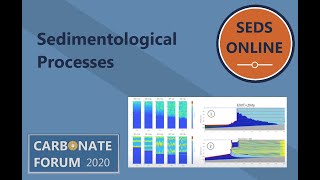
The Carbonate Forum - Sedimentological Processes
Explore sedimentological processes in carbonate environments, covering tempestites, coral facies, peritidal systems, and marine epiphytes. Gain insights from diverse case studies and modeling approaches.
Earth Science - The Earth-Moon System
Explore Earth-Moon dynamics, including rotations, phases, and eclipses. Understand key astronomical concepts and phenomena in our celestial neighborhood.
Earth Science - Climate Change (Part 2)
Explores Earth's carbon cycle, ozone depletion, biosphere sensitivity, deforestation, energy demand, and CO2 concentrations, emphasizing key environmental impacts and scientific evidence for climate change.
Earth Science - Air Masses, Fronts, and Midlatitude Cyclones
Explore air masses, fronts, and midlatitude cyclones, understanding their formation, characteristics, and impact on weather patterns and atmospheric dynamics.
Earth Science - Air Pressure and Wind
Explore air pressure, wind patterns, and global circulation, including Coriolis effect, weather systems, and local phenomena like sea breezes and mountain winds.
Earth Science - Clouds and Precipitation
Explore cloud formation, types, and precipitation processes in this comprehensive lecture on atmospheric phenomena and weather patterns.
Earth Science - Lift and Instability
Explore atmospheric lift mechanisms and stability types, understanding their impact on weather patterns and daily forecasting.
Earth Science - Atmospheric Moisture
Explore atmospheric moisture, phase changes, humidity concepts, and measurement techniques in Earth's atmosphere.
Earth Science - Atmospheric Temperature Controls
Explore factors influencing atmospheric temperatures, including latitude, land-water interactions, altitude, geography, and cloud cover. Gain insights into global temperature patterns.
Earth Science - Composition and Structure of the Atmosphere
Explore atmospheric composition, structure, and key elements influencing weather and climate. Understand the electromagnetic spectrum's role and differentiate between weather and climate.
Earth Science - Crustal Deformation
Explore crustal deformation, including stress types, rock deformation factors, and various geological structures like folds, faults, and joints in this comprehensive lecture.
Earth Science - Other Igneous Activity
Explore diverse igneous formations, from calderas to intrusive bodies, and learn about magma generation processes in this comprehensive lecture on volcanic activity.