The Future of AI for Drug Discovery
Explore the future of AI in drug discovery with leading experts discussing challenges, opportunities, and practical applications of machine learning in molecular research.
Accelerating Cryptic Pocket Discovery with Deep Learning
Explore deep learning techniques for accelerating cryptic pocket discovery in protein structures, focusing on simulation, key degrees of freedom, and tools like PocketMiner and AlphaFold.
Machine Learning for Molecular Structures and Drug Discovery
Explore machine learning applications in molecular structures, generative models, and protein analysis. Learn about tools like LigDream, TorchMD, and PlayMolecules for drug discovery and chemistry research.
Pre-training via Denoising for Molecular Property Prediction
Explore pre-training via denoising for molecular property prediction, learning force fields from equilibrium structures to improve generalization and achieve state-of-the-art results on QM9 dataset.
Applying Active Learning in Drug Discovery - There's No Free Lunch, but You Can Get a Discount
Explore active learning applications in drug discovery, from prioritizing molecules for synthesis to virtual screening of large libraries, with insights on machine learning's impact across the process.
Fragment-Based Hit Discovery via Unsupervised Learning of Fragment-Protein Complexes
Explore unsupervised machine learning for fragment-based hit discovery in drug development. Learn about FRESCO method, pharmacophore modeling, and its application in COVID-19 research.
A Computational Framework for Solving Wasserstein Lagrangian Flows
Explore a computational framework for solving Wasserstein Lagrangian flows, covering optimal transport variations and applications in single-cell trajectory inference.
Learning Representations on Biological Data with Weakly Supervised Learning
Explore weakly supervised learning for biological data representations. Discover PeML method for improved similarity metrics in perturbational experiments, enhancing mechanism of action identification and downstream analysis tasks.
PFGM++: Unlocking the Potential of Physics-Inspired Generative Models
Explore PFGM++, a physics-inspired generative model unifying diffusion models and PFGMs. Learn about its flexible embedding, unbiased objectives, and superior performance on image datasets.
Transformers Meet Directed Graphs - Exploring Direction-Aware Positional Encodings
Explore direction-aware positional encodings for transformers on directed graphs, enhancing performance in code understanding and sorting network correctness testing.

Improving and Generalizing Flow-Based Generative Models with Minibatch Optimal Transport
Explore advanced techniques for improving continuous normalizing flows, including generalized conditional flow matching and optimal transport CFM, enhancing generative modeling for various applications.
Generative Language Models in Molecular Discovery: Regression Transformer, GT4SD and Beyond
Explore generative language models for molecular discovery, focusing on the Regression Transformer and GT4SD toolkit. Learn about multitask approaches bridging regression and conditional generation for scientific applications.
Improvements on GFlowNets Applied to Molecular Discovery
Explore recent advancements in GFlowNets for complex molecular design, including multi-objective optimization, improved training strategies, and potential applications in scientific discovery and active learning.
Mirror Diffusion Models for Constrained and Watermarked Generation
Explore Mirror Diffusion Models for generating data on constrained sets, enhancing watermarking capabilities, and improving AI safety in drug discovery applications.
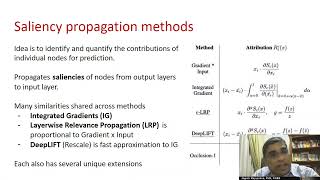
Explainable AI with Applications for Brain Imaging and Drug Discovery
Explore explainable AI techniques for deep neural networks, focusing on saliency backpropagation. Learn applications in biomarker discovery from fMRI data and drug mechanism prediction.

Trendspotting - Health Innovation the Morning After - TEDMED Great Challenges
Explore health innovation trends, challenges, and opportunities with experts from NASA to industry, discussing breakthroughs, barriers, and the future of healthcare delivery and monitoring.

SPARKing a New Generation in Translational Research - Daria Mochly-Rosen - TED
Discover how SPARK bridges academia and industry to accelerate drug development, featuring insights on overcoming challenges and fostering open collaboration in translational research.
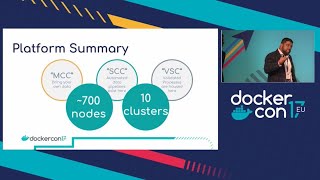
Letting Science Drive Technology at GlaxoSmithKline
Explore how GlaxoSmithKline leverages Docker to optimize drug discovery processes, streamline data management, and accelerate software deployment in pharmaceutical R&D.
We Need Better Drugs -- Now
Geneticist Francis Collins explores the gap between disease understanding and available treatments, proposing innovative solutions for accelerated drug discovery and development.
What is Artificial Intelligence?
Explore AI's fundamentals, applications, and impact on society in this energetic talk. Gain clarity on common AI terms and discover its potential in various fields, from image generation to drug discovery.
Accelerating Drug Discovery by Competitive Cooperation Through Open Source
Explore how Kubernetes enables collaborative machine learning in drug discovery, balancing data privacy and competitive interests among pharmaceutical companies.