
Interpretable Chirality-Aware Graph Neural Networks for QSAR Modeling in Drug Discovery
Explore an innovative Graph Neural Network approach for drug discovery, incorporating molecular chirality and offering interpretable results to enhance quantitative structure-activity relationship modeling.
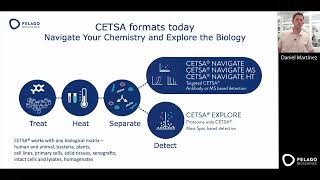
Impact of Cell Background on Small Compound Target Deconvolution by CETSA Coupled to Mass Spectrometry
Explore CETSA's role in target engagement and mode of action deconvolution, focusing on cell background impact and mass spectrometry coupling for small compound analysis.
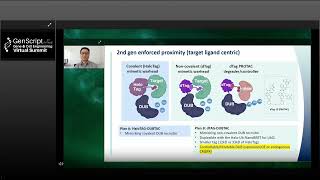
Advancing Protein Stabilization Therapeutic Development and DUBTAC Drug Discovery through Gene and Cell Engineering
Explore genetically modified cell models for drug discovery, focusing on protein stabilization and DUBTAC approaches. Learn how engineered cell lines accelerate therapeutic development and enable disease modeling.
Human-On-a-Chip Systems for Therapeutic Index Determination and Systemic Toxicity in Pre-Clinical Drug Discovery
Explore innovative Human-on-a-Chip systems for drug discovery, focusing on their application in therapeutic index determination and systemic toxicity assessment in pre-clinical stages.
Neural Network Potentials for Low-Energy 3D Structure Generation and Reactivity Prediction
Explore neural network potentials for efficient 3D structure generation and reactivity prediction in molecular modeling, featuring Auto3D package and ANI-2xt model advancements.
Molecule Representation Learning: A Perspective from Topology, Geometry, and Textual Description
Explore molecule representation learning through topology, geometry, and textual description. Gain insights into AI-driven drug discovery and molecular modeling techniques.
ProtMD: Incorporating Conformation Flexibility for Drug Binding via Pretraining on MD Simulations
Explore ProtMD, a novel approach incorporating protein flexibility in drug binding predictions using molecular dynamics simulations and self-supervised learning techniques for improved accuracy.

DiffDock: Diffusion Steps, Twists, and Turns for Molecular Docking
Explore DiffDock, a novel diffusion-based approach to molecular docking that outperforms traditional and deep learning methods in predicting ligand-protein binding structures for drug design.
Equivariant 3D-Conditional Diffusion Models for Molecular Linker Design
Explore equivariant 3D-conditional diffusion models for molecular linker design in drug discovery. Learn about DiffLinker's innovative approach to connecting multiple fragments and its applications in real-world scenarios.
Predicting Single-Cell Perturbation Responses for Unseen Drugs
Explore single-cell perturbation response prediction for novel drugs using an encoder-decoder architecture and transfer learning, enhancing drug discovery efficiency through in-silico hypothesis generation.
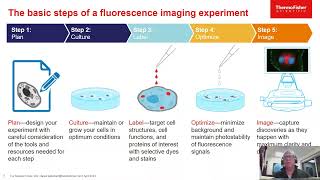
Practical Considerations for Fluorescent Cell Staining and Microscopy in Cancer Cell Biology
Explore fluorescence microscopy techniques for cancer research, covering cell staining, imaging methods, and applications in drug discovery and mechanism studies for 2D and 3D models.
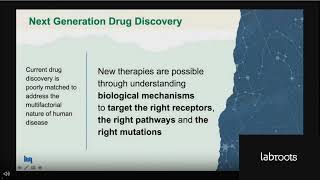
Enabling High-throughput Biology with New Technologies for Synthetic Construct Sequencing
Explore new methods and technologies accelerating sequence-based screening of plasmids for discovery, research, and biotechnology. Learn about ExpressPlex technology and its integration with rolling-circle amplification in OCTOPUS v3.0.
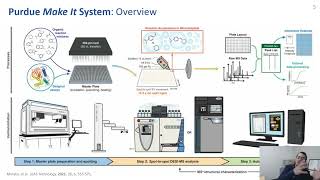
High-throughput Desorption Electrospray Ionization Mass Spectrometry for Reaction Screening, Nano-scale Synthesis and Bioanalysis
Explore high-throughput DESI-MS for drug discovery, including reaction screening, nano-scale synthesis, and bioanalysis. Learn innovative techniques for faster compound library synthesis and bioactivity assessment.
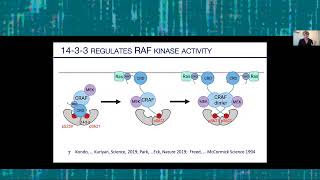
Modulating Cancer Networks with Molecular Glues
Explore molecular glues targeting 14-3-3 protein interactions to modulate MAPK pathway and C-RAF activity in cancer networks. Gain insights into innovative approaches for potential cancer therapies.
The Future of Chemistry - Self-Driving Laboratories and AI-Driven Discovery
Explore self-driving laboratories revolutionizing scientific discovery through AI and automation. Learn about cutting-edge applications, key elements, and opportunities in chemistry, materials science, and biotechnology.

Stability-Aware Boltzmann Estimator Training of Neural Network Interatomic Potentials
Explore advanced neural network interatomic potentials for molecular dynamics simulations using Stability-Aware Boltzmann Estimator Training to enhance stability and accuracy across various systems and architectures.
Combinatorial Perturbation Prediction Using Causally-Inspired Neural Networks
Explore PDGRAPHER, a novel graph neural network model for phenotype-driven drug discovery. Learn how it predicts perturbagens to reverse disease effects, offering faster and more efficient therapeutic target identification.
HyperPCM: Robust Task-Conditioned Modeling of Drug-Target Interactions
Explore HyperPCM, a robust method for predicting drug-target interactions using hypernetworks. Learn about its state-of-the-art performance on benchmarks and excellence in zero-shot inference for unseen protein targets.

MFBind - A Multi-Fidelity Approach for Evaluating Drugs in Generative Modeling
Explore MFBind, a multi-fidelity approach integrating docking and binding free energy simulations for improved drug discovery generative modeling. Learn its advantages over current methods.
Evaluating Retrosynthesis with Syntheseus and Retro-Fallback
Explore advancements in synthesis planning evaluation through syntheseus and retro-fallback, enhancing molecule discovery with probabilistic uncertainty and new search algorithms.
Removing Biases from Molecular Representations via Information Maximization
Explore InfoCORE, an innovative approach to remove batch effects in drug screening data, enhancing molecular representations for improved property prediction and molecule-phenotype retrieval.