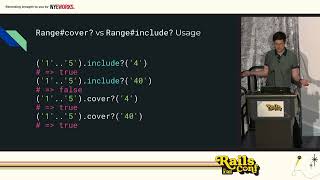
Similar Methods and Classes in Ruby and Rails - Comparing Options for Common Tasks
Explore similar but distinct Ruby and Rails methods for common tasks, comparing their differences, pros, cons, and edge cases to make more informed coding decisions.
Distributed GraphQL APIs - Breaking Down Monoliths and Unlocking Agility
Explore GraphQL federation for building scalable, distributed APIs. Learn to break down monolithic schemas, overcome challenges, and implement best practices for maintainable GraphQL architectures.

Leveraging Computational Storage for Simulation Science Storage System Design
Explore how computational storage innovations at Los Alamos National Laboratory overcome bottlenecks in simulation science, featuring implementations with ZFS offloads, flash key-value storage, and SQL-like processing.
Tracing Adventures from Pull Request to Production - Using OpenTelemetry for Deploy Troubleshooting
Discover how distributed tracing and OpenTelemetry signals can improve collaboration between developers and operators while troubleshooting deployment issues from PR to production.
Introduction to Lasso and Ridge Regression Models in R
Master linear regression regularization techniques through Lasso and Ridge methods in R, focusing on preventing overfitting and improving model reliability for more accurate predictions and estimations.
Row-level Modifications at Petabyte-scale via Impala on Iceberg
Discover how to perform efficient row-level modifications on massive datasets using Impala with Apache Iceberg, enabling petabyte-scale data management and manipulation.

Integrating AI with Real-time Data and RAG - Part 2
Dive into practical methods for integrating fine-tuned AI systems with external data sources, focusing on Retrieval Augmented Generation (RAG) and real-time data connectivity for enhanced AI applications.
How to Chat with LaTeX Documents Using GPT-4 Code Interpreter
Discover how to effectively communicate mathematical formulas with GPT-4 Code Interpreter by leveraging LaTeX documents for seamless AI interactions and improved formula comprehension.
Evaluating LLMs as AI Reasoning Agents - A Performance Comparison Study
Explore how different LLMs perform as AI agents in real-world tasks, comparing their effectiveness in database interactions, web bookings, and online product comparisons.
Comparing Direct Input vs Plugin Data Processing for LLMs - GPT-4 Case Study
Explore the impact of data input methods on GPT-4's performance, comparing direct PDF text input versus plugin-based processing, with focus on mathematical formula preservation and interpretation.
LangChain - Integrating External Documents and SQL with GPT-4
Dive into LangChain's capabilities for integrating external documents and SQL with GPT-4, learning to chain multiple data sources and leverage advanced language models effectively.
Analyzing and Visualizing OpenTelemetry Traces with SQL
Hands-on workshop exploring OpenTelemetry trace analysis using SQL and Grafana. Learn to ingest, query, and visualize distributed system data for powerful insights and proactive issue detection.

Getting AI to Do Things I Can't - Automatically Searching and Explaining Patterns in Text
Explore techniques for leveraging AI in complex NLP tasks, including pattern searching and SQL labeling, while enabling effective human oversight and uncovering unexpected insights.
How to Make Your Kubernetes Add-Ons Management Painless in Multi-Cloud Environments
Simplify Kubernetes add-ons management across multi-cloud environments. Learn to deploy applications seamlessly using Flux, Helm charts, YAML/JSON, and Lua templates for advanced configurations.
Text Processing in APL - Data-Parallel and Idiomatic Parsing Techniques
Explore APL's capabilities for text processing, parsing, and handling text-oriented applications. Learn data-parallel parsing techniques and their advantages over traditional methods.

Data Extraction via Semantic Regular Expression Synthesis
Explore semantic regexes for advanced data extraction, combining syntactic and semantic reasoning. Learn about a novel algorithm synthesizing these regexes from minimal examples.
Machine Learning in R - Repurpose Machine Learning Code for New Data
Learn to adapt machine learning code in R for new datasets. Explore data understanding, visualization, and model building techniques using the DHFR dataset as an example.
Train GPT-3 on Any Corpus of Data with ChatGPT and Knowledge Graphs - SCOTUS Opinions Part 2
Learn to process and analyze Supreme Court opinions using ChatGPT and knowledge graphs. Covers data cleaning, chunking, encoding, and visualization techniques with Python libraries.
Hugging Face Workshops - Pretraining Language Models & CodeParrot
Explore pretraining language models and CodeParrot, a code-writing AI. Learn data transformation, batching, evaluation, and tackle coding challenges in this hands-on workshop.
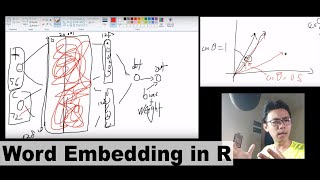
Word Embedding with Keras - A RStudio Tutorial
Learn word embedding techniques using Keras in RStudio. Covers theory, concepts, and practical implementation, including Keras basics and machine learning fundamentals for natural language processing.

Principal Component Analysis - PCA Clearly Explained - 2015
Clear explanation of Principal Component Analysis, covering dimensions, variance, loading scores, and key concepts for interpreting PCA plots in RNA-seq data analysis.