Containerd and LGTM Integration for Cloud Native Applications
Explore /lgtm integration with Containerd for efficient container image management and deployment in cloud-native environments.
Delivering Cloud-Native Apps to Kubernetes Using Werf
Explore werf, a CLI tool for seamless cloud-native app delivery to Kubernetes. Learn to build, push, and deploy using Git, Docker, and Helm, with GitOps integration for synchronized deployments.

MLOps - Machine Learning Production Grade Deployment Techniques - One-Shot Tutorial
Learn MLOps techniques for production-grade machine learning deployment across AWS and Azure platforms, including Elastic Beanstalk, EC2, Web Apps, and Docker with GitHub Actions.
Join the RISC-V Revolution - Getting Started with Ubuntu
Explore RISC-V architecture: supported hardware, virtual machines, boot flow, package building, and software availability. Learn about the evolving ISA and its implications for Ubuntu.
Evaluating LLMs with Weights & Biases and Docker Desktop
Learn to configure and evaluate open-source LLMs using Docker and Weights & Biases, with insights on automation, GitHub actions integration, and useful charts for performance analysis.
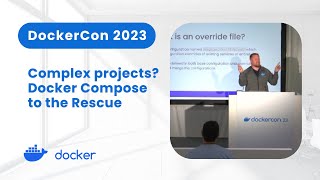
Docker Compose for Complex Projects - Modularizing and Sharing Configurations
Learn to manage complex Docker Compose configurations using override files, `include`, and `extends`. Discover techniques for modularizing and sharing common parts across projects to streamline your development workflow.
Before and After Docker Init - Simplifying Containerized Application Deployment
Explore the evolution of Docker deployment resources generation, comparing pre and post Docker Init command approaches using the Alfresco Docker installer as a real-world example.
The Incredibly Flexible OCI Image Format - Advanced Container Image Management
Explore advanced container image management techniques, including building without Dockerfiles, targeting multiple application types, and efficient distribution, to enhance your containerized development experience.
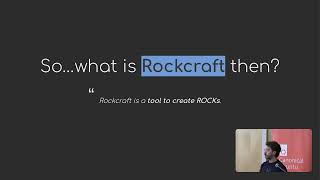
Container Craftsmanship - From Pebble to ROCK Workshop
Hands-on workshop exploring ROCKs, Rockcraft, and Pebble. Learn to build, optimize, and manage container images through interactive exercises and practical challenges suitable for all skill levels.
Managing Kubernetes Applications Without Expertise - Lens AppIQ Tutorial
Simplify Kubernetes app management with Lens AppIQ. Learn to import, deploy, monitor, and visualize applications without deep Kubernetes knowledge. Ideal for developers focusing on app development and business value.
Hands-on Containerization: Chiseling .NET 8 Applications with Ubuntu
Guided workshop on containerizing .NET 8 applications using Ubuntu, focusing on creating minimal, secure OCI images. Learn practical skills for efficient container development and deployment.
Simplifying Containers and Kubernetes on Your Laptop with Podman Desktop
Explore Podman Desktop, an open-source GUI tool that simplifies container workflows and bridges local development to Kubernetes deployment, enhancing predictability and security in your container processes.
Delivery and Debugging MariaDB Docker Official Images - Challenges and Solutions
Explore container-specific challenges, CI/CD benefits, and debugging strategies for MariaDB Docker images. Learn to avoid pitfalls and enhance database performance in containerized environments.

Debugging Innovation with Docker - New Debug Toolkit
Explore Docker's new debug toolkit to tackle common container issues, enhance troubleshooting skills, and gain deeper insights into container technology for improved usability and development efficiency.

Docker Extensions - From 0 to 1 Million Installs
Explore Docker Extensions' rapid growth, marketplace offerings, and learn to build custom tools using the Extensions SDK to enhance developer workflows and productivity.
The Matrix Reloaded - Dockerized and Multi-Platform Ready
Explore building, optimizing, and deploying multi-platform Docker containers using cmatrix. Learn to compile code, handle dependencies, and create minimal-size images for various architectures.
Processing Docker Container Logs and Metrics at Scale
Explore containerized application logging, including filesystem vs. network events, multiline messages, and in-motion parsing. Learn best practices for scalable log processing and data analysis using Fluent Bit.
Docker and Nix - Integrating Package Ecosystems for Consistent Environments
Explore integrating Nix package ecosystem with Docker, comparing it to Debian and Alpine. Learn to synchronize development, CI, and production environments using sample applications in various programming languages.
Building and Testing Cloud Apps with LocalStack on Docker
Learn to create local cloud sandboxes using LocalStack and Docker, optimizing cloud app development and testing. Reduce deployment cycles, debug efficiently, and enhance team collaboration with Cloud Pods and Docker ecosystem integration.
Bring Your App into the AI-Age with Weaviate and Docker - DockerCon 2023
Explore integrating AI capabilities into your applications using Weaviate and Docker. Learn about vector databases, LLMs, and overcoming hallucination through Retrieval Augmented Generation for AI-powered features.
Building LangChain-Based Database-Backed GenAI Applications with Docker - DockerCon 2023
Learn to develop GenAI applications using LangChain and databases within Docker. Explore new technologies for quick setup and gain insights from industry experts on leveraging large language models in your projects.