All You Need to Know to Get Started with Microservices on Kubernetes
Comprehensive introduction to deploying microservices on Kubernetes, covering key concepts, resources, and practical implementation using a real-world scenario.
Past, Present and Future of Microservices
Explore microservices' evolution, benefits, challenges, and future trends in cloud computing, focusing on AWS implementations and best practices for modern software architecture.
Building Stateful Clustered Microservices with Java, Actors, and Kubernetes
Explore building stateful clustered microservices using Java, actors, and Kubernetes. Learn about the actor model, resilient systems, and practical implementation in a Kubernetes environment.
Serverless Machine Learning Systems with Hopsworks and Github Actions
Learn to build an operational prediction service using Python and free serverless tools. Explore feature pipelines, batch predictions, and MLOps best practices with a real-world surfing wave height prediction example.
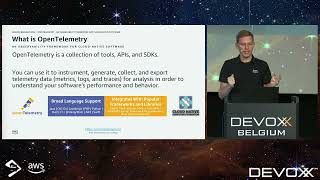
OpenTelemetry - An Observability Framework for Cloud Native Software
Explore OpenTelemetry, a vendor-agnostic observability framework for cloud-native software. Learn about its specification, integration with frameworks, and focus on solving operational challenges in distributed architectures.

Istio, Your K8S Cluster Best Friend
Explore Istio's capabilities for managing distributed systems, including circuit-breaking, retries, and blue-green deployments. Learn how it enhances Kubernetes clusters and simplifies microservices development.
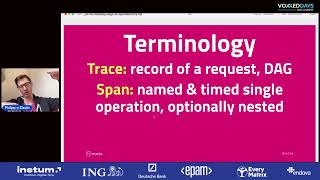
The State of OpenTelemetry
Explore OpenTelemetry's evolution, standards, and practical implementation in tracing and metrics. Learn about production-ready features, auto-instrumentation capabilities, and real-world experiences.
Keynote - Kubernetes Native Java
Explore Spring Boot's capabilities for developing fast, cloud-native services optimized for Kubernetes deployment, with insights from Spring Developer Advocate Josh Long.
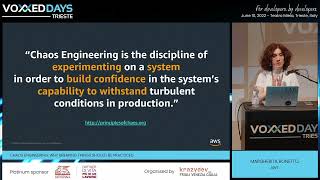
Chaos Engineering - Why Breaking Things Should be Practiced
Explore chaos engineering to build resilient systems by simulating failures. Learn how to uncover hidden issues and improve application performance through controlled disruptions.
Exploring Stateful Microservices in the Cloud Native World
Exploring stateful microservices in cloud-native systems, focusing on data integrity, concurrency, and deployment strategies using Open Liberty and MicroProfile.
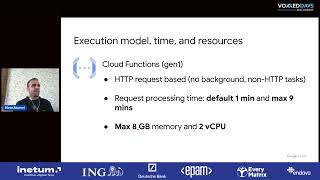
Serverless Landscape Beyond Functions
Explore the diverse serverless landscape, including containerized apps, API gateways, orchestrators, event-driven architectures, scheduled services, and hybrid serverless-serverful solutions.

Operate Kubernetes Workloads - Extend the Platform with the Operator Pattern
Explore the operator pattern for managing Kubernetes workloads efficiently. Learn how software-based operators can automate installation, upgrades, and maintenance, reducing human intervention in cloud-native environments.

Rusty Container Ships - Kubernetes Outside the Datacentre
Exploring how Kubernetes and Rust can be adapted for IoT applications beyond traditional datacenters, bringing cloud technologies to real-world scenarios.
Forget Mono vs. Multi-Repo - Building Centralized Git Workflows for All Apps
Discover a unified Git workflow solution for any repo architecture, implemented in Python, to streamline CI/CD processes and significantly boost development velocity.
Elegant Builds at Scale with Gradle 3.0
Scaling build infrastructure with Gradle 3.0 for large projects: standardization, dependency management, caching, multi-language builds, and advanced IDE integration.
Microservices and the PaaS - A True Love Story
Explore microservices architecture and PaaS implementation in a real-world healthcare project, focusing on deployment, communication, and zero-downtime strategies using OpenShift and G-Cloud.
Designing for Performance
Explore high-performance software design, focusing on response times, throughput, and scalability. Learn about modern hardware, abstraction layers, and practical techniques for optimizing system performance.
Docker Security for Developers
Practical guide for developers on Docker security best practices, covering strong defaults, official images, least privilege, and microservices to enhance application security.
Migrate Your Traditional VM-Based Clusters to Containers
Learn to migrate VM-based clusters to containers using Docker, Kubernetes, Mesos, and OpenShift. Explore scalable architectures, design patterns, and deployment strategies for containerized applications across various frameworks.
Combining 2 Clouds - An End-to-End DevOps Demo
Continuous build and deployment of Java Web apps using Linux, Docker, Jenkins, and Maven on Azure and OpenShift. Learn end-to-end DevOps practices for containerized applications across multiple cloud platforms.
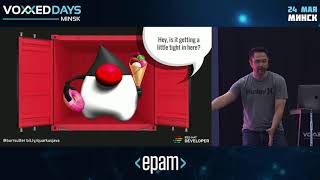
Supersonic, Subatomic Java with Quarkus
Explore Quarkus for high-performance Java development, focusing on its supersonic speed and subatomic footprint. Learn how to build efficient, scalable applications with this innovative framework.