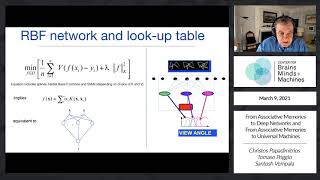
From Associative Memories to Deep Networks and From Associative Memories to Universal Machines
Explore the evolution from associative memories to deep networks and universal machines, discussing their similarities, limitations, and potential for understanding human intelligence.
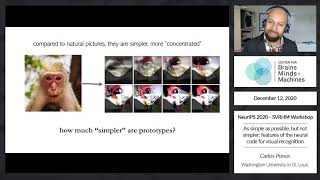
As Simple as Possible, but Not Simpler - Features of the Neural Code for Visual Recognition
Explore visual recognition in the brain through neural coding, feature visualization, and experiments comparing monkey behavior with convolutional neural networks.
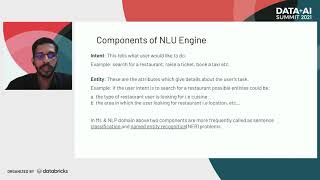
Conversational AI with Transformer Models - Building Blocks and Optimization Techniques
Explore building conversational AI agents using transformer models, covering advantages over RNN/LSTM, knowledge distillation, and model compression techniques for efficient production deployment.
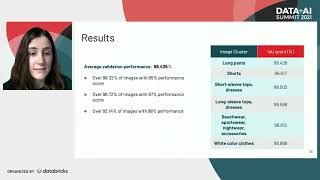
Automated Background Removal Using PyTorch - Wehkamp's Image Processing Pipeline
Discover an automated pipeline for efficient background removal in product images using PyTorch and machine learning, enhancing visual experiences for e-commerce customers.
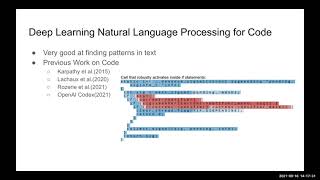
Automated Software Vulnerability Detection with Deep Learning for Natural Language Processing
Explore deep learning techniques for automated software vulnerability detection using natural language processing, covering data sets, pretraining, architecture, and results.

Easy Audio-Reactive Music Videos with Deforum and Automatic1111
Create audio-reactive music videos using Deforum and Automatic1111 webui. Learn to synchronize visuals with audio, install tools, choose prompts, and generate stunning AI-powered animations for your music.

How to Use Aesthetic Gradients - Stable Diffusion Tutorial
Learn to train and use aesthetic embeddings in Stable Diffusion for personalized text-to-image generation. Covers installation, using pretrained embeddings, training new ones, and comparing results.

How to Install XFormers and Run Stable Diffusion Faster on 4GB RAM
Optimize Stable Diffusion performance with XFormers: Learn to install and implement this efficiency-boosting library, achieving 1.5x faster processing on 4GB RAM systems.
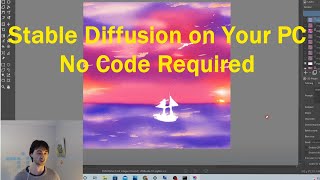
How to Run Stable Diffusion on Your Computer Without Writing a Single Line of Code - Using Krita
Learn to run stable diffusion in Krita without coding. Step-by-step guide covers installation, setup, and basic image generation using this powerful AI art tool on your local machine.

Textual Inversion and Hypernetworks - Stable Diffusion 2
Deep dive into training Hypernetworks and Textual Inversion Embeddings for Stable Diffusion, covering setup, models, and best practices for optimal results, even with limited image data.

Stable Diffusion Dreambooth Tutorial - Just Like Corridor Crew
Learn to use Dreambooth SD Optimised for adding custom elements to Stable Diffusion. This tutorial covers setup, training, and inference, with tips for different hardware configurations.
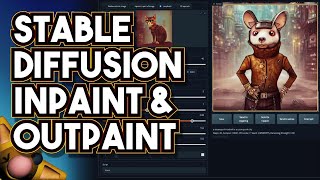
Stable Diffusion - Inpainting, Outpainting, Upscaling & More
Explore advanced Stable Diffusion techniques: inpainting, outpainting, upscaling, and more. Learn to use web interfaces, create on iPads, and enhance images with various tools and methods.
Convolutional Neural Networks
Explore convolutional neural networks for computer vision, covering feature extraction, convolution operations, and applications like object detection and self-driving cars.
Making the Most Out of Hardware Accelerators in Kubernetes Clusters
Optimize GPU and TPU usage in Kubernetes clusters for MLOps. Learn efficient hardware accelerator management, scaling, and time-sharing techniques to enhance machine learning workloads.
AI and Observability Role in E-Government Ecosystem
Explore how AI and observability enhance e-government IT operations, using open-source tools for telemetry data analysis and deep learning to improve service delivery and efficiency.
Building AutoML Pipelines with Argo Workflows and Katib
Explore AutoML pipelines using Argo Workflows and Katib for efficient model selection and hyperparameter tuning in Kubernetes environments, enhancing MLOps processes.
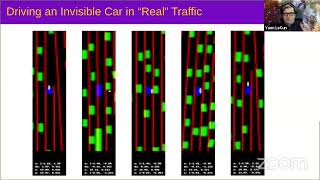
The Deep Learning - Applied Math Connection
Explore the intersection of deep learning and applied mathematics, focusing on advancements in signal processing, optimization, and self-supervised learning for predictive modeling.
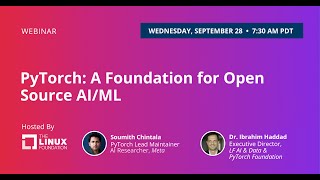
PyTorch: A Foundation for Open Source AI/ML - Live Webinar
Explore PyTorch's evolution, usage, and future with its creator. Learn about the new PyTorch Foundation and discover opportunities in open-source AI/ML development.
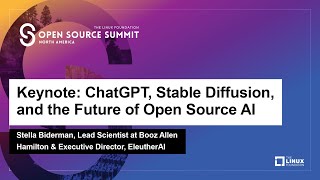
ChatGPT, Stable Diffusion, and the Future of Open Source AI
Explore the impact of generative AI on open source ethics, data usage, and individual rights, with insights from a leading AI scientist on the future of this technology.
Training AI to Code Using Project CodeNet - The Largest Code Dataset
Explore Project CodeNet, the largest AI-ready dataset for code, and its potential to revolutionize AI-assisted programming and software development automation.

What Are Machines Really Learning to Do? - Advancements in AI and Machine Learning
Explore the rapid advancements in machine learning, its impact on various industries, and the complex tasks AI systems are now capable of performing.