
Stable Diffusion- Applying ControlNet to Character Design - Part 2
Explore advanced techniques in AI-powered character design using ControlNet 1.1, including inpainting, targeted variations, and contextual upscaling for enhanced digital illustrations and PNGtubers.
When Is Scale Enough?
Exploring performance predictability in deep learning as models and datasets scale up, focusing on large language models and investigating solvable problems through scaling alone.
ChatGPT - Water Sector Applications
Explore AI and large language models in water industry applications, including ChatGPT capabilities, live demos, software integration, and potential risks and opportunities.
Approximating Many-Electron Wave Functions Using Neural Networks - IPAM at UCLA
Explore neural network applications in quantum mechanics, focusing on Fermionic neural networks for approximating many-electron wave functions and enhancing variational quantum Monte Carlo methods.
Incorporating Symmetry for Learning Spatiotemporal Dynamics - IPAM at UCLA
Explore how incorporating symmetries into deep neural networks enhances physical consistency and improves learning of spatiotemporal dynamics in scientific applications.
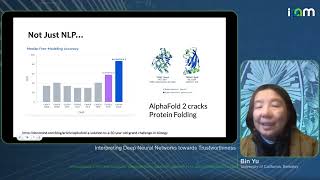
Interpreting Deep Neural Networks Towards Trustworthiness - IPAM at UCLA
Explore techniques for interpreting deep neural networks, including ACD and AWD methods, to enhance trustworthiness in AI applications across scientific domains.
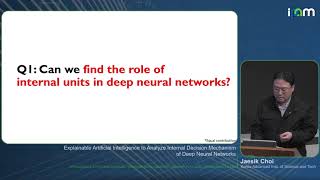
Explainable AI to Analyze Internal Decision Mechanism of Deep Neural Networks
Explore techniques for understanding and improving deep neural networks' decision-making processes, focusing on safety in critical applications and automatic correction of unreliable internal nodes.
From Network Dissection to Policy Dissection - Emergent Concepts in Deep Representations
Explore emergent concepts in deep neural networks, from image classification to reinforcement learning, revealing inner workings and enabling meaningful human-AI interactions for content creation and robotics control.
Contextual Conformational Variability in CryoEM and CryoET Using Deep Learning
Explore deep learning methodologies for analyzing CryoEM and CryoET data, focusing on population dynamics and contextual annotation of macromolecules in cellular environments.
Neural Network-Assisted Atomic Electron Tomography - IPAM at UCLA
Neural network-assisted atomic electron tomography for 3D atomic structure measurement of nanoparticles, enabling precise surface characterization and functional property analysis at single-atom level.
AI Inroads in Imaging Sciences for Materials Research - IPAM at UCLA
Explore deep learning applications in materials research, focusing on convolutional neural networks for transmission electron microscopy and tomographic imaging advancements.
Toward Practical Phase Retrieval with Deep Learning - IPAM at UCLA
Exploring phase retrieval challenges, conventional methods, and deep learning approaches for scientific imaging. Presents novel solutions for practical phase retrieval problems in unprecedented regimes.
Learning Deep Matrix Factorizations Via Gradient Descent - Implicit Bias Towards Low Rank
Explores implicit bias in gradient descent algorithms for deep matrix factorizations, analyzing convergence to low-rank matrices and discussing implications for tensor decompositions.
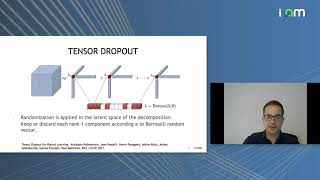
Efficient Tensor Representation for Deep Learning with TensorLy and PyTorch
Explore tensor methods for deep learning, improving performance, speed, and robustness. Learn practical implementation using TensorLy-Torch for video and image classification tasks.
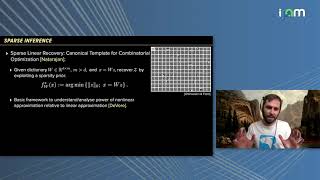
On Sparse Linear Programming and Simple Neural Networks
Explores connections between sparse linear programming and neural networks, focusing on overparametrized learning and sparse inference from computational perspectives.
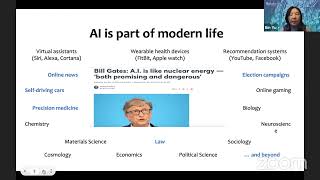
Interpreting Deep Neural Networks Towards Trustworthiness
Explores methods for interpreting complex neural networks, introducing ACD and AWD techniques. Advocates for a quality-controlled data science lifecycle to ensure trustworthy model interpretation.
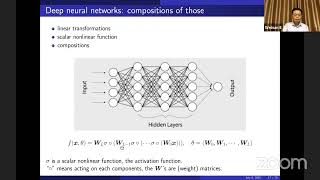
A Mathematical Perspective on Machine Learning
Explore deep learning's impact on AI and science, its theoretical foundations, and its potential for solving high-dimensional problems in scientific computing and beyond.
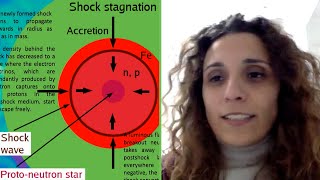
Deep Learning Algorithm for Core-Collapse Supernova Detection
Explore deep learning algorithms for detecting gravitational waves from core-collapse supernovae, enhancing multi-messenger astronomy and uncovering insights into extreme cosmic events.
Deep Learning and Shape Modelling for Medical Image Reconstruction, Segmentation and Analysis
Explores deep learning techniques for MR image processing, incorporating anatomical shape information as prior knowledge to enhance reconstruction, super-resolution, and segmentation in medical imaging applications.
Quantifying the Topology of Coma
Explore a novel graph distance measure based on non-backtracking cycles, its relation to network features, and its application in distinguishing brain networks of healthy and comatose patients.
Geometry, Optimization and Generalization in Multilayer Networks
Explore the interplay of geometry, optimization, and generalization in multilayer networks, focusing on representation learning and its applications in deep learning architectures.