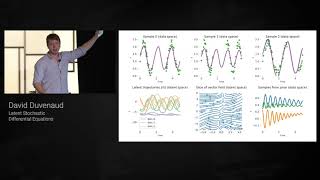
Neural ODEs: Continuous-Time Models for Machine Learning - TMLS 2019
Explore neural networks as implicit models and their applications in scientific computing with David Duvenaud at TMLS2019.

Analyzing the Security of Machine Learning for Algorithmic Trading
Explore adversarial attacks on ML-based algorithmic trading systems, evaluating robustness and discussing realistic attack scenarios in financial markets.
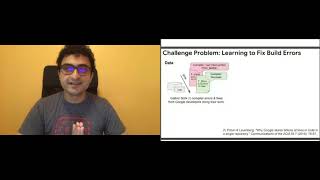
Deep Learning for Program Repair
Explore Google's ML4SE research on training deep learning models to fix software build errors, enhancing developer productivity and reducing project delays.
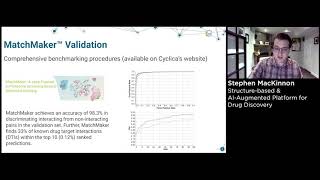
PolypharmDB: Quickly Identifying Repurposed Drug Candidates for COVID-19
Explore PolypharmDB, a deep learning-based resource for identifying repurposed drug candidates for COVID-19. Learn about accelerated drug discovery methods using existing clinical data.
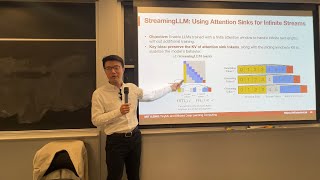
StreamingLLM: Deploying Language Models for Streaming Applications with Long Text Sequences
Explore innovative techniques for deploying LLMs in streaming applications, focusing on the "attention sink" phenomenon and efficient KV cache management.
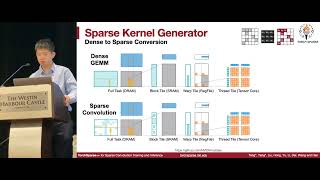
TorchSparse++ - Efficient Training and Inference Framework for Sparse Convolution on GPUs
Explore efficient GPU-based sparse convolution with TorchSparse++, an advanced framework for training and inference in deep learning applications.
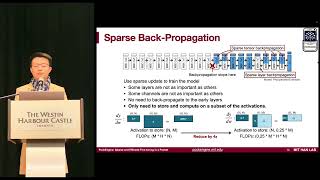
PockEngine: Sparse and Efficient Fine-tuning in a Pocket
Explore sparse and efficient fine-tuning techniques for AI models with PockEngine, enhancing performance while reducing computational demands.

Fine-tuning Large Language Models (LLMs) with Example Code
Learn to fine-tune large language models with practical Python examples. Explore techniques like LoRA for efficient parameter tuning and implement a text classification model using distilBERT.
The Fragmented ML Stack and How to Fix It
Explore the fragmented ML stack, understand Ivy's role in unification, and see demonstrations of function, library, and model transpilation.

Ivy: Quickstart and Introduction to Features - Demo 01
Get up to speed with Ivy's features and capabilities for efficient machine learning development, instant sharing, and optimal deployment.

How Data Powers Stable Diffusion and Generative AI
Explore the crucial role of data in developing Stable Diffusion and Generative AI with insights from Stability AI's CEO on leveraging data-driven approaches to drive innovation and shape AI's future.

Strategies to Integrate Data and Biogeochemical Models
Explore integrating data and biogeochemical models using Sindbad.jl framework. Learn hybrid approaches combining physics-based models with neural networks for ecosystem dynamics simulation.

Integrating Julia for Perception Tasks in Autonomous Driving
Explore Julia's potential in autonomous driving perception tasks, from LIDAR processing to ML algorithm development and integration in real vehicles.
Bytedance Deep Learning: Batch Flow Integrated Training Practice
Explore ByteDance's batch-stream integrated AI training engine, supporting large-scale cloud-native models for various businesses. Learn about flexible scheduling, data orchestration, and performance optimization techniques.
Uncertainty Quantification in Metacognition
Explore uncertainty quantification in metacognition and its applications in AI research, focusing on DARPA-funded efforts and advancements in neuro-symbolic approaches.

The Reality of Building a Modern AI Data Stack
Explore complexities of modern AI data stacks, balancing complexity, cost, scalability, and performance. Discover deep learning, LLMs, data management at scale, Data Mesh integration, and leveraging Data Products.

LLM Fine-Tuning - Explained
Explore parameter efficient fine-tuning techniques for large language models, including adapters, prefix-tuning, and LoRA. Learn their importance, implementation details, and performance evaluation.
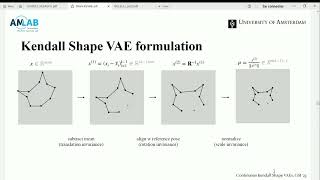
Continuous Kendall Shape Variational Autoencoders
Explore unsupervised learning of geometric representations using equivariant VAEs with hyperspherical latents, extending Kendall-shape VAEs for improved representation capacity.
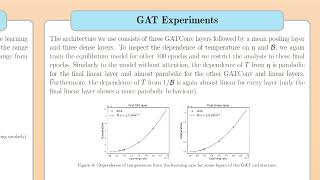
Geometric Deep Learning: A Temperature-Based Analysis of Graph Neural Networks
Explore graph neural networks through temperature-based analysis in geometric deep learning, uncovering insights into their behavior and performance.
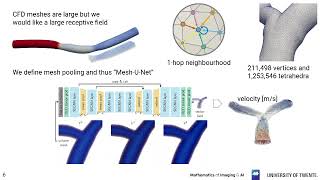
SE3 Equivariant Hemodynamic Field Estimation in 3D Artery Models via Graph Neural Networks
Estimate hemodynamic fields in 3D artery models using SE3 equivariant graph neural networks, enhancing accuracy and efficiency in cardiovascular research.
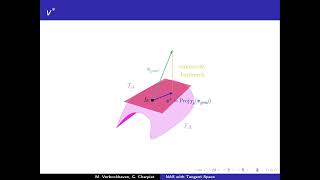
Spotting Expressivity Bottlenecks and Fixing Them Optimally
Discover techniques to identify and optimally resolve expressivity bottlenecks, enhancing system performance and efficiency.