Frugality for Sequential Prediction: Reaching Bounded Regret While Using Expert Advice Sparingly
Explore sequential prediction strategies for bounded regret using expert advice sparingly, focusing on frugal approaches in machine learning.
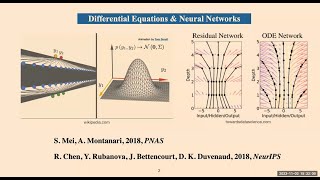
Continuous-in-time Limit for Bandits
Explore the connection between Hamilton-Jacobi-Bellman equations and multi-armed bandit problems, and discover an efficient algorithm for solving MAB challenges.

Can Quantum Machines Execute Complex Adaptive Strategies More Efficiently?
Explore quantum-enhanced agents' potential to execute complex adaptive strategies with reduced computational costs and improved efficiency in real-time decision-making scenarios.
Intro to Artificial Intelligence - MDP and Dynamic Programming - Lecture 15
Explore Markov Decision Processes and Dynamic Programming in AI, learning algorithmic techniques for modern problem-solving in game environments.
Introduction to Artificial Intelligence - Game Theory - Lecture 9
Explore game theory concepts and applications in AI, focusing on advanced strategies and decision-making in multi-agent environments.
COMP3200 - Introduction to Artificial Intelligence - MDP and Dynamic Programming - Lecture 16
Explore Markov Decision Processes and Dynamic Programming in AI, learning algorithmic techniques for modern problem-solving in game environments.
Intro to Artificial Intelligence - Markov Decision Process (MDP) - Lecture 17
Explore Markov Decision Processes (MDPs) in AI, learning algorithmic techniques for modern problem-solving in uncertain environments.
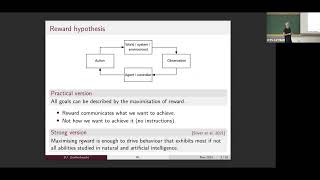
Introduction to Reinforcement Learning Theory and Methods - Lecture 1
Master the fundamentals of reinforcement learning through theoretical concepts and practical applications, covering Markov decision processes, dynamic programming, and temporal differences with hands-on exercises.
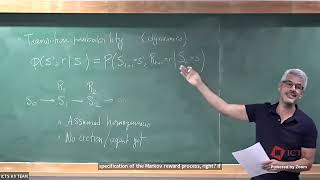
A Short Course on Reinforcement Learning - Lecture 2
Master the fundamentals of reinforcement learning through comprehensive lectures covering Markov decision processes, dynamic programming, and temporal differences, with hands-on practical applications.
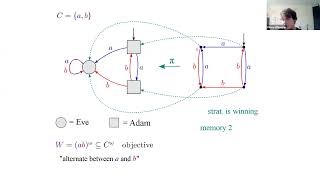
Games on Graphs - Memory Requirements and Strategy Analysis
Explore the theoretical foundations of graph-based games, focusing on strategic approaches, memory requirements, and applications in parity and mean-payoff scenarios.

Pathwise Conditioning and Non-Euclidean Gaussian Processes
Explore advanced Gaussian process techniques for efficient Bayesian optimization, including pathwise conditioning and models on graphs and manifolds, enhancing decision-making in complex settings.
Introduction to Artificial Intelligence: Game Theory and Matrix Games - Lecture 8
Explore game theory fundamentals and matrix games in AI, covering key concepts and strategies for problem-solving in competitive environments.
Introduction to Probabilistic Models - Lecture 1
Explore probabilistic models, their applications, and fundamental concepts in this comprehensive introduction by Silja Renooij at the Nordic Probabilistic AI School.

Information-Directed Sampling for AI Agent Alignment - From Theory to Practice
Explore Stanford's groundbreaking Information-Directed Sampling approach for aligning AI agents with human values, focusing on optimal decision-making and continuous learning in dynamic environments.

Learning to Disagree: Rational Agents and Persistent Polarization
Explore how rational agents can maintain disagreements despite information exchange, examining Aumann's theorem and the role of perceived opposing preferences in driving persistent polarization.
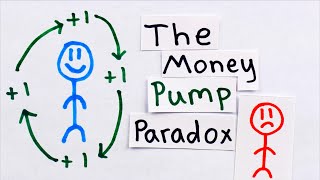
The Paradox of Intransitive Preferences in Rational Choice Theory
Explore the fascinating concept of intransitive preferences in rational choice theory, examining the money pump paradox and its implications for mathematical decision-making models.
Sequential Decision Making Under Uncertainty - Information Asymmetry in AI Systems
Delve into sequential decision-making under uncertainty, exploring persuasion and mechanism design in information asymmetry scenarios, with applications to AI and dynamic modeling frameworks.

فك شفرة النفس البشرية | Ahmed El-Fiky - أحمد الفقي | TEDxAssuitUniversity
هل تصرفاتنا نتيجة اختياراتنا الحرة… أم أننا نعيش وفق شفرة نفسية مُبرمجة فينا منذ الولادة؟ كل مرحلة من حياتنا تحمل أسرارها الخاصة، من طفولة تُشكّل هويتنا، إلى تمرد يبحث عن معنى، إلى تساؤلات لا تنتهي عن الحرية والمسؤولية والمصير. يأخذنا د.أحمد الفقي في رحلة فلسفية ونفسية عبر مراحل الإنسان من الولادة
The Paradox of Choice: Why Having More Makes Us Feel Less | Dana Alawi | TEDxMAS Youth
“The Paradox of Choice: Why Having More Makes Us Feel Less” examines the psychological impact of abundance on decision-making. Drawing on research in behavioral economics and psychology, it explores how excessive choices can lead to anxiety, indecision, and diminished satisfaction, offering insights

The Hidden Illusion Behind Our Decisions | Nitesh Prasad | TEDxNicmar
The Hidden Illusion Behind Our Decisions: We believe we are in control of our choices - our career, our studies, our job switches, our certifications, even our failures. But are we really deciding… or are we simply reacting to pressure, trends, fear and social expectations? In this talk, The Hidden

Why Do We Hesitate to Take Risks? | Dan Ariely | TEDxHM
Behavioral economist Dan Ariely, the author of Predictably Irrational, argues that in many areas of our lives we are too apprehensive of downside consequences and therefore don't take enough risks. After making this point, he suggests a few ways that could help us integrate more risk so that we can