Docker for Web 3.0 - Building Decentralized Apps and Infrastructure
Learn to leverage Docker for decentralized infrastructure in Web 3.0, including deploying traditional apps, creating dApps, and utilizing decentralized tools for registry, volumes, and content storage.
How to Dockerize an Ethereum Decentralized Application
Learn to create and containerize a decentralized Ethereum app using Docker. Build a smart contract, interact with the blockchain using Node.js, and develop a React frontend. Gain practical skills in blockchain development and containerization.
IPFS and Browsers - Synergistic Decentralization for the Masses
Explore IPFS integration in browsers, its impact on web3 adoption, and the advantages for decentralized app deployment, focusing on Brave's implementation and future browser support.
Dataverse Computer: Next-Gen Data Wallets and Operating Systems
Explore next-gen data wallets and operating systems, enabling user control of internet data. Learn about sign-in-with-ethereum, object capability, and graph database implementations for wallet-portable file systems.
Structured Data with IPLD - Introduction to Verifiable Data Structures for IPFS
Explore IPLD concepts for building verifiable data structures to support decentralized apps on IPFS, going beyond simple file storage to structured app data.
The State of Helia - IPFS in the Browser
Explore Helia, the new JS IPFS implementation for browser-based content access. Learn about current resources, ideas, and future plans for this innovative tool.
Dwellir - Harnessing Open Source for Scalable Blockchain Infrastructure
Explore how Dwellir leverages open-source software to build scalable blockchain infrastructure for web3, focusing on Ubuntu OS, LXC/LXD, and Juju operators to shape the future of finance.
Hacking Ethereum-based DApps - Security Vulnerabilities and Protections
Explore Ethereum-based DApps vulnerabilities and security measures. Learn attack techniques and protection strategies for blockchain applications.
Python Web3 Development - Connecting the Frontend and Backend - Part 4
Learn to connect frontend and backend in Python Web3 development using Cartesi. Covers Metamask setup, challenge creation, cryptography, hashing, and input sending for a complete Web3 application.
Python Web3 Development - Setup, Framework, and Security - Part 2
Learn to create Web3 applications using Python and Cartesi, covering setup, framework understanding, and security. Explore DApp architecture, HTTP API, and key concepts for building decentralized apps.
Python Web3 Development - DApp Deployment and Testing
Learn to deploy and test a Web3 DApp using Python and Cartesi, covering setup, contract deployment, validator node operation, and frontend configuration.
Blockchain Speaks Python: Building Real Solutions on Algorand
Learn to build blockchain solutions using Python on Algorand. Explore data storage, logic evaluations, and access control. Leverage familiar tools like Poetry and Pytest to deploy fundamental blockchain primitives.
Attacking Ethereum dApps
Explore vulnerabilities in Ethereum decentralized applications and learn effective attack strategies for smart contracts in this insightful cybersecurity presentation.
A Distributed File System for Secure P2P Applications
Explore WebNative File System: a content-addressed, encrypted forest of blocks enabling secure, user-centric collaborative software without platform dependence. Learn its applications in decentralized, multiuser scenarios.
All Your Ether Belong to Us - Hacking Ethereum-Based DApps
Explore Ethereum-based DApp vulnerabilities, attack methods, and protection strategies. Learn about blockchain technology, smart contracts, and the security challenges in decentralized applications.

Town Crier - An Authenticated Data Feed for Smart Contracts
Explore authenticated data feeds for smart contracts using Town Crier, leveraging Intel SGX for secure and confidential data delivery in decentralized environments.
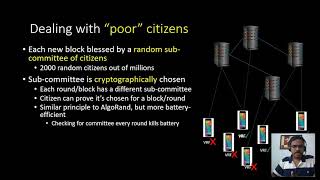
Blockene - A High-throughput Blockchain Over Mobile Devices
Innovative blockchain system enabling smartphone participation in validation and consensus, offering high throughput and scalability while minimizing resource usage through a novel split-trust design.
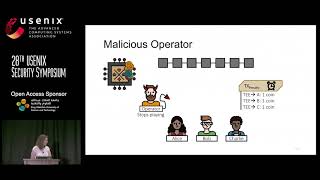
FastKitten - Practical Smart Contracts on Bitcoin
Explore FastKitten, a framework for executing complex smart contracts on Bitcoin using trusted computing environments, offering efficiency and low costs for multi-round applications.
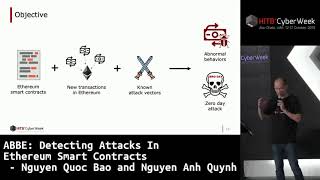
Detecting Attacks in Ethereum Smart Contracts
Explore a heuristic-based solution for detecting known and unknown attacks on Ethereum smart contracts through blockchain transaction and storage analysis, with live demonstrations.

Refactoring the Web
Explore Web5: a decentralized platform empowering individuals to own and control their data, revolutionizing web development with simplified decentralization for innovative app creation.
IPVM - Seamless Services for an Open World
Explore IPVM and UCAN Invocation for next-gen open services with location-free verifiable data and computation, enabling seamless interoperability and improved scaling in decentralized applications.