
The Hows and Whys of a Distributed SQL Database
Explore the evolution of databases and dive into distributed SQL systems, focusing on CockroachDB's design choices for scalability, consistency, and high availability.
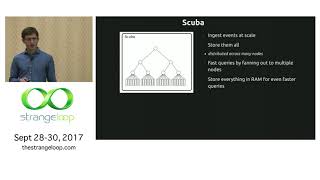
Why We Built Our Own Distributed Column Store
Explore the architecture and implementation of Retriever, a custom-built distributed column store database inspired by Facebook's Scuba, designed for efficient querying of large-scale event data.

Stop Rate Limiting - Capacity Management Done Right
Explore capacity management alternatives to rate limiting, using Little's Law and concurrency control for better API performance and resource isolation in microservices architectures.

Measure All The Things with App Metrics
Learn to implement App Metrics in ASP.NET Core applications, exploring metrics, time series databases, dashboards, and best practices for effective monitoring and observability in .NET environments.
Build Nodejs APIs Using Serverless on Azure
Discover how to migrate an API to Azure Functions, using Visual Studio Code and Azure Functions extension to streamline development and join the ranks of serverless developers.

Life Beyond Distributed Transactions - An Apostate's Implementation
Explore coordination strategies for distributed systems without transactions. Learn implementation techniques using Azure services and real-world examples for robust, scalable enterprise solutions.
A Skeptics Guide to Graph Databases
Explore the pros and cons of graph databases, learn when to use them effectively, and understand their potential pitfalls in solving real-world problems.

Practical Chaos Engineering - Breaking Things on Purpose to Make Them More Resilient Against Failure
Learn to implement chaos engineering on AWS, revealing system failures before they become outages. Discover tools and methods for injecting failures to enhance architecture resilience.
Why Databases Cry at Night
Explore NoSQL database performance, examining common features' impact and inherent bottlenecks to understand why databases struggle and how to optimize them.
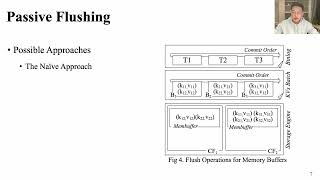
Removing Double-Logging with Passive Data Persistence in LSM-tree Based Relational Databases
Explores a novel solution to remove double-logging in LSM-tree based relational databases, improving performance and efficiency while maintaining data reliability and fast recovery.
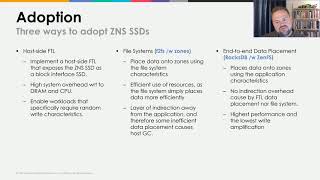
ZNS - Avoiding the Block Interface Tax for Flash-based SSDs
Explore Zoned Namespace SSDs: improved efficiency, higher throughput, and lower latency for flash storage. Learn about interface changes, software adaptations, and performance benefits in Linux and RocksDB.
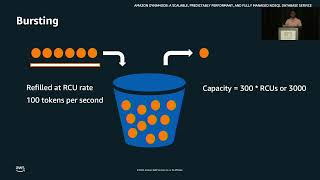
Amazon DynamoDB - A Scalable, Predictably Performant, and Fully Managed NoSQL Database Service
Explore Amazon DynamoDB's architecture, scalability, and performance optimizations. Learn how it handles massive workloads, ensures reliability, and evolves to meet increasing demands.
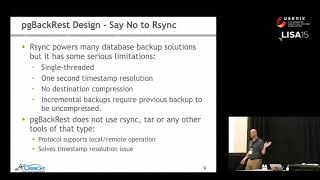
Efficiently Backing Up Terabytes of Data with PgBackRest
Explore efficient PostgreSQL backup solutions with PgBackRest, featuring checksums, compression, parallel transfer, and more. Learn about its design, features, and practical applications for large-scale databases.
How Stripe Invests in Technical Infrastructure
Explore Stripe's approach to prioritizing technical infrastructure investments, balancing firefighting and innovation, and enabling long-term success through strategic decision-making and resource allocation.
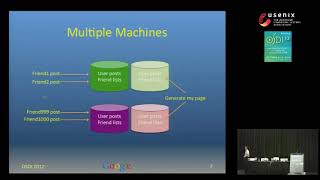
Spanner - Google’s Globally-Distributed Database
Explore Google's Spanner: a globally-distributed database with scalability, multi-version support, and synchronous replication. Learn about its structure, features, and innovative time API for external consistency.
Experiences with Modeling Network Topologies at Multiple Levels of Abstraction
Explores MALT, a multi-layer topology representation for network management, covering its benefits, implementation challenges, and lessons learned in creating a comprehensive topology model.
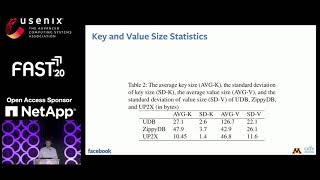
Characterizing, Modeling, and Benchmarking RocksDB Key-Value Workloads at Facebook
Detailed analysis of RocksDB workloads at Facebook, revealing key-value usage patterns and proposing improved benchmarking methods for more accurate representation of real-world scenarios.

What Happens When You Type en.wikipedia.org
Explore Wikipedia's server-side architecture, from routers to microservices, and learn how open-source technologies power one of the world's top websites.
Building Blocks of Distributed Systems - Parts 1 & 2
Interactive class exploring orchestration, load balancing, databases, and storage in distributed systems. Covers key concepts and design principles for large data processing pipelines through collaborative exercises.
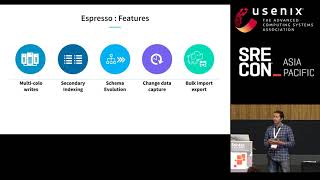
How We Used Kafka to Scale Database Infrastructure
Explore LinkedIn's NoSQL database scaling journey, from MySQL replication challenges to Kafka-based solutions, offering insights on reliable data delivery and infrastructure optimization.
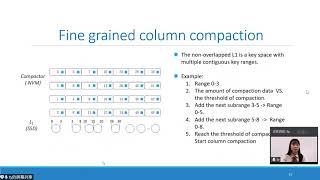
MatrixKV - Reducing Write Stalls and Write Amplification in LSM-tree Based KV Stores
Innovative LSM-tree based key-value store design using NVM to reduce write stalls and amplification. Introduces matrix container, column compaction, and cross-row hint search for improved performance in multi-tier storage systems.