Building a Real-Time Analytics Database - A 'Choose Your Own Adventure' Journey
Explore the journey of building a low-latency, scalable analytics database, focusing on design decisions and tradeoffs that led to Apache Pinot's development for ultra-fast, user-facing analytics at scale.

AI Enhanced UX
Explore AI-enhanced UX through predictive marketing, user intent classification, and personalized experiences. Learn to optimize interactions using machine learning and product micro-metrics for adaptive, user-centric design.
I Have a NoSQL Toaster
Explore key-value, document, columnar, and graph data models in NoSQL databases, understanding their differences and ideal use cases for modern data management.
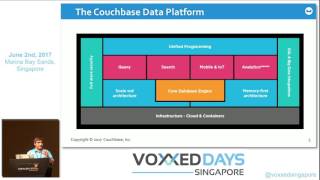
Data Modeling for Couchbase
Learn JSON document data modeling for Couchbase Server, covering schema design, nesting, key-value patterns, and best practices for efficient NoSQL database implementation.
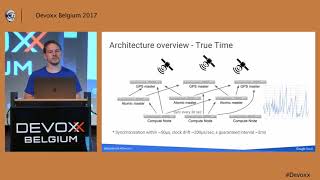
Google Cloud Spanner - Global Consistency at Scale
Explore Google Cloud Spanner's unique capabilities for global consistency at scale through live coding and demos. Learn setup, schema design, and query optimization for terabyte-scale data.
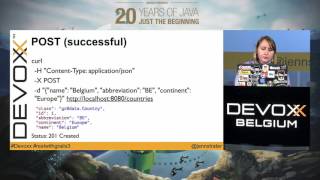
Creating RESTful Web Services with Grails 3
Learn to create efficient RESTful APIs using Grails 3, covering key concepts like data modeling, endpoints, resource annotations, media types, and versioning for modern web development integration.
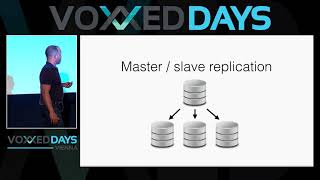
Embracing Database Diversity with Kafka and Debezium
Modernize legacy systems using Event Sourcing: Capture data with Debezium, process with Kafka Streams, and store in diverse databases for flexible, context-specific data access and improved scalability.
Design Good Schemas - Get a Better Database
Optimize database performance through effective schema design, covering modeling, table mapping, and data types. Learn to avoid common pitfalls and create flexible, maintainable database structures.

Using ELSA for Fun & Profit
Explore advanced ELSA features for security analysis, including Elasticsearch integration, improved syslog-ng, containerization, and new visualization tools like Ankey and geo mapping.
Software Development in the 21st Century
Martin Fowler explores modern software development, discussing schemaless data structures, agile methodologies, and adaptive approaches. He emphasizes embracing change and highlights key patterns for effective design and development.

Introduction to NoSQL
Comprehensive overview of NoSQL databases, covering history, data models, consistency, and use cases. Explores key-value, document, column-family, and graph models, discussing their strengths and applications.
Let Me Graph That For You
Explore graph databases for modeling complex, connected data. Learn about Cypher query language, fraud analysis, and path-based operations through real-world examples.
NoSQL Distilled
Explore NoSQL databases, their data models, distribution options, and implementation details using Riak, MongoDB, Cassandra, and Neo4J. Learn about schema-less models and evolutionary design with schema migration.

Boost Your API Development with GraphQL and Prisma
Explore GraphQL and Prisma for modern API development. Learn data modeling, migrations, and realtime streaming. Discover how Prisma simplifies GraphQL resolver implementation through live coding and demos.
Modern Event-driven Architecture - Adopting Data in Motion
Explore event-driven architectures and data in motion, covering Kafka, event streams, and principles for effective implementation. Learn to leverage real-time data for business success.
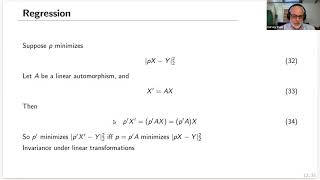
Model Invariants and Functional Regularization
Explore model invariants and functional regularization in quantitative finance. Learn about regression, MLE, Bayesian estimation, and new approaches to improve model robustness and interpretability in data analysis.
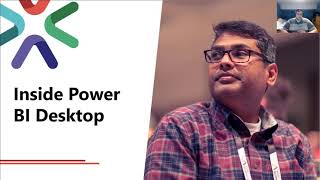
Troubleshooting Power BI Report Performance
Optimize Power BI report performance by identifying bottlenecks, addressing DAX measures, modeling issues, and visual overload. Learn techniques to enhance report responsiveness and user experience.
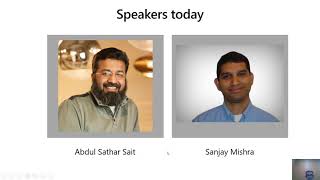
Elevation to the Cloud – How Our Customers Are Using Azure SQL
Explore real-world scenarios of Azure SQL adoption, innovative design patterns, and lessons learned from customers achieving cost efficiency, scalability, and elasticity in their database usage.
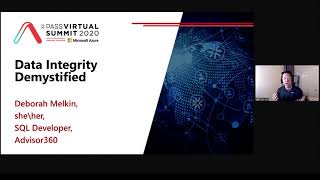
Data Integrity Demystified
Explore data integrity fundamentals, from table design to constraints, and learn how database constructs enforce it. Understand its importance and implementation for meaningful, reliable data.

Tabular Data Modeling Solutions for Challenging Problems
Explore creative solutions for complex data modeling challenges in Power BI, focusing on resolving ambiguous relationships and connecting multiple tables effectively.

Life After Business Objects - Confessions of an OOP Veteran
Exploring the transition from OOP to functional programming in F#, highlighting advantages in development speed, operational stability, and handling large-scale data processing with improved performance and scalability.