Learn SQL - From Absolute Scratch to Advanced Queries
Master SQL fundamentals in 47 minutes: create databases, tables, perform queries, use joins, and format results. Ideal for beginners seeking a quick, comprehensive introduction to SQL.
Application vs. Database - Who Actually Owns Your Data Model?
Explore code-first and database-first approaches in data modeling, comparing their pros and cons and discovering IntelliJ IDEA tools to support both perspectives in application development.
Implementing Native Composite Primary Key Support in Rails 7.1
Discover how to leverage composite primary keys in Rails 7.1 to enhance database performance and optimize your applications, with insights on implementation and practical use cases.
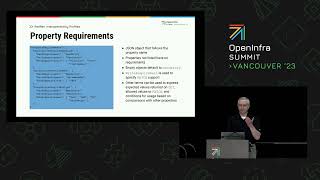
Catching Consistent Redfish - Understanding Data Center Equipment Implementation
Explore Redfish interoperability profiles and validation tools for implementing consistent data center equipment management through JSON-based requirements and DMTF compliance tools.
Realistic Synthetic Data Generation at Scale - Modeling Production Data Without Exposure
Discover how to generate large-scale synthetic test data that mirrors production patterns without exposing sensitive information, using modeling techniques for directory trees, files, and various data characteristics.
Prometheus: Introduction and Deep Dive - From Basics to New Features
Comprehensive overview of Prometheus monitoring system, covering architecture, data model, querying, alerting, and recent feature updates for efficient cloud-native observability.
The Missing Chapter in the CI Playbook: Database Schema Change Management
Discover effective strategies for managing database schema changes in CI pipelines, focusing on safety, automation, and modern patterns for evolving data models while maintaining stability.
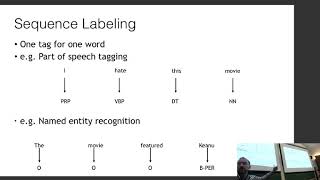
Neural Nets for NLP 2020 - Structured Prediction with Local Independence Assumptions
Explore structured prediction in NLP, covering local independence assumptions and Conditional Random Fields for improved sequence labeling and output consistency.
CQRS and Event Sourcing Explained
Comprehensive introduction to CQRS and Event Sourcing concepts, exploring their benefits and helping developers decide if these architectural patterns are suitable for their projects.

Deploy a Model for LEGO Sets With Docker
Predict LEGO set piece counts using machine learning, then deploy the model with Docker for easy sharing and reproducibility.
A ZooKeeper Layer for FoundationDB - Paul Hemberger, HubSpot
Explore building a ZooKeeper layer for FoundationDB, comparing data models, consistency guarantees, and watch semantics. Learn about emulating ZK using Directory Layer, changefeeds, and approaches for ephemeral nodes and session management.

TensorFlow Binary and Multi-class Classification Tutorial
Learn TensorFlow for binary and multi-class classification, covering data handling, model building, optimization, and evaluation techniques for effective machine learning implementations.

CS480-680 Lecture 19 - Attention and Transformer Networks
Explore attention mechanisms, transformer networks, and their applications in machine learning, including multihead attention and normalization techniques.
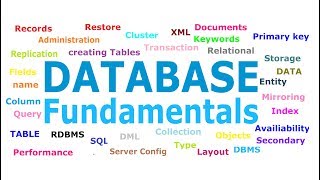
Database Fundamentals for Beginners - Database Tutorial
Comprehensive introduction to database concepts, covering normalization, relational databases, SQL, and administration fundamentals. Ideal for beginners preparing for Microsoft certification.
Generative Models
Explore generative models in deep learning, covering theoretical perspectives, hacker models, information flow, and provable algorithms for learning classifiers and phylogenetic reconstruction.
Distributed Systems and the End of the API - Emerging Technologies for the Enterprise Conference
Explore distributed systems' impact on APIs, discussing real-world implications, functional programming parallels, and data-oriented approaches for modern system design.
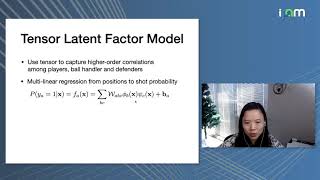
Multiresolution Tensor Learning for Efficient and Interpretable Spatial Analysis
Explore efficient and interpretable spatial analysis using multiresolution tensor learning, with applications in geology, sports, and climate science. Discover improved methods for handling complex spatial data.
The No-Code Approach to Internal Developer Portals
Explore no-code internal developer portals, covering data models, software catalogs, self-service actions, and scorecards. Learn advanced uses like CI/CD integration in platform engineering.
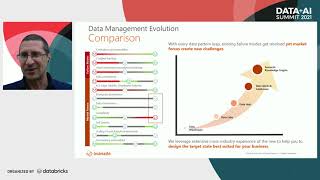
The Shift to Data Mesh: Fundamentals and Implementation Strategies
Explore Data Mesh fundamentals and how Avanade helps clients adopt a distributed, domain-led approach to improve data modeling, governance, and incremental transformation for faster performance.

Running at Scale on Parse - Tips for High-Traffic Apps
Learn strategies for scaling high-traffic apps on Parse, including optimizing API requests, database principles, and data modeling techniques to enhance performance and reliability.
Building Powerful Mobile Apps with Parse
Learn to build powerful mobile apps using Parse, covering data sharing, login, push notifications, and cloud integration for a comprehensive development experience.