Data Analysis on House Pricing Data Using MongoDB Aggregation Pipelines
Learn MongoDB aggregation pipelines for data analysis on house pricing. Explore operations like match, group, and sort to extract insights from your data using Python and MongoDB Atlas.
The Future of Data-Driven Discovery in Mineralogy and Crystallography
Explore data-driven approaches in mineralogy, including mineral evolution, ecology, network analysis, and clustering techniques for advancing research and discovery in Earth and planetary sciences.
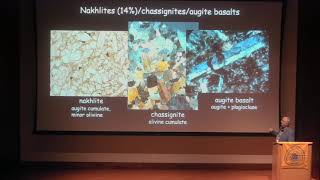
The Mineralogy of Mars from Rocks in Hand
Explore Mars' mineralogy through meteorites and rover data, revealing unique planetary composition, mantle sources, and geological processes that shaped the Red Planet's surface and interior.
Making Mineral Collections Relevant in the 21st Century
Explore strategies to modernize mineral collections, including digitization, big data studies, and innovative storage solutions, while enhancing their relevance and accessibility for research and education.
Using Chart.js with React
Learn to integrate Chart.js with React, creating dynamic and interactive charts in your web applications. Covers installation, components, data handling, and API integration.
Introduction to Data Analysis with Excel
Learn Excel data analysis essentials: navigate, format, use formulas, import data, clean datasets, and apply functions. Hands-on exercises included for practical skill development.

Data Driven Maps With Python Folium & Leaflet.js
Learn to create interactive maps using Python Folium and Leaflet.js. Covers markers, geojson overlays, choropleths, and data integration for powerful data-driven visualizations.
Triple Oxygen Isotopes in Carbonates, Biological Apatites, and Continental Paleoclimate Reconstruction
Explore triple oxygen isotopes in carbonates and apatites for paleoclimate reconstruction, covering evaporative modification, closed basin lakes, and aridity gradients.
SPLADE - The First Search Model to Beat BM25
Explore SPLADE, a groundbreaking sparse embedding model for AI-powered search. Learn its advantages over traditional methods, implementation techniques, and potential future developments in vector search technology.
Microsoft Access 2021 Beginner Course - Database Management Training
Learn to create and manage databases using Microsoft Access 2021. Master interface, tables, relationships, data import, and more. Includes hands-on exercises and downloadable files for practical application.
Inside TensorFlow - Summaries and TensorBoard
Explore TensorBoard and tf.summary API for data visualization in TensorFlow. Learn about API changes, log directories, event files, and best practices from a TensorFlow engineer.

Cloud TPU Pods - AI Supercomputing for Large Machine Learning Problems
Explore Cloud TPU Pods for AI supercomputing, enabling large-scale model parallelism in deep learning. Learn technical details and new TensorFlow features for accelerating machine learning workloads.
TensorFlow Extended - Machine Learning Pipelines and Model Understanding
Explore TFX for building production-ready ML pipelines. Learn data processing, model analysis, and versioning techniques for large datasets, enhancing your machine learning workflow.
Inside TensorFlow - TF Input Pipeline
Explore TensorFlow's tf.data input pipeline, covering data sources, transformations, performance optimizations, and advanced features for efficient data handling in machine learning workflows.

TensorFlow Extended - TFX Overview and Pre-Training Workflow
Explore TensorFlow Extended's pre-training workflow, focusing on data validation and transformation for robust machine learning pipelines. Learn key components and best practices for efficient ML development.

Deep Learning for Fundamental Sciences Using High-Performance Computing
Exploring deep learning applications in fundamental sciences using high-performance computing to uncover universe secrets and improve discovery sensitivity.
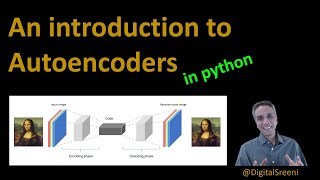
An Introduction to Autoencoders - In Python
Learn to build and implement autoencoders in Python for image compression, reconstruction, and various applications like denoising and anomaly detection.
How to Use Random Forest in Python
Learn to implement Random Forest in Python for data analysis, including data importing, feature engineering, and model fitting techniques.
Linear Regression Using Sci-Kit Learn in Python
Learn to implement linear regression using Sci-Kit Learn in Python, from data import to model creation, evaluation, and prediction. Hands-on coding with real-world data.
Introduction to Pandas - Data Reading and Handling
Learn to load, manipulate, and analyze data using Pandas in Python. Covers CSV file handling, data types, and basic operations for efficient data processing and analysis.

Grain Size Analysis in Python Using Watershed
Watershed-assisted segmentation in Python for analyzing grain size in microscope images, overcoming limitations of threshold-based methods for improved accuracy in feature separation.