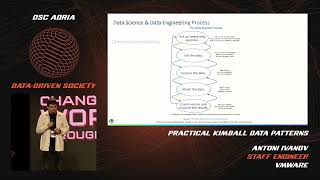
Practical Kimball Data Patterns for Machine Learning Data Warehousing
Discover how dimensional modeling and Kimball patterns can streamline machine learning projects, reduce data preparation time, and improve ML model development through practical warehouse design techniques.
Government Data Lakes and the Future of Digital Society
Explore how government data lakes drive digital transformation, enabling data-driven decisions and smarter societies through centralized data management and analysis.

Digital Data-Driven Financial Advisory: From Prototypes to Production in Banking
Explore the evolution of data science in banking, from prototype to production, focusing on trust-building, real-time monitoring, and practical solutions for data-driven financial advisory services.

Data Science Applications in Gaming Analytics
Discover how data science revolutionizes gaming through player analytics, development strategies, and mathematical modeling to create optimal gaming experiences and drive industry innovation.

Transforming the Everyday Analytics - From Industrial Revolution to Digital Innovation
Discover how Siemens leverages data and AI ecosystems through real-world examples, featuring insights from their tech marathon with 3,000 developers working across 750 projects using 45TB of data.

Data Science in High Energy Physics - Applications at Future Collider Experiments
Explore how data science tackles challenges in high-energy physics experiments, from managing vast datasets to precise measurements and signal detection in particle colliders.

Real-time Analytics at IoT Scale for Electric Vehicle Systems
Explore how Rivian leverages real-time analytics and IoT technologies to power their electric vehicles through an advanced stack combining Kafka, Flink, and Druid with custom solutions.
Cloud Warehouse Monitoring - Snowflake Case Study
Discover essential strategies for monitoring cloud data warehouse costs, security, and performance, with practical insights applicable across platforms like Snowflake for better governance and optimization.
Unlocking Geospatial Data Science: A Strategic Overview
Explore the landscape of geospatial data science and location intelligence, from strategic perspectives to practical applications, including data sources, industry use cases, and hands-on examples.

Process Mining from the Inside - A Guide to Integration and Implementation
Discover how process mining can revolutionize business operations through practical implementation strategies, real-world cases, and essential principles for effective decision-making and process management.
Identification of Building Thermal Model Using Data Science Tools
Discover how to create building thermal models using data science tools instead of complex mathematical approaches, streamlining the process for efficient control algorithm implementation.

Data as the New Commodity: AI, Sustainability and Financial Innovation
Explore how data emerges as a valuable commodity, driving AI advancement and financial innovation while addressing sustainability challenges and ethical considerations in the modern digital economy.
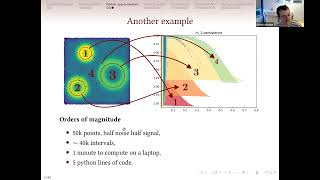
Multiparameter Persistence for Machine Learning in Topological Data Analysis
Explore advanced Topological Data Analysis through multiparameter persistence, focusing on practical machine learning applications using MMA decomposition and signed barcode techniques.
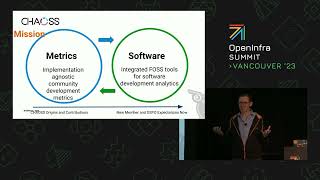
Understanding Open Source Project Health with CHAOSS Metrics and Software
Discover how to evaluate open source project health using CHAOSS metrics and software tools, exploring data collection, visualization, and customizable metrics models for different use cases.

Airflow в кровавом энтерпрайзе
Discover how to effectively deploy and implement Airflow for enterprise automation, with step-by-step guidance on setup, configuration, and best practices for streamlining routine processes.

Stateful в Kubernetes - Особенности Работы с Базами Данных
Dive into managing stateful applications in Kubernetes, exploring deployment strategies for databases like PostgreSQL, ClickHouse, and Cassandra while learning best practices and potential pitfalls.
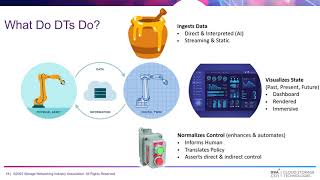
Digital Twins - Journey to the Center of Massive Data
Explore digital twin technology's role in Industry 4.0, understanding how virtual representations of physical systems enable AI-driven decision-making and real-time data processing for smart factories and cities.

Implementing HDFS ACLs in OneFS - A Guide to POSIX.1e Style Access Control Lists
Dive into POSIX.1e ACLs implementation in multiprotocol environments, exploring security model interactions, multithreading challenges, and practical translation methods between different ACL types.

Kinetic Campaign: Speeding Up Scientific Data Analytics with Computational Storage
Discover how computational storage technologies and erasure coding enhance scientific data analytics performance, focusing on LANL's Campaign storage system and Seagate Kinetic Drives implementation.

Accelerating Near Real-time Analytics with High Performance Object Storage
Discover how computational storage enhances object storage applications through in-situ processing, improving system performance, reducing data movement, and enabling efficient real-time analytics in disaggregated environments.

Apache Ozone Distributed Object Storage with Erasure Coding Architecture
Dive into Apache Ozone's distributed object storage system architecture, focusing on Erasure Coding implementation for enhanced storage efficiency and reliability while reducing costs by 50% compared to traditional replication methods.