Reshaping Reconnaissance - AI's Role in OSINT
Explore how AI and ML tools revolutionize OSINT practices, enhancing efficiency in processing public information and solving real-world intelligence gathering challenges.
The Importance of Arts and Crafts in ThreatOps - Effective Visual Communication for Cybersecurity Analysis
Master effective visualization techniques for cybersecurity incidents and threat intelligence, enhancing your ability to communicate complex security concepts through clear, standardized diagrams.

Securing Critical Versions of Your Reality - Extended Reality in Critical Infrastructure
Explore how Extended Reality (XR) technology impacts critical infrastructure security and operations through expert insights on implementation, risks, and protective measures.
Digital Twinning with Extended Reality for Signal Analysis
Explore how Idaho National Labs leverages XR technologies and digital twinning to revolutionize data visualization, signal analysis, and autonomous operations in nuclear and security missions.
BOLABuster - Harnessing LLMs for Automating BOLA Detection
Discover how to leverage LLMs for automated BOLA vulnerability detection in APIs and web applications, exploring BOLABuster's innovative approach to identifying critical security risks at scale.
Ethical and Secure AI Vulnerability Disclosure - Challenges and Best Practices
Explore the complexities of AI vulnerability disclosure, focusing on ethical challenges, bias management, and security implications while examining real-world cases and solutions for responsible reporting.
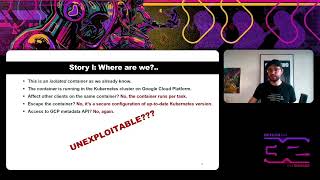
Exploiting the Unexploitable - Advanced JavaScript Vulnerability Chains in Kibana
Dive into advanced exploitation techniques for JavaScript vulnerabilities, focusing on Prototype Pollution attacks and RCE chains through real-world Kibana Bug Bounty examples and defense strategies.

Measuring the Tor Network - Understanding Network Health and Security Analysis
Dive into the mechanics of Tor's network infrastructure, exploring metrics collection, attack mitigation, and community management strategies for maintaining this vital privacy ecosystem.
Signature-Based Detection Using Network Timing - Malware Traffic Analysis
Explore advanced malware detection techniques using network timing patterns and Python, learning to identify malicious behavior through transaction intervals rather than traditional code signatures.

Counter Deception: Defending Yourself in a World Full of Lies
Discover practical strategies to detect and defend against digital deception across network layers, from electromagnetic spoofing to false narratives, while developing critical skills to discern truth in our interconnected world.
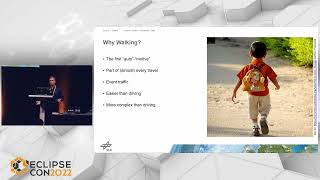
Simulating Pedestrians and Vehicle Traffic Integration Using SUMO and JuPedSim
Discover how to simulate integrated traffic scenarios combining pedestrian and vehicle movements using SUMO and JuPedSim tools for enhanced road safety and event planning analysis.
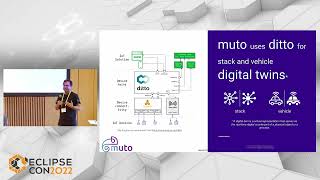
Eclipse Muto - Adaptive Framework for Model-Driven ROS Software Stacks
Discover how Eclipse Muto enables dynamic composition and management of ROS-based software stacks for autonomous vehicles through adaptive frameworks and IoT integration with Eclipse Ditto.
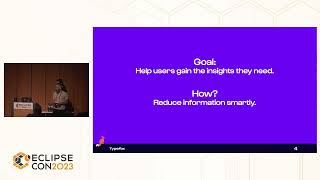
High-Performance Graphical View Filtering with Sprotty - Techniques for Information Visualization
Discover techniques for optimizing graphical network visualizations using Sprotty, focusing on smart filtering, nested graphs, and client-side performance optimization for complex data representation.
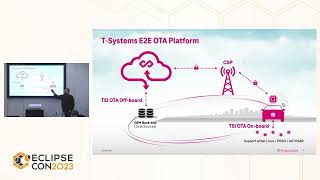
Eclipse SDV Developer Console and T-Systems Hypercube - Connected Car Services in Action
Discover how T-Systems Hypercube revolutionizes automotive software management through DevOps principles, enabling data-driven development and fleet operations using Eclipse projects for connected vehicles.

Create Detailed Traffic Models and Simulations with Open Source Tools and Open Data
Discover how to build digital twins for traffic systems using open-source tools like Eclipse SUMO and TAPAS, enabling data-driven decisions for urban mobility optimization and planning.
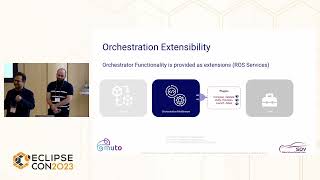
Eclipse Muto in Action - Dynamic ROS Software Stack Orchestration for Autonomous Vehicles
Discover how Eclipse Muto orchestrates ROS software stacks for autonomous vehicles, featuring ROS2 support, dynamic reconfiguration capabilities, and practical implementation in logistics vehicle management.
Standards in AI, IoT, and Digital Twin Development - Current Progress and Roadmaps
Discover the standardization process for AI, IoT, and digital twin technologies, focusing on ISO frameworks, cybersecurity requirements, and implementation roadmaps for emerging standards.

Seeing is Believing - Transportation Simulation and Research
Explore cutting-edge transportation research and simulation techniques at the Alabama Transportation Institute, focusing on human-centered innovations and international collaborative efforts.

Digital Powertrain Energy Appraisal: Identifying Opportunities for Industrial Energy Savings
Discover how digital powertrain analysis and connected motor data can optimize industrial energy efficiency, reduce costs, and support Net Zero targets through strategic improvements.
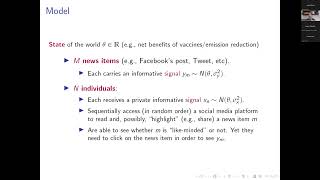
Crowding Out the Truth: A Simple Model of Misinformation
Explore a theoretical framework examining how misinformation spreads and impacts truth in digital spaces through computational modeling and political analysis.

Clustering: Clusterability, Voronoi Diagrams, and Assignment-based Clustering - Lecture 22
Explore clustering fundamentals through Voronoi diagrams and assignment-based techniques while learning to assess data clusterability and implement effective grouping strategies.