
Terraforming Earth - How Terraform Bridges the Multi-Cloud Gap for Earth Observation
Explore how Terraform bridges multi-cloud gaps in Earth Observation, enabling efficient data processing and resource management across distributed infrastructures for improved accessibility and analysis.

How Eye Movements Can Revolutionize Human-Machine Interaction
Exploring eye-tracking technology's potential to revolutionize human-machine interaction, enhancing usability and user experience across digital interfaces for a more intuitive and personalized future.
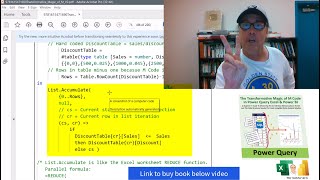
Approximate Match Lookup in Power Query - Amazing Functions for Power BI and Excel
Discover powerful approximate match lookup techniques in Power Query using custom functions. Learn to create efficient solutions with Table.SelectRows and List.Accumulate for Excel and Power BI data analysis.

What is Digital Maturity? How to Measure and Improve Technical Competence
Explore digital maturity's definition, measurement, and improvement strategies for organizations. Learn to assess and enhance technical competence in the digital age.
How Artificial Intelligence Is Disrupting Supply Chain Management
Explore AI's transformative impact on supply chain management, from demand forecasting to logistics optimization, enhancing efficiency and decision-making across the entire value chain.
Top 10 ERP Software and Implementation Challenges - AI Analysis
Discover AI-identified top 10 ERP software and implementation challenges, covering financial, data, compliance, strategy, human factors, growth, integration, and cultural aspects.
Towards Multi-Table Transactions in Delta Lake
Explore managed-commits in Delta Lake: a new protocol enabling multi-table transactions, reliable commit semantics, and enhanced data governance for cloud storage-based data lakes.
State Reader API: The New "Statestore" Data Source for Structured Streaming
Explore Databricks' State Reader API for accessing and analyzing Structured Streaming's internal state data, aiding development and troubleshooting of stateful workloads in Apache Spark 4.0.0.
Many Model Forecasting in Real-Time with Databricks Online Store
Learn real-time forecasting techniques using Spark, Delta, and Databricks' latest features. Explore model fitting, monitoring, and serving strategies for efficient, large-scale predictions across various scenarios.
Easily Test Models in Databricks with Foundation Model APIs and AI Playground
Explore Databricks' Foundation Model APIs for GenAI projects: access LLMs, image generation, and new features. Live demo shows integration with OpenAI SDK in notebooks for quick idea validation.
Delta Lake for Polyglot Data and Machine Learning Workloads
Explore Delta Lake's power for data streams, analysis, and ML workloads. Learn about data quality monitoring, efficient job management, and leveraging Delta for auto-ML models and Spark Structured Streaming.
Reskilling Data Talent in the Era of Generative AI
Explore Accenture's approach to evolving data and AI roles, circular pathways, and the changing landscape of data platforms. Learn about new skills needed for data architects and governance experts in the era of generative AI.
Streamlined Monitoring of Databricks Workflows with Deloitte
Discover Deloitte's Automated Workflow Monitoring solution for Databricks, offering streamlined tracking of data engineering pipeline statuses with minimal overhead and a simplified view, built on Databricks' SDK and SQL dashboards.
Best Practices for Data Preparation in Generative AI Development
Explore data preparation techniques for generative AI, covering quality, diversity, labeling, preprocessing, and optimization. Gain practical insights for enhancing model performance and accuracy.
Simulating the Superbowl: Real-Time ML to Predict the NFL
Explore DraftKings' real-time ML system for NFL predictions, featuring Monte Carlo simulations and ensemble models. Learn about their MLOps pipelines and how Databricks accelerates development.
GenAI-Enabled Co-Pilots for Data Management on Databricks Platform
Explore how GenAI co-pilots accelerate data modernization for enterprises, enhancing efficiency in data management and operations while maintaining value in strategic transformations.
Delta Tensor: Efficient Vector and Tensor Storage in Delta Lake
Efficient tensor storage solution for machine learning workflows, using chunking and sparse encoding to reduce IO costs and improve storage efficiency in cloud-native Lakehouse environments.
Development and Deployment of Generative AI with NVIDIA
Discover how to rapidly develop and deploy enterprise-scale generative AI solutions using microservices, leveraging NVIDIA NIM and AI software for tailored business applications.
Transforming Legacy Reporting to Cloud-Based BI Applications
Streamlining 900+ legacy reports into a centralized cloud-based metric hub for TD's Personal Banking, enhancing data governance and cost-efficiency while providing a single source of truth.
Building Applications with Databricks SDK for Go
Explore how Databricks SDK for Go enhances application development, simplifies deployment, and improves packaging. Learn from examples like Databricks CLI and Labs Watchdog for efficient data analytics workflows.
Developing Data Pipelines with Branch Deployments - A New Approach
Explore a new approach to data pipeline development using branch deployments, enabling safer testing on production data and improving productivity, data reliability, and cost-efficiency.