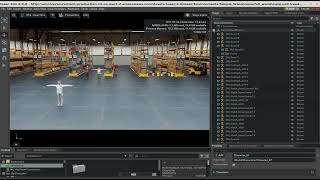
Explore NVIDIA Metropolis AI-Powered Multi-Camera Tracking on AWS
Discover AI-powered multi-camera tracking with NVIDIA Metropolis on AWS. Step-by-step guide for deploying advanced video analytics and real-time location systems using synthetic data and microservices.
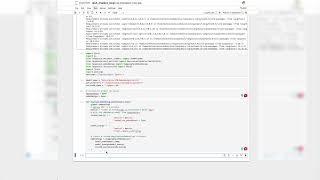
Developing Local AI Copilots with LangChain, NVIDIA NIM, and FAISS - LLM App Development
Learn to build a local AI copilot using LangChain, NVIDIA NIM, and FAISS. Covers document processing, vector storage, inference with Llama 3, and LangChain orchestration for responsive LLM applications.
Google Ads Reports in Google Analytics - Standard, Exploration and Advertising
Explore Google Ads reporting in Analytics: standard reports, custom explorations, and advertising insights. Learn to link accounts and analyze campaign performance effectively.

Button Click Tracking with Google Tag Manager (2024) - Track Clicks with GTM
Learn to track button clicks with Google Tag Manager, sending data to Google Analytics 4. Covers tracking regular buttons and link-buttons, plus building a sample GA4 report for enhanced website engagement insights.
Model Openness Framework: The Path to Openness, Transparency and Collaboration in Machine Learning Models
Explore the Model Openness Framework, a system for rating machine learning models based on openness and completeness, promoting transparency and collaboration in AI development.
Juliet&Romeo: Making Julia a Hard Real-Time Robot Language
Explore Juliet&Romeo: a groundbreaking real-time robot programming language combining safety, dynamism, and low-latency multitasking with Julia compatibility for advanced machine control and AI integration.
Julia's Use in Nuclear Physics Data Analysis: A Case Study
Explore Julia's potential in nuclear physics data analysis, combining high performance with dynamic capabilities for efficient processing and visualization of large datasets.
Julia Community Reshapes Computation in Geosciences
Explore Julia's impact on geosciences: ecosystem tools, hardware acceleration, and collaborative initiatives revolutionizing Earth observation and software development in the field.
Rasters.jl - Raster Data and GIS Tools for Julia
Explore Rasters.jl for Julia: handle raster data, GIS tools, and large datasets with ease. Efficient spatial operations, plotting, and ecosystem compatibility for geospatial analysis.

The Personalisation of Cardiovascular Models Using Julia
Innovative workflow for personalizing cardiovascular models using Julia, combining data assimilation, sensitivity analysis, and optimization to enhance clinical decision-making and improve patient outcomes.
NetSurvival.jl - A Glimpse into Relative Survival Analysis
Explore relative survival analysis in cancer studies using NetSurvival.jl, a Julia package offering fast, reliable tools for extracting net survival curves and integrating with StatsModels.jl API.
MATLAB to Julia: Practical Examples for MATLAB Developers
Explore practical examples of transitioning from MATLAB to Julia, covering plotting, file handling, control systems, and package development for experienced MATLAB users.
Applications of Distributed Task Parallelism
Explore distributed task parallelism in Julia, comparing Dagger with other frameworks and libraries. Learn about unique features for efficient, scalable, and maintainable code.

Geant4.jl - Particle Transport in Julia
Explore Geant4.jl, a Julia wrapper for simulating particle interactions in physics. Learn about its user-friendly interface, performance benefits, and automated generation using WrapIt.

Covariate Shift - Challenges and Good Practice in Machine Learning
Explore challenges and best practices in covariate shift, a crucial concept in machine learning, with insights on improving model performance and adaptability in changing data distributions.
Testing Data Pipelines - Techniques for Ensuring Data Flow Integrity
Explore effective techniques for testing data pipelines, ensuring smooth data flow and quick problem resolution. Learn about unit, integration, and end-to-end tests, plus unique methods like data snapshot testing.
Improve Your ML Projects - Embrace Reproducibility and Production Readiness with Kedro
Discover how Kedro framework enhances ML project management, focusing on reproducibility, flexibility, and production readiness. Learn to integrate Kedro for improved efficiency in Python-based projects.
Rest Easy with Jupyrest - Deploy Notebooks as Web Services
Deploy Jupyter notebooks as web services effortlessly with Jupyrest, a Microsoft-developed library that transforms notebooks into microservices without modifications, streamlining the process for data scientists.

Introduction to Retrieval-Augmented Generation (RAG) - Lecture 6.1
Explore Retrieval-Augmented Generation (RAG) for precise document-based Q&A using LLMs and LangChain. Learn about retrieval, augmentation, and generation phases to enhance model accuracy.
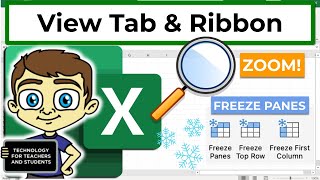
Excel View Tab and Ribbon in Depth
Explore Excel's View tab features like zoom, freeze panes, and Page Break Preview to enhance productivity and streamline your workflow in this comprehensive tutorial.
Agentic Information Extraction with Structured Outputs in JSON
Explore OpenAI's new feature for guaranteed structured JSON outputs in LLMs, with a demo and discussion on its applications, availability, and limitations.