Cross-Cloud Analytics Workloads with BigQuery Omni and Looker
Leverage BigQuery and Looker for cross-cloud analytics, enabling real-time insights and smarter business decisions without infrastructure management or capacity concerns.
Exploring Google Cloud's Data and AI Foundation
Discover Google Cloud's data and AI advantages, including Generative AI integration, infrastructure benefits, and real-time data matching across structured and unstructured sources.
Building Next-Generation Data Pipelines with Containers - Fast Track to Modernization
Build efficient, scalable data pipelines using containers. Learn to leverage Cloud Run for streaming, batch, and on-demand data processing, enhancing your business's data management capabilities.
Cloud Storage Infrastructure for Data-Intensive Workloads - Featuring Flipkart and Databricks
Optimize data-intensive workloads with Cloud Storage. Learn from Flipkart's experience and explore Databricks integration for scalable, secure, and cost-effective data lakes.
Build an Open Format Analytics and AI Lakehouse
Unlock data value with an analytics and AI lakehouse architecture, converging to a single platform for all workloads. Learn from Rakuten's CTO about their BigLake transformation.
Redefining Vector Search for Generative AI Application Development
Explore cutting-edge vector search algorithms for generative AI apps, leveraging Google's decade of research for enterprise-scale solutions.
Real-time Operational Data Streaming for Analytics and Generative AI Apps Using Datastream
Explore serverless data streaming for operational analytics and AI apps with Datastream, featuring insights from RocketMoney and Intuit Mailchimp.
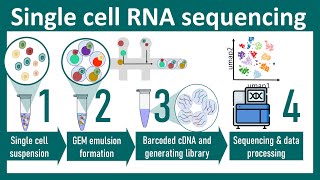
Single Cell RNA Sequencing Overview: ScRNA-seq vs Bulk Seq and Chemistry - Bio Techniques
Explore single-cell RNA sequencing: overview, comparison with bulk sequencing, chemistry, and techniques. Gain insights into this advanced genomic analysis method.
Visualizing Bubble Sorts with Python
Explore bubble sort visualization using Web VPython, creating cool animations to understand this sorting algorithm's mechanics and efficiency.
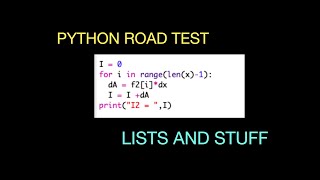
Python Lists for Physics: Creating, Manipulating, and Visualizing Data
Explore Python lists for physics applications, covering creation, manipulation, and visualization of data, including integration and animated graphing.
Physics Python Warm Up Questions Using Numpy
Master Python for physics: import libraries, create arrays, plot data, manipulate matrices, calculate eigenvalues, and handle complex data structures.
Physics Lab: Modeling the Motion of a Falling Coffee Filter with Python
Model falling coffee filter motion with Python, exploring air resistance and drag coefficients using real data and numerical calculations.
Calculating and Plotting Mathematical Functions with a Spreadsheet - Intro Tutorial
Learn to harness spreadsheet power for plotting equations efficiently. Master quick techniques to visualize mathematical functions graphically.
Building a 3D Model of the Solar System with Python
Construct a 3D solar system model using Python and Web VPython, exploring numerical modeling and adding multiple planets.
Video Analysis: Cybertruck Crash Test Acceleration
Analyze Cybertruck crash test acceleration using video tracking software, exploring physics concepts in vehicle safety and collision dynamics.
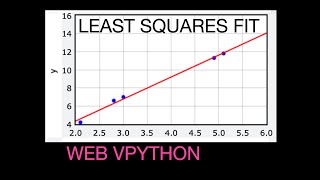
Least Squares Fit for Web VPython
Implement least squares fit in Web VPython to find the best fit line for data, enhancing your data analysis capabilities in this programming environment.
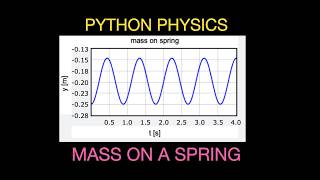
Python Physics: Hooke's Law and Modeling a Mass on a Spring
Explore Hooke's Law and model mass-spring systems using Python, enhancing your understanding of physics concepts through practical coding.
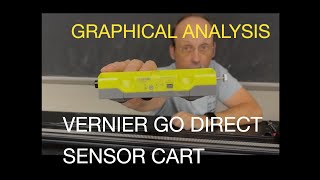
Using Vernier's Graphical Analysis with Go Direct Sensor Cart - Data Collection and Collision Demonstration
Explore data collection using Graphical Analysis and Vernier Sensor cart with fan. Learn collection options, demonstration techniques, and analyze collisions in physics experiments.
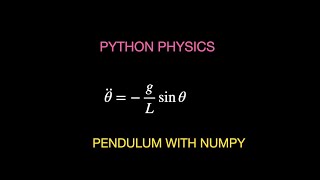
Python Physics: Modeling a Pendulum with Jupyter Notebooks
Model a pendulum's motion using Python and Jupyter Notebooks. Learn to apply Newton's second law in polar coordinates and visualize the results through practical coding exercises.
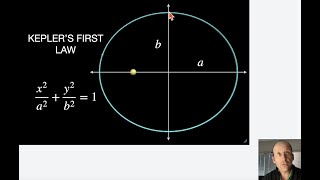
Modeling Kepler's First Law with Python
Model Kepler's first law of planetary motion using Python, demonstrating elliptical orbits through code implementation and visual plotting.
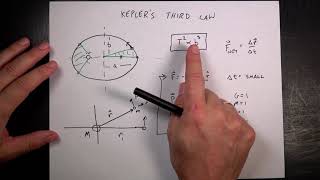
Demonstration of Kepler's Third Law Using Python
Explore Kepler's Third Law through Python modeling, calculating orbital periods and semi-major axes for various orbits to verify the law's validity.