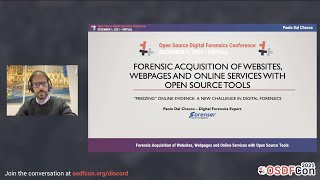
Forensic Acquisition of Websites, Webpages and Online Services with Open Source Tools
Explore open-source tools for forensically acquiring online evidence, including websites, social media, and cloud services. Learn techniques for preserving digital content with verifiable processes and blockchain timestamps.
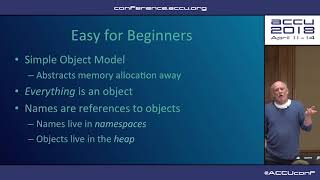
How Python Wins New Friends
Explore Python's rise to popularity, its user-friendly features, and its impact on programming education and various industries.

Debug C++ Without Running
Explore advanced C++ debugging techniques without running code, focusing on macros, templates, and preprocessor challenges. Learn IDE-based solutions for improved code analysis and development.
Best Practices When Accessing Big Data or Any Other Data
Explore best practices for efficient data access on local and shared file systems, backed by real-world examples. Learn to improve performance, reliability, scalability, and portability in data-intensive applications.
Interactive C++ - Meet Jupyter - Cling
Explore interactive C++ using Jupyter and Cling. Learn prototyping techniques, interface guidance, and powerful combinations for data science and exploratory programming.

The Cell as a Computer - Turing Complete and Massively Parallel
Explore biological computing: cells as Turing-complete devices, biocomputers, and parallels between cellular processes and computer components. Gain insights into nature's 4-billion-year-old computing paradigm.

You Can't Test This? Hammertime!
Explore effective testing strategies for challenging code, including data science and machine learning applications, to ensure reliability and confidence in deployment.
Handling Large Volumes of Immutable Structured Data With ClickHouse
Explore ClickHouse, an open-source column-oriented database for handling large volumes of immutable structured data, with SQL querying capabilities and efficient analytics on modest hardware.
Things I Learnt While Trying to Avoid Becoming a CMake Expert
Explore CMake fundamentals, best practices, and advanced features. Learn about variables, functions, macros, and sophisticated configure-time functionality for efficient software development.
Asynchronous I/O and Coroutines for Smooth Data Streaming
Explore asynchronous I/O with io_uring and C++20 coroutines for enhanced program responsiveness. Learn to write efficient, parallel-like code without threading complexities.

Maths - The Fun Parts
Explore fun mathematical concepts through programming, including Sets, Groups, and Graphs. Discover the joy of abstract math ideas by writing code to understand their inner workings.
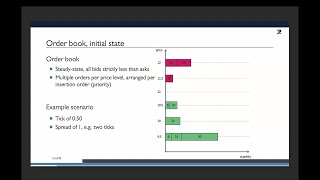
C++ Electronic Trading for Cpp Programmers
Explore electronic trading for C++ developers, covering market dynamics, low-latency strategies, and optimized programming techniques for high-frequency trading systems.
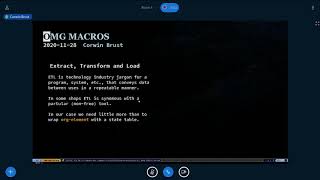
OMG Macros
Explore Emacs macros with Corwin Brust in this EmacsConf 2020 talk. Learn powerful techniques to enhance your Emacs workflow and boost productivity through macro usage.
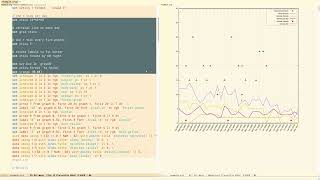
Health Data Journaling and Visualization with Org Mode and GNUplot
Learn to use Org Mode and GNUplot in Emacs for health data journaling and visualization. Explore techniques for daily tracking, data organization, and creating insightful charts to monitor personal health metrics.
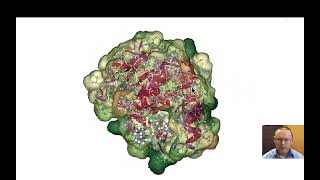
Edit Live Jupyter Notebook Cells with Emacs
Edit live Jupyter notebook cells with Emacs using GhostText and Atomic Chrome. Learn setup, supported browsers, and precautions. Includes demos for Python and Julia code editing.
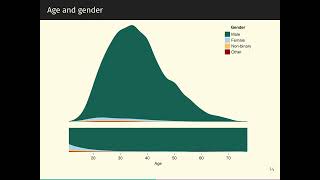
Results of the 2022 Emacs Survey
Comprehensive analysis of the 2022 Emacs User Survey, covering methodology, results, and future plans. Insights into user demographics, preferences, and Emacs usage patterns.
GRAIL - A Generalized Representation and Aggregation of Information Layers
Explore GRAIL, a unified representation for language processing and annotation, leveraging Emacs and Org mode for complex linguistic structures and efficient data analysis.

Health Data Journaling and Visualization with Org Mode and Gnuplot
Explore health data journaling and visualization using Org Mode and gnuplot, with insights on tracking medications, parameters, and long-term trends for personal health management.

Prometheus - For Both Big and Little People
Explore Prometheus monitoring for small and large deployments, covering data collection, service discovery, alerting, storage, and visualization with Grafana.

The Joy of Spreadsheets
Explore the versatile world of spreadsheets, from practical applications to quirky uses. Discover the power of familiar interfaces, built-in functions, and macros in this entertaining journey through "boring" technology.

Open Source - Open Data - Changing Lives for the Better
Exploring the impact of open source and open data in government, focusing on New Zealand's initiatives to improve data management, sharing, and decision-making for better societal outcomes.