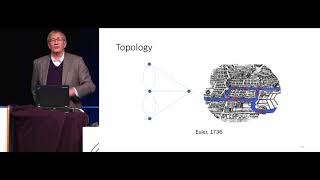
Topological Modeling of Complex Data
Explore topological modeling for complex data analysis, covering hierarchical clustering, network building, and applications in diabetes, cancer research, and finance.

The Minimum Exercise for the Max Gain
Discover the most effective daily actions for maximizing longevity and health, based on quantitative analysis of lifestyle choices and their impact on lifespan.

Profiling Malicious Actors
Explore techniques for identifying and understanding malicious actors in cybersecurity, including profiling methods, frameworks, and analytical tools for threat assessment.
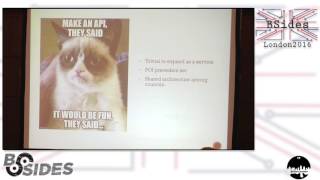
Bytes Between the Lines - Hidden Data in Plain Sight
Explore hidden data risks in seemingly innocuous datasets through a real-world example of parking ticket data analysis, revealing potential privacy and security implications.
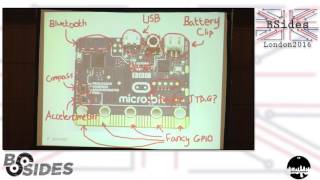
Pwning the Micro-Bit
Explore the Micro:Bit's origins, components, and vulnerabilities to extract user and device information through hardware exploitation techniques.

Offensive Anti-Analysis
Explore open-source malware analysis tools and techniques for file, URL, network traffic, and memory image analysis. Learn to build an automated analysis lab by chaining tools together.

All Your Logs Are Belong To You!
Discover effective log management techniques and their crucial role in cybersecurity. Learn to harness the power of logs for enhanced threat detection and incident response.
Vendor Data Science Buzzwords Hacked
Decoding security vendor buzzwords: Learn to interpret AI, data-driven, and advanced analysis claims. Gain insights to critically evaluate product capabilities and ask informed questions about underlying technologies.

Connecting the Dots - A Beginner's Experience of Threat Actor Tracking
Explore threat actor tracking through a beginner's perspective, covering setup, tools, and techniques for identifying and analyzing malicious activities.

One Stop Anomaly Shop
Comprehensive machine learning framework for anomaly detection in datasets. Enables custom preprocessing, enhances accuracy on small datasets, and targets security threats efficiently.

Walk Through Access Control Systems
Exploring vulnerabilities in biometric access control systems, including server command forgery, unauthorized user addition, and face database exposure. Demonstrates exploits to leak employee data and bypass security measures.
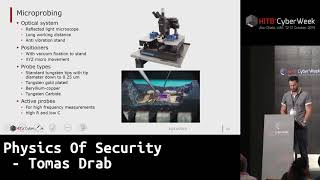
Physics of Security
Exploring IC reverse engineering techniques for security assessment, including failure analysis tools, delayering methods, and circuit editing. Learn how to analyze and modify chip structures for hardware hacking.
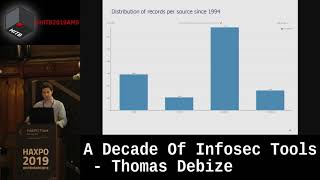
A Decade of Infosec Tools
A quantitative study of 2000+ infosec tools from the past decade, analyzing their evolution and providing insights on creating effective cybersecurity tools.
Secure and Scalable Anomaly-Based Network Intrusion Detection
Presentation on a secure, scalable framework for anomaly-based network intrusion detection, implemented in Go. Explores feature extraction, data collection, and machine learning applications for detecting network threats.

CANsee - An Automobile Intrusion Detection System
Introducing CANsee: A machine learning-based intrusion detection system for automobiles. Detects abnormal CANBUS traffic using a low-cost device to capture and transmit data wirelessly. Open-source project with potential for enhancing vehicle security.

Targeted Attacks in Asia
Evolution of politically motivated targeted malware attacks in Asia over five years. Analysis of attack campaigns against human rights groups, media, and political parties, revealing overlaps and shifts in tactics. Discussion on countermeasures and futur…
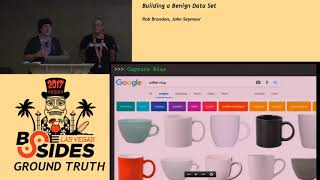
Building a Benign Data Set
Explore techniques for creating unbiased datasets in machine learning, focusing on common pitfalls and strategies to mitigate selection, capture, negative set, and category biases.

Social Media in Incident Response Program
Explore integrating social media into incident response programs for enhanced situational awareness, flexible communication, and real-time information gathering during crises.

Advancing Internet Security Research with Big Data and Graph Databases
Explore innovative approaches to internet security research using big data and graph databases, focusing on data sources, prototypes, and research development pipelines.

Let's Be Realistic - A Deep Dive into How Games Are Selling on Steam
Explore Steam game sales data and marketplace dynamics to gain realistic insights for PC game developers, helping inform business strategies and expectations.

There Are No Shortcuts in Organizing, but Technology Sure Does Help
Explore how tech skills enhanced workplace organizing efforts, featuring data visualization, automation, and web development techniques used by the Times Tech Guild to boost solidarity.