LLMOPs - Inference in CPU with Phi3 4k Instruct ONNX 4-bit Model Using C#
Explore CPU-based inference using 4-bit quantized Phi 3 4K Instruct in ONNX format with C#. Learn practical implementation for efficient machine learning deployment.
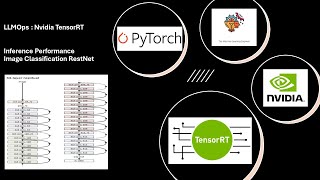
LLMOps: Using Nvidia TensorRT SDK for GPU Inference
Optimize GPU inference using Nvidia TensorRT SDK. Convert models, compare throughput, and explore batch sizes, data precision, and runtime options for enhanced performance.
Responsible AI in Practice - Building Ethical Machine Learning Systems
Explore best practices and open-source tools for implementing Responsible AI, ensuring ethical standards in machine learning applications across industries. Learn to align AI development with human-centric principles.
Accelerating Financial Processing and Reporting with Pre-Trained and Custom ML Models
Innovative approach using pre-trained and custom ML models to enhance financial data processing and reporting, streamlining workflows and improving efficiency in generating insights for the finance industry.
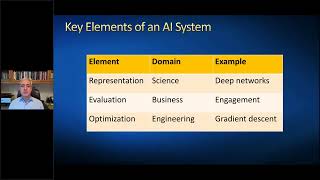
Secrets of Successful AI Projects - Strategies and Pitfalls
Unveiling AI project success: from concept to implementation. Learn key elements, strengths, limitations, and adoption stages. Gain insights on team organization and future trends for effective AI integration.
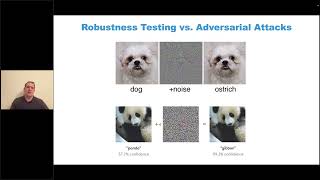
Applying Responsible AI with Open-Source Tools
Learn practical techniques for building safe, fair AI models using open-source tools. Tackle challenges in robustness, labeling errors, bias, and data leakage with hands-on examples for machine learning and NLP projects.
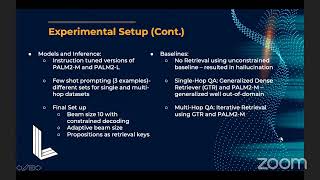
From RAG to RICHES - Retrieval Interlaced with Sequence Generation
Innovative AI approach integrating retrieval into sequence generation, simplifying RAG systems. Adapts to new tasks through prompting, supports multi-hop retrievals, and excels in Open Domain Question Answering.

A Short Summary of the Last Decades of Data Management - GOTO 2024
Explore the evolution of data management over decades, from monolithic systems to open-source engines and cloud computing, examining key trends, successes, and failures in this trillion-dollar industry.

Local Flux.1 LoRA Training Using AI-Toolkit
Learn to create custom LoRAs for Flux.1 image generation on your PC, enhancing style and object control. Explore the process, requirements, and potential future developments in AI image customization.

Productive Parallel Programming with Dagger.jl - JuliaCon 2024 Workshop
Learn to write fast, parallel Julia code using Dagger.jl. Explore various programming interfaces, build example programs, and gain insights into parallelism through logging and profiling capabilities.
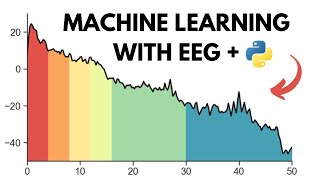
Machine Learning with EEG Time-Series - Easy Python Project - Part 0
Learn to classify EEG data between awake and asleep states using Python and random forest. Covers data loading, preprocessing, feature engineering, and machine learning implementation.
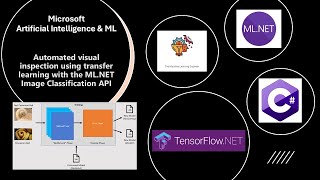
Microsoft AI: ML.NET Framework in C# - Transfer Learning for Image Classification
Aprende a entrenar modelos de aprendizaje profundo personalizados utilizando transferencia de aprendizaje, TensorFlow y ML.NET para clasificar imágenes de superficies de concreto.
AI and Machine Learning in Drug Discovery and Development
Explore AI's revolutionary impact on drug discovery and healthcare with Daphne Koller. Gain insights into machine learning applications in biology, protein folding, and interdisciplinary collaboration for future medical breakthroughs.
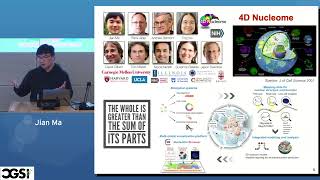
Machine Learning for Single-Cell 3D Epigenomics
Explore machine learning techniques for analyzing single-cell 3D epigenomics, focusing on genome structure and integrative Hi-C analysis methods for advanced biomedical research.
Tokenized and Continuous Embedding Compressions of Protein Sequence and Structure
Explore protein ML representations, focusing on joint sequence-structure modeling. Learn about CHEAP embeddings and HPCT architecture for compact, flexible protein representations.
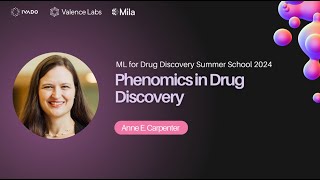
Phenomics in Drug Discovery: Microscopy and Machine Learning - Day 4
Explore phenomics in drug discovery through microscopy and machine learning techniques with expert Anne Carpenter.

Binding Affinity Prediction with Machine Learning-Based Docking - Lab 2
Explore ML-based docking techniques for predicting binding affinity in drug discovery, featuring insights from experts Stephan Thaler and Cristian Gabellini.
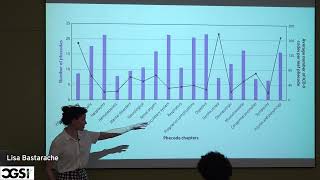
Fun with Phecodes - From PheWAS to PheRS
Explore Phecodes for electronic health record research, from PheWAS to PheRS. Learn applications, tools, and best practices for phenotype-genotype analysis and biobank data science.
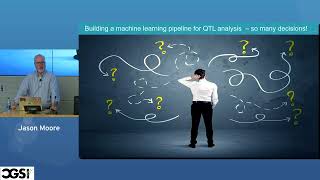
Automated Quantitative Trait Locus Analysis - CGSI 2023
Explore automated quantitative trait locus analysis using machine learning. Learn about genetic architecture, feature engineering, and Pareto optimization for biodata mining and complex trait analysis.
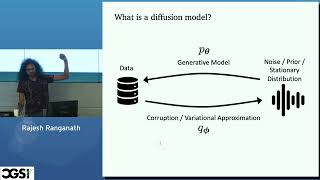
Deep Generative Models in Medicine - CGSI 2023
Explore deep generative models in medicine, covering robustness, interpretability, missing data, language models, and diffusion techniques for improved medical applications and research.
Applications of Deep Learning to Genomics and Digital Pathology
Explore deep learning applications in genomics and digital pathology, focusing on cutting-edge research and practical implementations in healthcare.