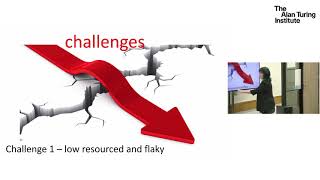
The Ghost in the Machine - The Impact of Cyber-Physical Interactions on Data Centric Engineering
Exploring the challenges and technologies in sensor-based systems for engineering applications, focusing on data accuracy, timeliness, and cost-effectiveness in cyber-physical interactions.
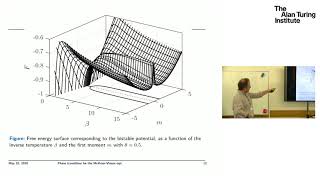
Phase Transitions for Mean Field Limits of Noisy Interacting Agents
Explore phase transitions in mean field limits of noisy interacting agents, examining complex systems modeling and statistical approaches for accurate predictions in various scientific fields.
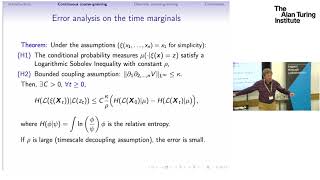
Coarse-Graining Stochastic Dynamics
Explore techniques for simplifying complex stochastic systems through coarse-graining, enabling practical computation and accurate prediction in various scientific fields.
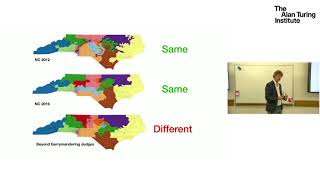
Understanding the Geopolitical Structure of the USA
Explore statistical approaches for analyzing geopolitical structures in the USA, combining data analysis with complex systems modeling to uncover crucial features and patterns.
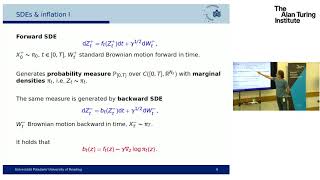
Learning Models by Making Them Interact
Explore new approaches to data-driven modeling of complex systems, combining statistical inference, high-throughput computation, and physical laws for more accurate predictions in various scientific fields.
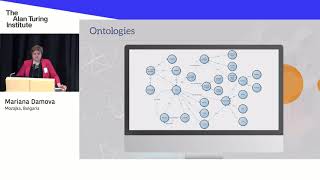
Semantic Information Infrastructures and Their Value to Data Intensive Services
Exploring semantic information infrastructures for data-intensive services, covering advantages, drawbacks, and industry adoption trends. Includes real-world applications and insights on data value chain realization.

Ghost Work: The Human Labour Behind AI Technology
Explore the hidden workforce behind AI technology, examining ethical concerns and labor practices in data labeling and crowdsourcing platforms for AI development.
Turing Lecture - Is Education AI-Ready?
Exploring AI's role in education post-COVID, discussing current applications, future potential, and recommendations for an AI-ready education system to enable all learners to achieve their full potential.

The Power of AI in Search - Transforming Digital Interactions
Richard Socher discusses AI's impact on search engines, exploring You.com's innovative approach, security measures, ethical considerations, and the future of AI in transforming digital interactions and work.

Vector Embeddings for Semantic Search Made Easy with Practical Tips
Explore vector embeddings for semantic search, learning techniques to create meaningful representations, efficient similarity search algorithms, and practical strategies for enhanced information retrieval.
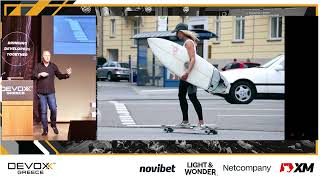
Generative AI for Data Platforms - Cutting to the Chase
Explore AI-infused lakehouses: integrating generative AI with data platforms for enhanced code generation, natural language queries, and semantic search. Includes live demo of IoT event processing.
A Hitchhiker's Guide to Observing Java Applications in Kubernetes
Explore Kubernetes observability tools, from API-querying UIs to service meshes and application monitoring, to understand cluster health and performance.
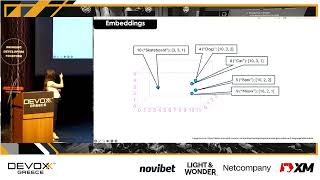
Unleashing the GenAI Magic - Building a Chatbot for Traders with Generative AI
Explore the creation of a trader-focused chatbot using Generative AI, covering prompt engineering, Retrieval Augmented Generation, and unconventional tech choices for robust, scalable solutions.

Steering SME ERPs into the AI Frontier
Explore how Epsilon Net's AI solutions transform SME ERPs, simplifying data analysis, decision-making, and accelerating growth in the digital age.

LangChain Multi-Query Retriever for RAG - Advanced Technique for Broader Vector Space Search
Learn advanced RAG techniques using LangChain's Multi-Query Retriever. Explore how to broaden search results, customize queries, and integrate this method into larger RAG pipelines for improved AI applications.

GPT-4 Vision and Speech Code Examples
Explore GPT-4's vision and speech capabilities through practical code examples, including video narration, website analysis, and creative storytelling using AI-generated content.
Embracing Multi-Tenancy While Scaling MLOps
Learn strategies for implementing multi-tenancy in MLOps, covering resource sharing, isolation, security, and efficient scaling using open-source tools like Flyte for improved ML operations.
Building Smart Farms with Edge Computing Systems Using Kubernetes
Explore edge computing for smart farms using K3s, sensors, and Raspberry Pi. Learn to design and implement real-time monitoring systems for agriculture in Latin America.
Unifying Trusted Data AI and Analytics - Informatica for Microsoft Fabric
Explore Informatica's integration with Microsoft Fabric, leveraging generative AI for enhanced data management, quality, and observability in a unified experience.
Leveraging LLMs for Enterprise Data Management - Strategies and Applications
Explore essential LLM strategies for non-public data applications, including prompt engineering, fine-tuning, and Retrieval Augmented Generation. Learn to transform enterprise data processes with practical techniques and real-world examples.
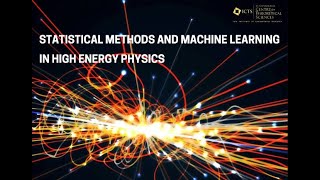
Bread and Butter ML in HEP by Elham E Khoda and Aishik Ghosh
Explore fundamental machine learning techniques applied to high energy physics, covering classification, identification, and estimation strategies for analyzing LHC data and searching for new physics.