Training Foundation Model Workloads on Kubernetes at Scale with MCAD
Explore how IBM's Vela supercomputer uses MCAD to queue custom resources for large-scale AI training on Kubernetes, enabling flexible frameworks and fault tolerance across hundreds of GPUs.
Migrating Hybrid Big Data Platforms at Scale to Kubernetes
Explore challenges and solutions for migrating legacy big data workloads to Kubernetes, focusing on resource management, multi-tenancy, and enterprise-ready solutions for effective data insights.

Where's Your Money Going? The Beginners Guide to Measuring Kubernetes Costs
Learn to accurately measure and optimize Kubernetes costs using metrics and OpenCost, enabling better cloud expense management and preventing unexpected bills.
Scaling ML Pipelines on Kubernetes Using Tekton - Overcoming Complexity
Explore scaling ML pipelines on Kubernetes with Tekton, addressing limitations and enhancing efficiency through custom tasks and integration with KubeFlow for improved scalability in production environments.
Adventures in Data - Leaning on Kubernetes Storage to Run Real-Time Analytic Databases
Explore practical strategies for leveraging Kubernetes storage features to build scalable, flexible data platforms. Learn about compute/storage separation, storage optimization, and custom solutions for managing analytic databases.
Discovering Chicago Film Sets with MLOps in Kubernetes
Explore Chicago film sets using Kubernetes and MLOps. Learn to integrate CNCF projects, design patterns, and best practices for data-driven applications while discovering popular shooting locations.
Infinite Compression, Zero Knowledge Auth and Merkle Proofs - IPFS Connect Istanbul 2023
Explore w3up: UCAN-based upload API for web3.storage, enabling verifiable end-to-end data pipelines with infinite compression, zero-knowledge auth, and Merkle proofs.

Advanced RAG Techniques - RAG Fusion Implementation - Lecture 6
Explore RAG fusion technique to enhance retrieval-augmented generation models, combining multiple search queries and ranking results using reciprocal rank fusion with LangChain implementation.

Project Sophia - Solving Complex Problems with Next-Generation AI
Explore Project Sophia, an AI-driven approach for data visualization and problem-solving. Learn how this innovative tool can empower organizations to uncover insights, generate visualizations, and provide actionable recommendations.
Preparing to Implement and Secure Microsoft 365 Copilot
Explore key tasks for implementing Microsoft 365 Copilot, including prerequisites, data preparation, licensing, and security measures to protect sensitive business information.
Differentiable Programming for End-to-end Optimization of Experiments - Lecture 5
Explore differentiable programming for optimizing experiments in high-energy physics. Learn advanced techniques to enhance data analysis and improve experimental design in particle physics research.
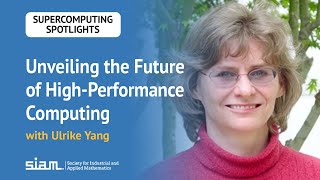
Unveiling the Future of High-Performance Computing with Ulrike Yang
Explore xSDK, an ecosystem of interoperable math libraries for extreme-scale architectures, enabling efficient development of high-quality applications in multiphysics modeling and data analytics.
Reimagining the Frontline with Next-Generation AI and Fast Deployment
Discover innovative AI solutions for frontline challenges, leveraging Microsoft Teams, Copilot, and Dynamics 365 to create an intelligent, intuitive workspace for essential workers at scale.
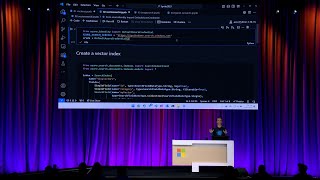
Vector Search and State-of-the-Art Retrieval for Generative AI Apps
Explore vector search, hybrid search, and reranking models for improved knowledge retrieval in Generative AI apps. Includes live code demos and evaluation insights on retrieval quality.

ChatGPT 3.5 Turbo Fine-Tuning Tutorial - Specific Tasks with Synthetic Data
Step-by-step guide to fine-tuning ChatGPT 3.5 Turbo for specific tasks using synthetic data, covering when and why to fine-tune, data creation, dataset cleaning, and model testing.
GPT-4 Turbo Documentation Converter to JSON Format
Convert documentation into easily chunkable JSON format using GPT-4 Turbo, enhancing retrieval accuracy. Explore basic to advanced implementations and iteratively improve generated documentation for better searchability.

Feature Selection in the Corrected KDD Dataset
Explore feature selection techniques for the Corrected KDD dataset with Dr. Zargari, enhancing understanding of information security and data analysis in cybersecurity applications.
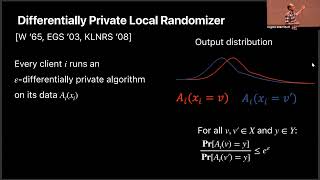
Low-Communication Algorithms for Private Federated Data Analysis - Invited Talk
Low-communication algorithms for private federated data analysis, offering optimal accuracy guarantees while preserving privacy in distributed settings.
Understanding Observability in Kubernetes
Explore Kubernetes observability: metrics, logging, tracing, and profiling. Learn built-in tools, kubectl, and external solutions like Prometheus and Grafana. Discover best practices and real-world examples for effective cluster monitoring.
Generative AI and Data Storytelling
Explore the fusion of generative AI and data storytelling, learning techniques to create dynamic narratives from complex datasets and drive business efficiency through AI-aided communication.

Intro to Open Source Observability With Grafana, Prometheus, Loki, and Tempo
Explore open source observability tools like Grafana, Prometheus, Loki, and Tempo. Learn their philosophies, integrations, and best practices for effective monitoring and visualization of complex systems.