Analyzing Wi-Fi Wardriving Data with Google Colab
Learn to analyze Wi-Fi wardriving data using Google Colab. Explore captured data, detect access points, and gain insights into wireless device mapping with this hands-on tutorial led by security researcher Alex Lynd.
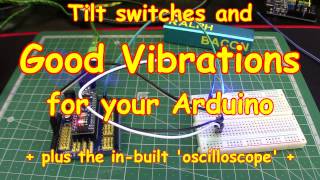
Vibration and Other Switches for Your Arduino
Explore vibration and switch sensors for Arduino projects, including mercury and vibration detectors. Learn to use the Serial Plotter for data visualization and analysis.
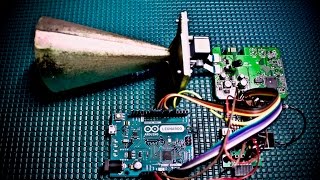
Arduino Radar Gun Speed Reader - Easy How-To Guide
Learn to extract speed data from a radar gun using Arduino, enabling DIY projects and custom applications with this off-the-shelf device. Includes hardware setup, code explanation, and future possibilities.
AI at the Edge - Enabling Vision for Low-Power Devices
Explore AI's shift to edge devices, focusing on building efficient computer vision algorithms for battery-powered devices. Learn about data collection, continuous learning, and optimization techniques.
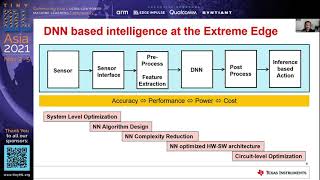
Machine Learning at the Extreme Edge of Always-on Intelligent Sensor Networks
Explore ML optimization techniques for resource-constrained IoT sensor nodes, focusing on system, algorithm, architecture, and circuit levels to achieve significant area-power improvements.

Stable Diffusion DreamBooth Guide - Optimal Classification Images Count Comparison Test
Comprehensive guide on optimizing DreamBooth training in Automatic1111, comparing classification image counts for best results in AI image generation and fine-tuning.
Machine Learning and Earth System Modeling - From Parameter Calibration to Feature Detection
Explore machine learning applications in Earth system modeling, from parameter calibration to feature detection, enhancing climate predictions and understanding of complex environmental processes.
Interpretable and Generalizable Machine Learning for Fluid Dynamics - Steven Brunton
Explore interpretable and generalizable machine learning techniques for fluid dynamics, focusing on sparse identification of nonlinear dynamics and incorporating physical constraints for improved accuracy.
Physics-Guided Deep Learning for Fluid Dynamics - Rose Yu
Explores physics-guided deep learning for fluid dynamics, focusing on accelerating turbulence simulations and incorporating symmetry for generalization in ocean current forecasting.

Building Recommendation Systems Using Graph Neural Networks
Explore graph neural networks for recommendation systems, focusing on RECKON's encoder-decoder architecture to improve entity intelligence and personalize user experiences.
Quick to Production: Integrating Spark and TensorFlow for Efficient MLOps
Learn to quickly deploy deep learning models using Spark and TensorFlow, simplifying MLOps for data scientists. Explore distributed computing, feature engineering, and leveraging TensorFlow ecosystem libraries for efficient model production.
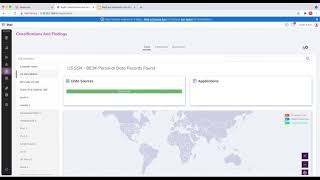
Identifying Sensitive Data and Mitigating Risk in Apache Spark and Databricks
Discover sensitive data in Apache Spark and Databricks using BigID's platform. Learn to scale discovery, label data, and apply necessary guardrails for compliance and risk mitigation in data analytics.
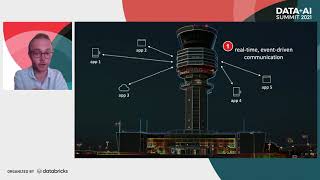
Building the Foundations of an Intelligent, Event-Driven Data Platform at EFSA
Designing an intelligent, event-driven data platform for EFSA's digital transformation, enhancing transparency in food safety risk assessment through Azure and Databricks technologies.
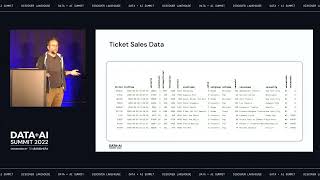
Unsupervised Machine Learning for Scaling Data Quality Monitoring in Databricks
Explore unsupervised ML algorithms for scalable data quality monitoring in Databricks, covering implementation, strengths, weaknesses, and practical applications for effective data management.
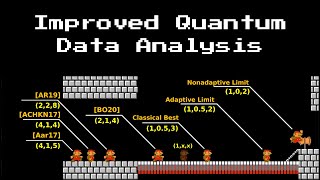
Improved Quantum Data Analysis - Shadow Tomography
Explore improved quantum shadow tomography, focusing on optimal dependence on observables, dimension, and error tolerance. Learn connections to adaptive data analysis in this advanced talk.
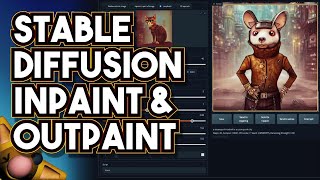
Stable Diffusion - Inpainting, Outpainting, Upscaling & More
Explore advanced Stable Diffusion techniques: inpainting, outpainting, upscaling, and more. Learn to use web interfaces, create on iPads, and enhance images with various tools and methods.
Distributed System Design for Data Engineering
Overview of distributed system design principles for data engineering, covering partitioning, replication, fault tolerance, and scalability. Includes real-world examples and best practices for building robust, large-scale data systems.
LangChain Data Loaders, Tokenizers, Chunking, and Datasets - Data Prep
Learn to prepare text data for LLMs using LangChain tools: data loading, tokenization, chunking, and dataset creation. Practical guide for efficient text processing in AI applications.
Kubernetes as a Substrate for ATLAS Compute
Exploring Kubernetes' potential for ATLAS experiment computing, including batch processing, GPU resource management, and interactive analysis clusters for high-energy physics research.
Introduction to Kubernetes Working Group Batch - Goals and Roadmap
Explore the Kubernetes WG Batch: goals, roadmap, and early efforts to enhance support for batch workloads, improve portability, and simplify deployment in core Kubernetes.
Boost Your Logs with Prometheus - From Logs to Metrics
Learn to transform log data into Prometheus metrics, enhancing observability by combining log information with existing metrics for improved troubleshooting and alerting in cloud-native environments.