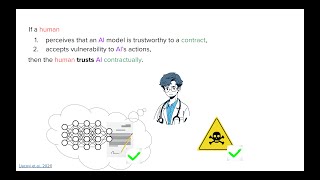
Challenges in Fostering Trust and Distrust in AI Systems
Explore key challenges in AI trust development, from benchmark construction and evaluation methods to data quality issues and human trust factors in artificial intelligence systems.
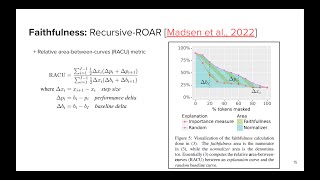
Evaluating Input Attribution Methods in Machine Learning - Plausibility and Comprehensiveness
Explore advanced concepts in gradient-based input attribution, from plausibility assessment to comprehensive evaluation methods like ROAR and Recursive-ROAR techniques.
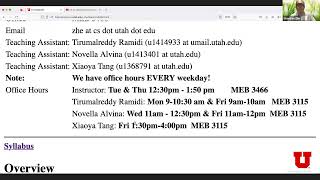
Machine Learning Fundamentals - Lecture 1
Dive into foundational machine learning concepts, algorithms, and theoretical frameworks in this comprehensive first lecture of advanced data science studies.
Introduction to Machine Learning Model Explanations and Interpretability
Explore key concepts in data science explanations, from gradient-based highlighting to contrastive editing, covering essential techniques for understanding and interpreting complex models.
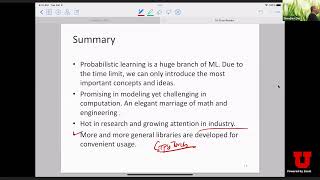
Probabilistic Machine Learning - Lecture 28
Dive into advanced data science concepts and methodologies through comprehensive lecture materials from the University of Utah's graduate-level computer science program.
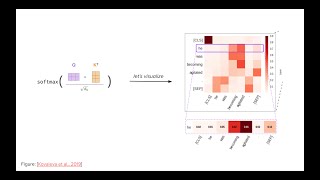
Data Preparation and Transformer Models - Introduction to Text and Image Processing
Master data preparation techniques for transformers, including text and image processing, and understand the fundamentals of transformer architecture and pretraining methods.
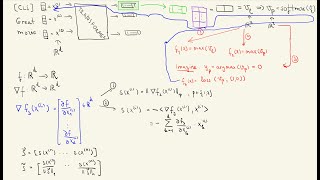
Gradient-Based Input Attribution Methods and Their Applications
Explore gradient-based input attribution methods, from fundamental concepts to practical applications, limitations, and advanced extensions in machine learning model interpretability.

Prompting for Evaluation of Free-Text Explanations - Part 2
Dive into advanced techniques for evaluating free-text explanations in AI prompting, focusing on methodologies and practical applications for data science analysis.
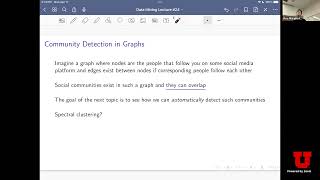
MapReduce and Distributed Computing for Data Mining - Spring 2023
Master distributed computing fundamentals through MapReduce, exploring cluster computing challenges, file systems, and practical applications like PageRank and community detection algorithms.
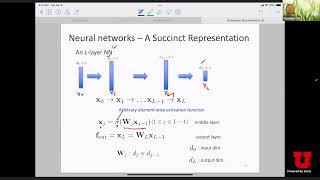
Probabilistic Machine Learning - Lecture 24
Dive into advanced data science concepts through comprehensive lecture coverage of key theoretical and practical aspects in this graduate-level academic session.
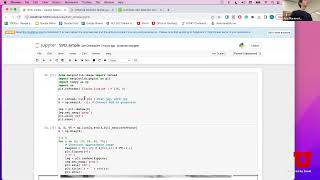
Principal Component Analysis and Singular Value Decomposition - Spring 2023
Master dimensionality reduction techniques through PCA and SVD, exploring multicollinearity, vector basis, and practical applications with hands-on demonstrations for effective data analysis.

Advancements and Challenges in Retrieval-Augmented Generation Systems
Explore the latest developments in Retrieval-Augmented Generation systems, their real-world applications, and key challenges in implementing AI-powered information retrieval and generation solutions.

Getting Started with DSPy - Building LLM Programs Tutorial
Discover how to build robust LLM programs using DSPy framework, from basic concepts to creating retrieve-then-read RAG systems with optimized instructions and structured data handling.
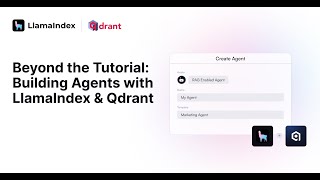
Building Agents with LlamaIndex and Qdrant - Beyond the Tutorial
Dive into advanced agent development using LlamaIndex and Qdrant, exploring vector database integration and search engine capabilities for building sophisticated AI solutions.
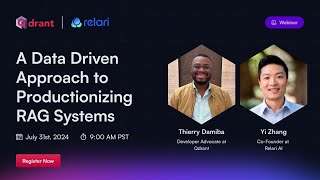
A Data-Driven Approach to Productionizing RAG Systems
Discover practical strategies for deploying RAG applications effectively, focusing on data-driven methods and optimization techniques for enhanced performance and reliability.
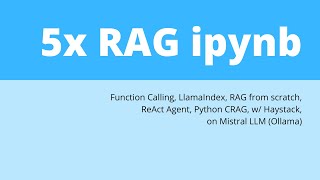
Building RAG Systems: From Vector Embeddings to Self-Reflective CRAG - 5 Python Notebooks
Explore practical RAG implementations through 5 Python notebooks, from basic text embeddings to advanced self-reflective systems using LlamaIndex, Ollama, and ReAct Agent frameworks.
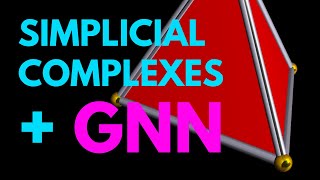
Topological Message Passing: From Graph Neural Networks to Simplicial Complexes on CW Networks
Delve into advanced Graph Neural Network concepts, exploring topological message passing, simplicial complexes, and high-dimensional interactions for computational graph networks and molecular design applications.
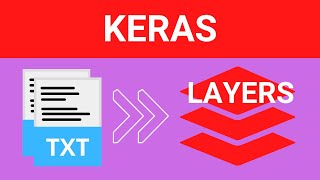
Text Vectorization Made Easy - A Tutorial on Keras Preprocessing Layers for AI
Master text vectorization techniques in Keras preprocessing layers for transforming natural language inputs into numerical sequences and building efficient AI input processing pipelines.
Experimental KERAS Feature Space for Medical AI Heart Attack Prediction
Dive into advanced feature scaling with KERAS Feature Space, building a medical AI system to predict heart attack probabilities using structured data classification and optimized data pipelines.
Vector Search for Content-Based Video Recommendation
Discover how to implement vector search for video recommendations using Qdrant, exploring practical applications, system architecture, and performance optimization techniques for high-scale platforms.
The Bitter Lesson of Retrieval in Generative Language Model Workflows
Discover how leveraging data and compute in RAG architectures can enhance generative AI applications, with insights from YOKOT.AI's implementation for enterprise data solutions.